Running a successful spa requires juggling countless moving parts: appointment scheduling, staff coordination, inventory management, payment processing, and client relationship management. For many spa owners, these operational challenges consume valuable time that could be spent on business growth and client care. Modern spa business management software addresses these pain points by consolidating essential functions into one unified platform, enabling spa professionals to operate more efficiently while delivering exceptional client experiences.
Understanding Spa Business Management Software
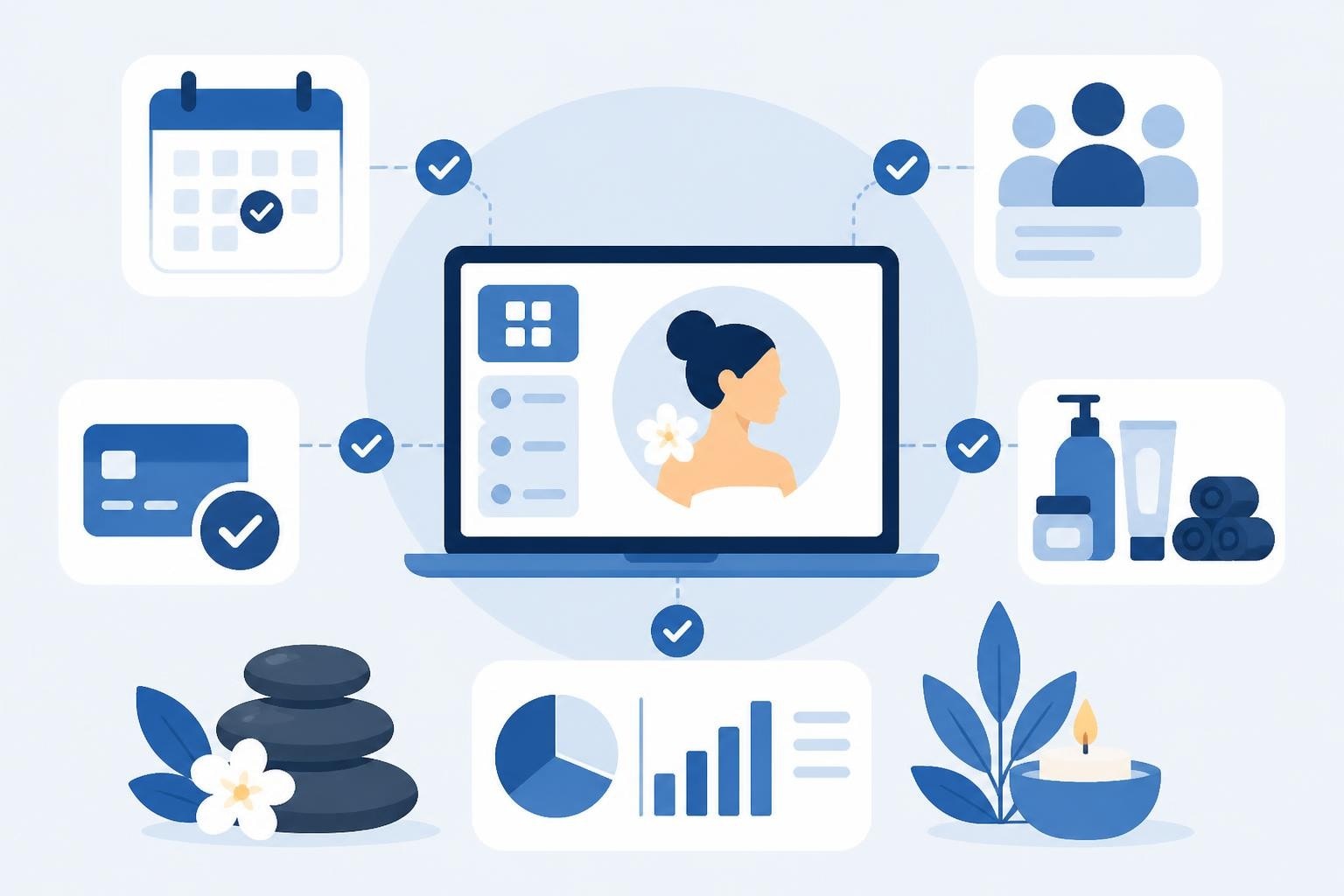
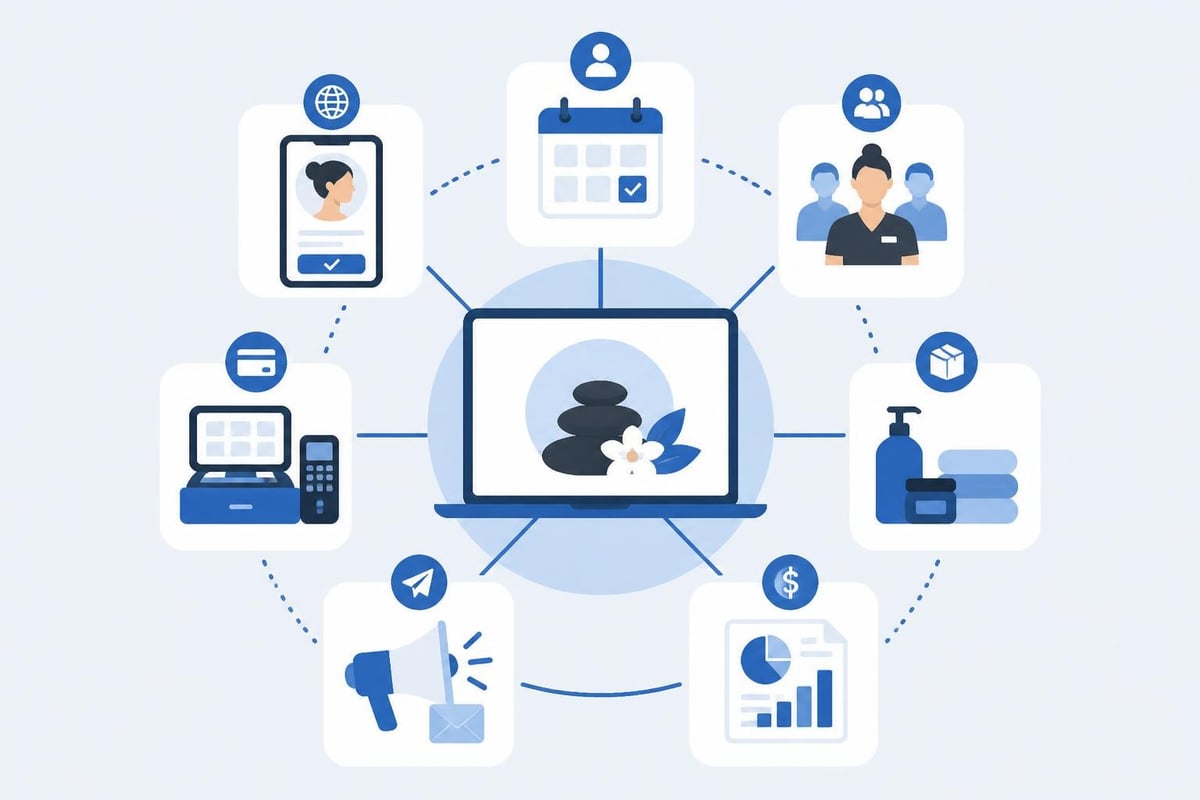
Spa business management software serves as the operational backbone for wellness facilities of all sizes. This technology integrates appointment scheduling, point-of-sale functionality, client records, staff management, and business analytics into a centralized system. Unlike standalone booking tools, comprehensive management platforms coordinate every aspect of spa operations.
The global spa management software market continues to expand, driven by increasing demand for operational efficiency and enhanced customer experiences. Industry data shows that spas implementing management software report significant improvements in both revenue and client retention rates.
Core Functionality Requirements
Professional spa business management software must deliver several essential capabilities:
- Appointment scheduling with real-time availability tracking and automated confirmations
- Client database management storing service history, preferences, and contact information
- Point-of-sale processing for products, services, packages, and gift certificates
- Staff scheduling and commission tracking to optimize labor costs
- Inventory control with automatic reorder alerts and product usage tracking
- Marketing automation including email campaigns and loyalty programs
- Financial reporting with detailed analytics on revenue, expenses, and profitability
These features work together to create a seamless operational flow. When a client books an appointment online, the system automatically checks staff availability, sends confirmation messages, updates the schedule, and prepares the client record for the upcoming visit.
Selecting the Right Management Platform
Choosing appropriate spa business management software requires careful evaluation of your specific operational needs and growth objectives. The decision impacts daily workflows, staff productivity, and client satisfaction for years to come.
Business Size and Complexity
Small independent spas have different requirements than multi-location wellness chains. A single-location day spa with five treatment rooms needs streamlined functionality and ease of use, while a medical spa network requires advanced compliance features and consolidated reporting across locations.
Consider these factors when assessing your needs:
| Business Factor | Small Spa Needs | Multi-Location Needs |
|---|---|---|
| User interface | Intuitive, minimal training | Role-based access, advanced features |
| Pricing model | Affordable monthly fee | Scalable enterprise pricing |
| Customization | Template-based setup | Extensive customization options |
| Integration | Basic payment processing | ERP, accounting, HR systems |
| Support | Email and chat support | Dedicated account manager |
Feature Prioritization
According to industry best practices for spa software selection, prioritizing features based on your operational challenges yields the best return on investment. Create a weighted scorecard listing your must-have features, nice-to-have capabilities, and unnecessary bells and whistles.
Critical features for most spas include:
- Online booking capabilities that integrate with your website and social media
- Automated appointment reminders via SMS and email to reduce no-shows
- Secure payment processing with PCI compliance and multiple payment options
- Mobile accessibility for staff and managers to access the system anywhere
- Client history tracking to personalize services and build loyalty
The key considerations for spa management systems emphasize matching software capabilities to your specific service offerings and business model. Medical spas need HIPAA compliance and integration with medical records, while luxury day spas prioritize client experience features like preference tracking and personalized recommendations.
Implementation and Integration Strategies
Successfully deploying spa business management software requires strategic planning and methodical execution. Rushed implementations often result in data loss, staff frustration, and temporary operational disruptions.
Data Migration Planning
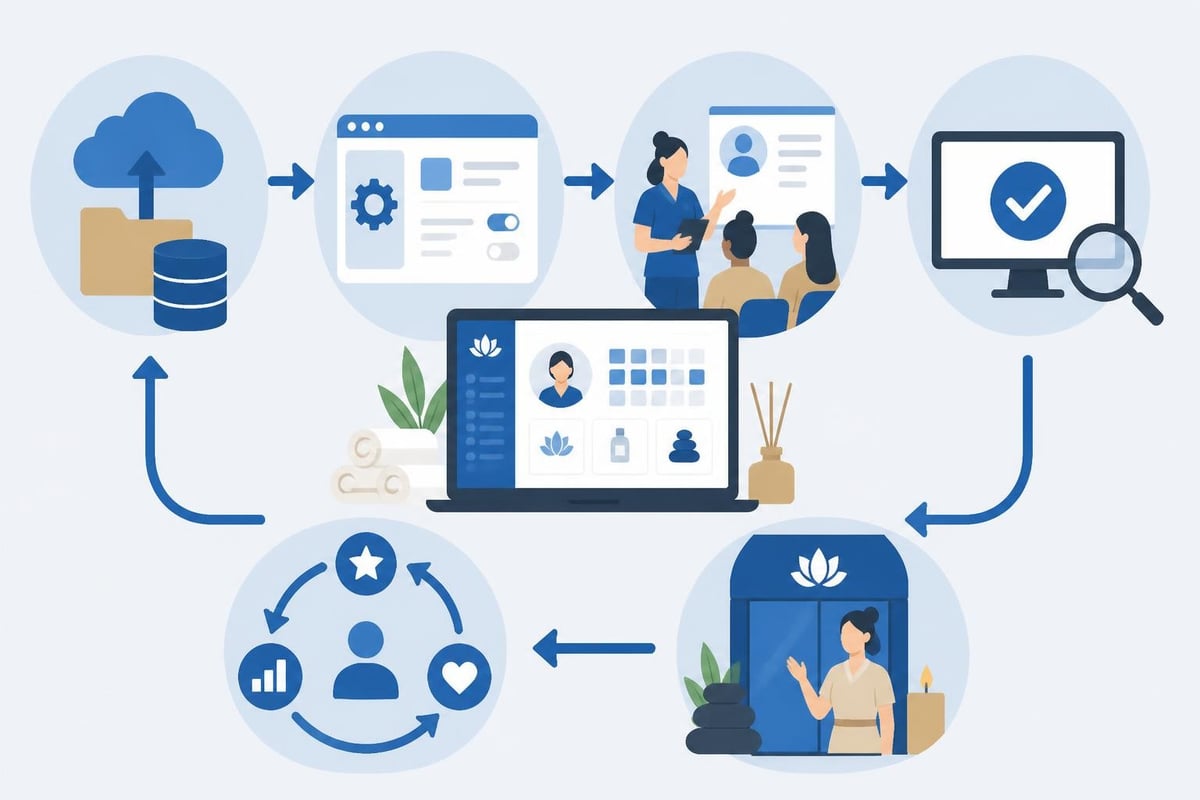
Transferring existing client records, appointment history, and financial data into new software demands careful attention. Start by cleaning your current database, removing duplicate entries and outdated information. Export data in the most compatible format your new system accepts, typically CSV files for client lists and Excel spreadsheets for financial records.
Step-by-step migration process:
- Audit your current data and identify what needs to transfer
- Clean and standardize information before export
- Run a test migration with a small data sample
- Verify accuracy and completeness of transferred records
- Perform full migration during off-peak hours
- Conduct thorough validation checks across all modules
- Maintain backup access to your old system for 30-60 days
Staff Training and Adoption
Technology only delivers value when your team uses it correctly and consistently. Allocate sufficient time for comprehensive training, recognizing that staff members have varying comfort levels with technology.
Effective training incorporates multiple learning methods. Schedule hands-on practice sessions where staff members complete real tasks under supervision. Create quick-reference guides for common procedures like checking in clients, processing retail sales, and managing appointment changes. Designate tech-savvy team members as internal champions who can answer questions and troubleshoot minor issues.
Revenue Optimization Through Software
Strategic use of spa business management software directly impacts your bottom line through improved efficiency, reduced no-shows, and enhanced client spending.
Reducing No-Show Rates
No-shows and last-minute cancellations cost spas an estimated 15-20% of potential revenue annually. Automated reminder systems built into management platforms significantly reduce these losses. Industry data shows that implementing three-point reminder sequences (booking confirmation, 48-hour reminder, and 24-hour reminder) decreases no-shows by up to 60%.
Consider implementing these policies through your software:
- Automated reminder messages delivered via SMS and email at strategic intervals
- Online rescheduling options allowing clients to modify appointments without calling
- Cancellation policies clearly communicated during booking and enforced automatically
- Waitlist management filling cancelled slots immediately with interested clients
Dynamic Pricing and Packages
Modern spa business management software enables sophisticated pricing strategies that maximize revenue during peak periods while filling capacity during slower times. Configure different pricing tiers for prime appointment times, implement happy hour discounts for off-peak periods, and create package deals that encourage larger purchases.
| Pricing Strategy | Implementation | Expected Impact |
|---|---|---|
| Peak pricing | 10-15% premium for weekend/evening slots | 8-12% revenue increase |
| Off-peak discounts | 15-20% discount for weekday mornings | 25-30% capacity improvement |
| Service bundles | Package of 5-6 treatments at 15% discount | 35-40% increase in advance bookings |
| Membership programs | Monthly fee with discounted services | 40-50% improvement in client retention |
Retail Integration
Effective point-of-sale integration transforms treatment rooms into retail opportunities. When therapists complete service notes in your spa business management software, the system can prompt recommended home-care products based on treatments provided and client skin type or concerns.
According to professional spa management software requirements, retail typically accounts for 15-25% of total revenue in well-run spas. Software features that support retail growth include:
- Automatic product recommendations based on services received
- Inventory alerts when popular items run low
- Staff commission tracking to incentivize retail sales
- Package creation combining services and products
- Gift certificate management for retail purchases
Client Experience Enhancement
Superior client experiences create loyal customers who return frequently and recommend your spa to others. Technology enables personalization and convenience that modern consumers expect.
Personalization at Scale
Comprehensive client profiles within your management software enable personalized service delivery that makes each guest feel uniquely valued. Document preferences for room temperature, music selection, pressure preferences, and preferred therapists. Record allergies, contraindications, and past treatments to ensure safety and continuity.
Before each appointment, staff members review client profiles to prepare appropriately. This attention to detail transforms ordinary spa visits into memorable experiences that generate positive reviews and referrals.
Convenience Features
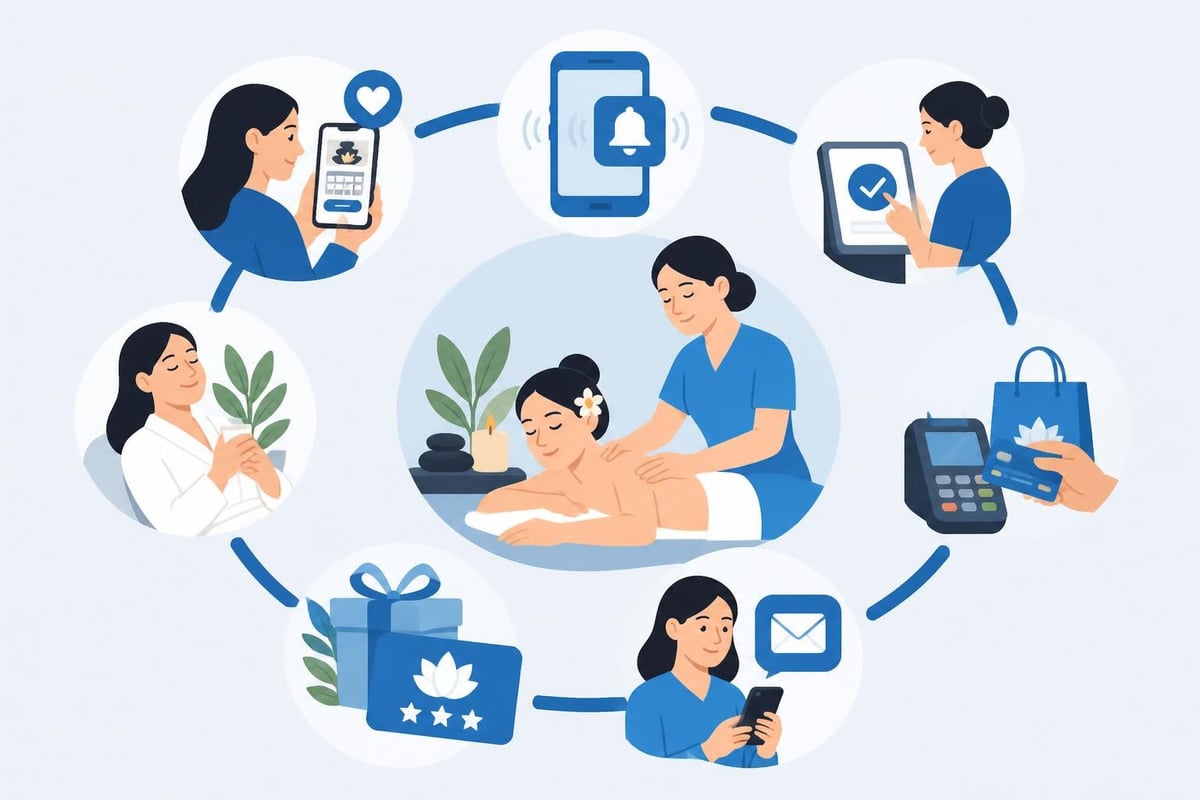
Today's clients expect seamless digital interactions. The essential features for spa management platforms include 24/7 online booking, mobile-friendly interfaces, and automated communication that keeps clients informed without requiring phone calls.
High-impact convenience features:
- Online booking available directly from your website and social media profiles
- Mobile app access for viewing appointments and making changes
- Automated pre-visit forms reducing check-in time
- Digital gift certificates purchased and delivered instantly
- Loyalty program tracking with automatic reward notifications
- Post-visit follow-up messages requesting feedback
Operational Efficiency Gains
Streamlined operations reduce labor costs, minimize errors, and free staff time for revenue-generating activities rather than administrative tasks.
Automated Administrative Tasks
Manual processes consume surprising amounts of staff time. Receptionists spend hours calling clients for appointment confirmations, therapists handwrite service notes that get filed away, managers manually compile data from multiple sources for performance reports. Spa business management software automates these repetitive tasks.
Automation capabilities deliver measurable time savings:
- Appointment confirmations and reminders: Eliminates 5-10 hours of weekly phone calls
- Staff schedule creation: Reduces scheduling time from 4 hours to 30 minutes weekly
- Inventory counting: Automated tracking saves 2-3 hours during monthly counts
- Financial reporting: Instant reports replace hours of manual spreadsheet work
- Marketing campaigns: Automated email sequences replace manual outreach efforts
Commission and Payroll Accuracy
Calculating staff commissions manually creates errors and disputes. Software-based commission tracking applies rules consistently, records all services and retail sales automatically, and generates detailed reports showing exactly how compensation calculations were determined.
Configure commission structures based on:
- Service type and pricing tier
- Individual performance targets
- Retail versus service sales
- New client acquisition bonuses
- Package sales incentives
Accurate, transparent commission reporting improves staff satisfaction and reduces administrative overhead associated with payroll processing.
Analytics and Business Intelligence
Data-driven decision making separates thriving spas from struggling competitors. Comprehensive reporting built into management platforms reveals patterns, opportunities, and potential problems before they impact your bottom line.
Key Performance Indicators
Track these essential metrics through your spa business management software:
| Metric | Industry Benchmark | Action Threshold |
|---|---|---|
| Booking conversion rate | 60-70% | Below 55% review booking process |
| No-show rate | 5-8% | Above 10% strengthen reminder system |
| Average ticket value | Varies by market | Track trend, aim for 3-5% annual growth |
| Retail attachment rate | 15-25% | Below 12% improve POS integration |
| Client retention rate | 30-40% (annual) | Below 25% enhance loyalty program |
| Staff utilization | 75-85% | Below 70% adjust scheduling |
Predictive Analytics
Advanced spa business management software identifies trends that inform strategic planning. Seasonal booking patterns help optimize inventory purchases and staff scheduling. Service popularity trends guide menu development and promotional planning. Client lifetime value calculations identify your most profitable customer segments.
Review weekly dashboards showing:
- Appointment volume trends compared to previous periods
- Revenue by service category highlighting profitable offerings
- Staff productivity metrics indicating training needs or scheduling issues
- Inventory turnover rates preventing overstock and stockouts
- Marketing campaign performance measuring ROI on promotional activities
Mobile and Cloud Advantages
Cloud-based spa business management software offers significant advantages over legacy on-premise systems. Accessibility, automatic updates, data security, and disaster recovery capabilities make cloud platforms the standard for modern spas.
Remote Access Benefits
Managers access real-time business data from anywhere with internet connectivity. Review today's schedule while commuting, check yesterday's revenue from home, approve time-off requests while on vacation. Mobile apps extend this accessibility to smartphones and tablets.
Staff members benefit from mobile functionality too. Therapists view their schedules, access client profiles, and complete service notes from treatment rooms. Front desk personnel assist clients using tablets rather than being tethered to desktop computers.
Security and Compliance
Reputable cloud-based platforms maintain security certifications and compliance with industry regulations. According to market analysis of spa management software trends, data security ranks among the top three concerns for spa owners evaluating software options.
Essential security features include:
- Encrypted data transmission and storage protecting sensitive client information
- Role-based access controls limiting staff members to appropriate data
- Automated backup procedures preventing data loss
- PCI compliance for secure payment card processing
- HIPAA compliance for medical spas handling protected health information
- Audit trails documenting all system access and changes
Integration Ecosystem
Modern spas use specialized tools for various functions. Your management software should integrate seamlessly with accounting systems, marketing platforms, payment processors, and other business applications you rely on.
Accounting Software Connections
Automated integration between your spa business management software and accounting platforms like QuickBooks or Xero eliminates double-entry bookkeeping. Daily sales, expenses, and payment data flow automatically into your accounting system, maintaining accurate financial records without manual data transfer.
Marketing Platform Integration
Connect your client database with email marketing tools to create targeted campaigns based on service history, purchase behavior, and preferences. Integration enables sophisticated segmentation and personalization that dramatically improves marketing effectiveness.
Send birthday promotions to clients automatically, re-engagement campaigns to guests who haven't visited recently, and product recommendations based on services received. Track campaign performance directly within your management platform to measure ROI accurately.
Scaling Your Spa Business
As your business grows, your software must scale accordingly. Whether opening additional locations, expanding service offerings, or franchising your concept, choose platforms built to support growth.
Multi-Location Management
Expanding to multiple locations creates complexity in scheduling, inventory, reporting, and staff management. Enterprise-level spa business management software consolidates data across all locations while maintaining site-specific control.
Central management features include:
- Consolidated reporting showing performance across all locations
- Centralized inventory management with location transfers
- Cross-location booking allowing clients to visit any facility
- Standardized procedures ensuring consistent client experiences
- Corporate marketing with location-specific customization
Franchise Capabilities
Franchising requires specialized functionality including royalty tracking, brand compliance monitoring, and franchisee-specific reporting. Select platforms designed specifically for franchise operations if you plan this growth strategy.
Investment and ROI Considerations
Spa business management software represents a significant investment requiring careful financial analysis. Understanding total cost of ownership and expected return helps justify the expenditure and select the right solution.
Pricing Models
Software vendors offer various pricing structures:
- Monthly subscription fees based on number of staff, locations, or features
- Per-appointment charges scaling costs with booking volume
- Annual contracts offering discounts compared to month-to-month pricing
- Setup and training fees covering implementation services
- Transaction fees for payment processing through the platform
Calculate total annual costs including all fees, payment processing charges, and add-on features you'll need. Compare this against quantifiable benefits like reduced no-shows, increased appointment capacity, and improved retail attachment rates.
Expected Returns
Well-implemented spa business management software typically delivers positive ROI within 6-12 months through multiple benefit categories. Labor savings from automation, revenue increases from reduced no-shows and improved booking capacity, and enhanced client retention all contribute to returns.
Quantifiable benefits for a mid-sized spa:
- No-show reduction: 60% decrease in missed appointments = $18,000 annual revenue recovery
- Increased capacity: 15% more appointments through optimized scheduling = $35,000 additional revenue
- Labor savings: 15 hours weekly administrative time reduction = $12,000 annual savings
- Retail improvement: 5% increase in attachment rate = $8,000 additional revenue
- Client retention: 10% improvement in repeat visits = $25,000 additional lifetime value
Total potential annual benefit: $98,000 versus typical annual software cost of $6,000-12,000.
Implementing the right spa business management software transforms operational efficiency, enhances client experiences, and drives sustainable revenue growth. By carefully evaluating your specific needs, selecting feature-rich platforms, and executing thorough implementation plans, you position your spa for long-term success in an increasingly competitive market. Salon Booking System delivers comprehensive appointment scheduling, online payments, customer notifications, and advanced scheduling rules that help salons and spas streamline operations and enhance client satisfaction. Since 2016, businesses have trusted our user-friendly platform to manage appointments efficiently and grow their operations.