Running a salon in 2026 means juggling appointments, managing staff schedules, processing payments, and maintaining client relationships-all while delivering exceptional service. A salon management app transforms this complex operation into a streamlined workflow, allowing salon owners to focus on what truly matters: creating memorable experiences for their clients. With the global salon management software market projected to reach substantial growth as businesses increasingly adopt cloud-based solutions for flexible operations, the shift toward digital management has become essential rather than optional for competitive salon businesses.
Understanding the Core Components of a Salon Management App
A comprehensive salon management app integrates multiple operational functions into one cohesive platform. These applications go far beyond simple appointment calendars, serving as the central nervous system for your entire business operation.
Appointment Scheduling and Calendar Management
The scheduling engine represents the foundation of any effective salon management app. Modern platforms offer real-time availability displays, allowing clients to book services 24/7 without phone calls or manual coordination. Automated scheduling rules prevent double-bookings and ensure adequate buffer time between appointments.
Advanced systems incorporate service duration tracking, stylist-specific calendars, and multi-location support. When a client books a color treatment followed by a cut, the app automatically calculates total time requirements, accounting for processing periods and setup.
Key scheduling features include:
- Recurring appointment automation for regular clients
- Waitlist management to fill cancellation gaps
- Resource allocation for equipment and treatment rooms
- Color-coded calendars by service type or staff member
- Drag-and-drop rescheduling for quick adjustments
Client Database and Relationship Management
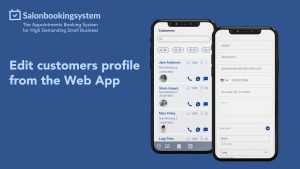
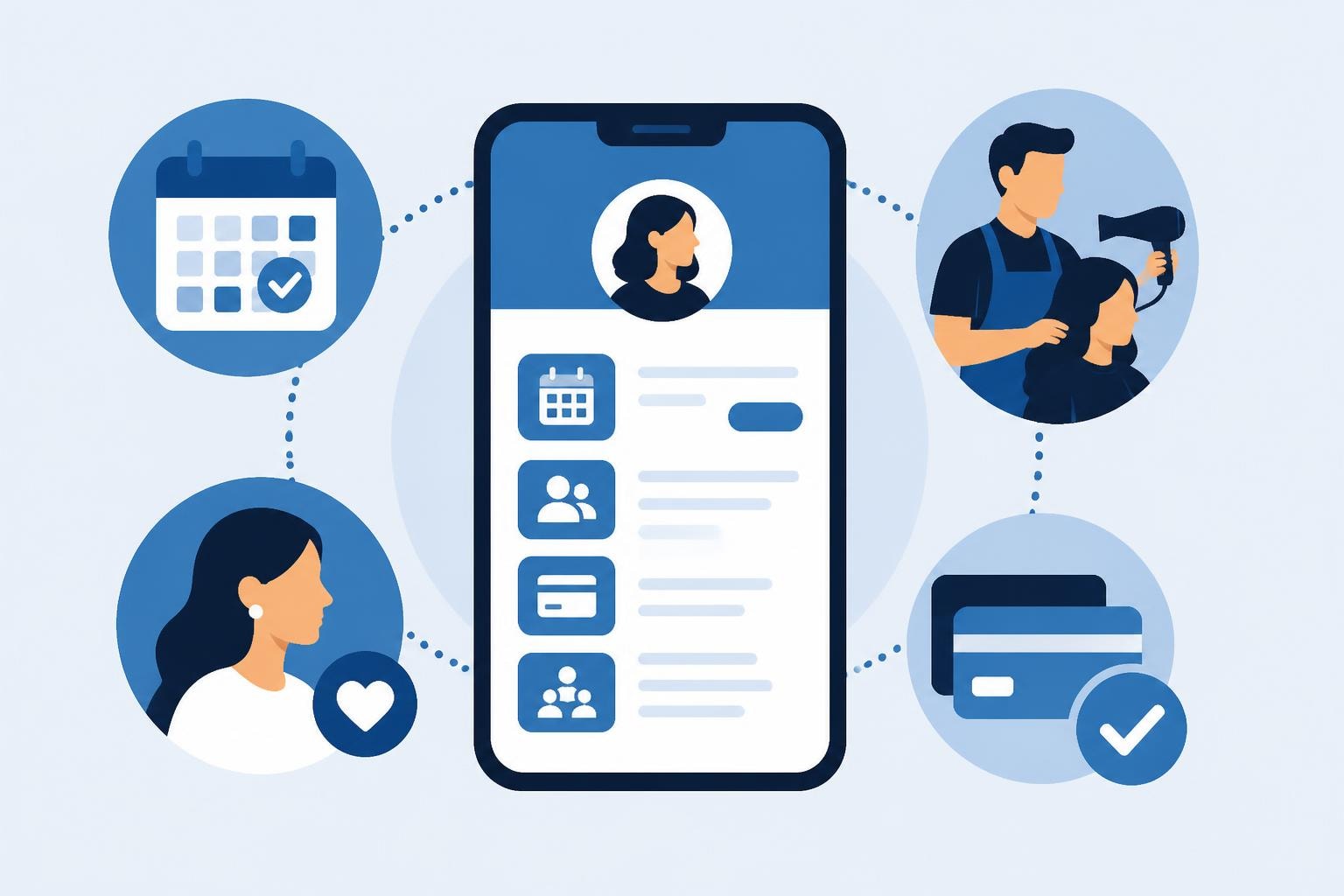
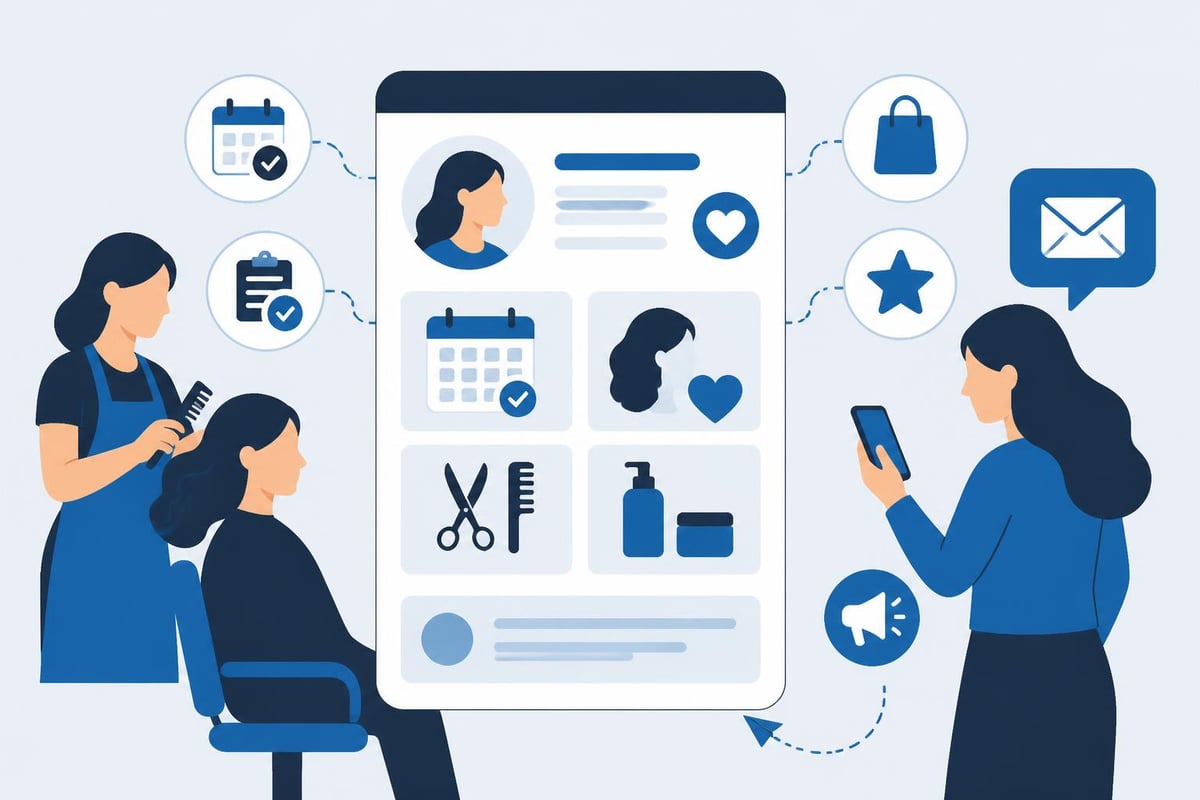
Every client interaction generates valuable data. A robust salon management app captures this information, building comprehensive profiles that enhance service personalization. Client records store contact details, appointment history, service preferences, product purchases, and notes about allergies or sensitivities.
This centralized database enables targeted marketing campaigns. Rather than sending generic promotions, you can identify clients who haven't booked in 60 days or those who regularly purchase specific products. Automated segmentation creates marketing lists based on service history, spending patterns, or booking frequency.
| Client Data Category | Business Application | Example Use Case |
|---|---|---|
| Service History | Personalized recommendations | Suggest complementary treatments based on past bookings |
| Product Purchases | Inventory management | Reorder alerts when favorite products run low |
| Appointment Patterns | Retention strategies | Automated reminders for clients overdue for regular services |
| Preference Notes | Service customization | Remember specific requests like water temperature or music preferences |
Payment Processing and Financial Tracking
Financial management integration distinguishes professional-grade salon management apps from basic schedulers. Built-in payment processing accepts credit cards, digital wallets, and contactless payments directly through the platform. This eliminates separate point-of-sale systems and ensures all financial data flows into unified reporting.
Online payment capabilities extend beyond in-salon transactions. Clients can prepay for appointments, purchase gift certificates, or buy retail products through your booking website. Some platforms support deposit requirements for high-value services, reducing no-show rates while securing revenue.
Financial reporting tools track daily sales, service popularity, staff performance, and product inventory. Revenue reports segment by service category, stylist, or time period, revealing which offerings drive profitability and which underperform.
Operational Benefits That Transform Daily Management
Implementing a salon management app fundamentally changes how your business operates. The efficiency gains compound over time, freeing staff from administrative tasks and reducing errors that frustrate clients.
Reducing No-Shows Through Automated Communication
No-shows and last-minute cancellations cost salons an estimated 10-15% of potential revenue. A salon management app addresses this challenge through multi-channel notification systems that automatically remind clients of upcoming appointments.
Automated reminders typically deploy through:
- Email confirmations sent immediately upon booking
- SMS text messages 24-48 hours before appointments
- Push notifications for clients using your mobile app
- Follow-up messages encouraging rebooking after services
Platforms like Salon Booking System enable customizable notification timing and messaging. You can adjust reminder frequency based on appointment value or client history-sending more reminders for expensive services while keeping communication light for regular weekly clients.
The impact proves measurable. Salons implementing automated reminders report no-show reductions of 30-50%, directly translating to recovered revenue and improved schedule efficiency.
Staff Coordination and Performance Tracking
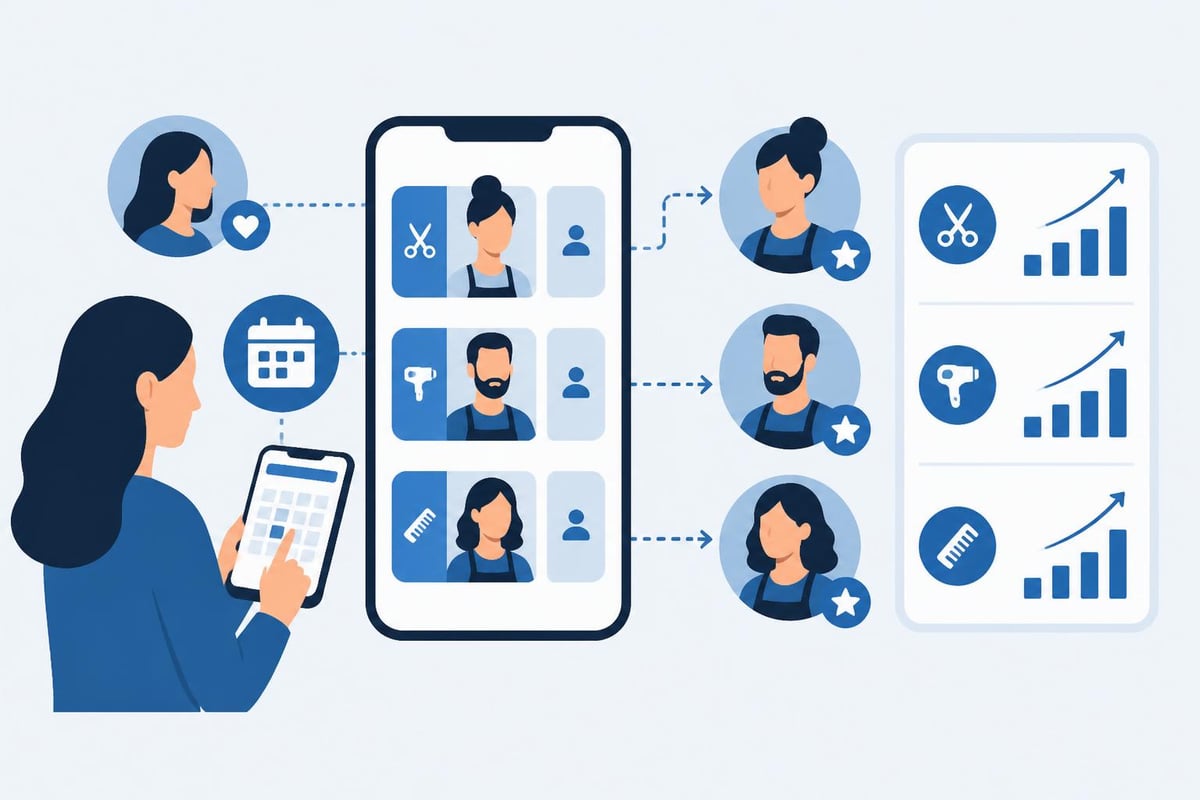
Managing multiple stylists, aestheticians, and support staff requires careful coordination. A salon management app provides each team member with personalized schedules accessible from any device. Staff can view their upcoming appointments, client notes, and service requirements without checking physical schedules or calling the front desk.
Performance analytics reveal individual productivity metrics including:
- Total appointments completed per week
- Average service ticket value
- Client retention rates
- Rebooking percentages
- Product sales per stylist
This data-driven approach supports fair commission structures and identifies training opportunities. When one stylist consistently achieves higher rebooking rates, their techniques can be shared across the team. If another struggles with retail sales, targeted coaching addresses the gap.
Inventory Management and Product Sales
Retail product sales represent significant revenue opportunities for salons, but managing inventory manually creates headaches. A comprehensive salon management app tracks product stock levels, alerts when reordering becomes necessary, and integrates sales data with financial reporting.
When stylists use specific products during services, the system can automatically deduct quantities from inventory. This real-time tracking prevents shortages and identifies fast-moving items worthy of expanded shelf space. Purchase order generation streamlines vendor relationships by automating restock requests.
Integration between services and retail strengthens sales strategies. If a client books a keratin treatment, the app can suggest complementary shampoos or styling products, either automatically adding them to checkout or prompting staff to mention them.
Selecting the Right Salon Management App for Your Business
The market offers dozens of options, each emphasizing different features and pricing models. Understanding your specific needs ensures you select a platform that grows with your business rather than limiting it.
Essential Features vs. Premium Add-Ons
Start by identifying non-negotiable capabilities. Every professional salon management app should include:
- Online booking with real-time availability
- Automated client communications via email and SMS
- Payment processing with PCI compliance
- Client database with service history
- Basic reporting for sales and appointments
- Mobile accessibility for staff and clients
Premium features provide competitive advantages but may exceed the needs of smaller operations. Consider whether your business requires:
- Multi-location management dashboards
- Advanced marketing automation and email campaigns
- Loyalty program integration
- Sophisticated inventory tracking
- Commission calculation and payroll integration
- Custom branded mobile applications
According to research on salon management software solutions, matching features to your operational complexity prevents overpaying for unused capabilities while ensuring core functions meet professional standards.
Evaluating Pricing Models and Total Cost of Ownership
Salon management apps employ various pricing structures, each with distinct advantages and considerations. Understanding total cost of ownership extends beyond monthly subscription fees.
Common pricing approaches include:
- Per-stylist pricing: Monthly fees multiply by the number of staff members using the system
- Flat-rate pricing: Single monthly cost regardless of team size
- Transaction-based pricing: Fees calculated as percentages of payments processed
- Tiered pricing: Features unlock at higher subscription levels
Hidden costs sometimes emerge after implementation. Payment processing fees, SMS message charges, premium support costs, and integration expenses can significantly increase total investment. Request transparent pricing documentation showing all potential charges before committing.
| Pricing Model | Best For | Potential Drawback |
|---|---|---|
| Per-Stylist | Small salons with limited staff | Costs scale directly with team growth |
| Flat-Rate | Large teams or expanding businesses | May pay for unused capacity initially |
| Transaction-Based | New salons with unpredictable volume | Percentage fees can exceed flat rates as business grows |
| Tiered | Businesses wanting flexibility | Feature restrictions may frustrate growth |
Integration Capabilities and Ecosystem Compatibility
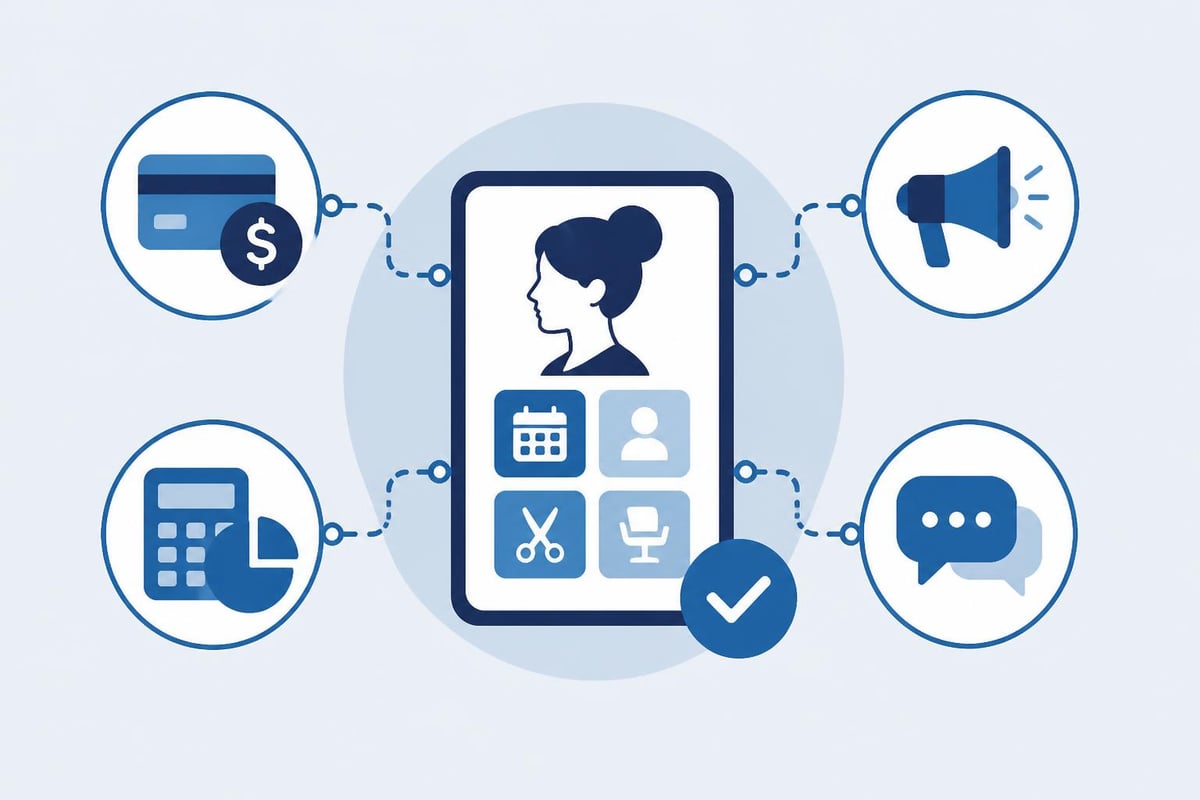
Modern salons rarely operate with a single software tool. Your salon management app should integrate seamlessly with existing systems including accounting software, marketing platforms, and communication tools.
Critical integration points include:
- Accounting software (QuickBooks, Xero) for financial reconciliation
- Email marketing platforms for campaign management
- Social media for automatic posting and reputation management
- Review platforms to solicit feedback and manage online reputation
- Payment processors offering competitive transaction rates
The digital transformation of salon operations increasingly depends on connected ecosystems rather than isolated applications. Evaluate whether potential platforms offer open APIs or pre-built integrations with tools you already use.
Implementation Strategies for Maximum Adoption
Purchasing a salon management app represents just the first step. Successful implementation requires careful planning, staff training, and client communication to ensure smooth transitions and high adoption rates.
Staff Training and Change Management
Resistance to new technology often stems from uncertainty rather than the technology itself. Comprehensive training programs address this challenge by building confidence and demonstrating clear benefits.
Effective training approaches:
- Role-specific sessions focusing on tasks each team member performs
- Hands-on practice with test accounts before live deployment
- Quick reference guides for common tasks and troubleshooting
- Designated super-users who receive advanced training and support colleagues
- Gradual rollout starting with core features before advanced capabilities
Schedule training during slower business periods to minimize service disruptions. Consider bringing in vendor representatives or certified trainers who can answer technical questions and share best practices from other salons.
Document standard operating procedures for the new system. Create step-by-step guides for opening and closing procedures, handling walk-ins, processing returns, and managing waitlists. These resources support consistency and help new hires integrate quickly.
Client Migration and Communication
Transitioning your existing client base to a new booking system requires clear communication and patience. Clients accustomed to calling for appointments may initially resist online booking, while tech-savvy clients will embrace the convenience immediately.
Migration strategies include:
- Advance notification explaining upcoming changes and benefits
- Dual systems temporarily allowing both old and new booking methods
- Incentives for online booking like priority scheduling or small discounts
- In-salon demonstrations helping clients create accounts during visits
- Follow-up support addressing technical issues quickly
Import existing client data carefully, ensuring accuracy and completeness. Verify contact information, merge duplicate records, and update outdated details. Clean data from the start prevents confusion and communication failures.
Advanced Features Driving Competitive Advantage
As salon management apps mature, advanced capabilities separate industry leaders from basic schedulers. Understanding these features helps future-proof your technology investment.
AI-Powered Recommendations and Personalization
Artificial intelligence enhances client experiences through predictive analytics and personalized suggestions. Modern platforms analyze booking patterns, service combinations, and seasonal trends to recommend optimal offerings.
AI applications in salon management include:
- Dynamic pricing adjusting rates based on demand and availability
- Service recommendations suggesting complementary treatments
- Optimal scheduling identifying ideal appointment times based on historical data
- Inventory forecasting predicting product needs before stockouts occur
- Client retention predictions flagging at-risk relationships for intervention
These capabilities leverage the substantial datasets generated through normal operations. The rise of AI-powered platforms represents a significant market trend, with adoption accelerating as businesses recognize measurable ROI from intelligent automation.
Marketing Automation and Client Retention Tools
Acquiring new clients costs 5-25 times more than retaining existing ones, making retention a critical profitability driver. Advanced salon management apps include marketing automation that nurtures client relationships systematically.
Automated marketing campaigns:
- Birthday promotions sending special offers during celebration months
- Win-back campaigns targeting inactive clients with incentives
- Service anniversary messages commemorating first visits or milestones
- Seasonal promotions aligned with holidays and special events
- Review requests automatically sent after positive experiences
Segmentation enables precise targeting. Rather than generic blasts, you can message blonde clients about new color treatments, men about beard grooming services, or bridal party coordinators about wedding packages. This relevance dramatically improves response rates compared to untargeted communications.
Mobile-First Experiences and Self-Service Portals
Client expectations in 2026 center on mobile accessibility and self-service capabilities. Your salon management app should provide full-featured mobile experiences for both clients and staff, not simplified versions of desktop functionality.
Mobile capabilities for clients:
- Complete service menus with descriptions and pricing
- Stylist profiles with photos, specialties, and availability
- Real-time booking with instant confirmation
- Appointment modification and cancellation
- Payment history and receipt access
- Loyalty program tracking and rewards
Mobile tools for staff:
- Schedule viewing and modification
- Client notes and history access
- Point-of-sale transactions
- Commission and performance tracking
- Internal messaging and coordination
- Inventory updates and alerts
Progressive web applications and native mobile apps both serve these needs, though native apps typically provide superior performance and offline functionality. Evaluate which approach best serves your client demographics and technical requirements.
Measuring Success and Optimizing Performance
Implementing a salon management app creates opportunities for data-driven decision making. Tracking key performance indicators reveals what works, what needs adjustment, and where growth opportunities exist.
Critical Metrics for Salon Operations
Effective measurement focuses on metrics that directly impact profitability and client satisfaction. Vanity metrics like total appointments scheduled matter less than conversion rates, retention percentages, and revenue per client.
Essential KPIs include:
| Metric | Calculation | Target Benchmark | Business Impact |
|---|---|---|---|
| Online booking rate | Online bookings ÷ Total bookings | 60-80% | Reduces staff workload, improves efficiency |
| No-show rate | No-shows ÷ Total scheduled | Under 5% | Maximizes revenue, optimizes scheduling |
| Client retention | Returning clients ÷ Total clients | 60-70% annually | Sustainable revenue, lower acquisition costs |
| Average ticket value | Total revenue ÷ Number of transactions | Varies by market | Revenue growth indicator |
| Rebooking rate | Rebooks before leaving ÷ Total appointments | 40-60% | Ensures continuous revenue stream |
Track these metrics monthly, identifying trends and anomalies. Sudden retention drops may indicate service quality issues, while declining average tickets might suggest missed upselling opportunities.
A/B Testing and Continuous Improvement
Your salon management app enables experimentation that refines operations over time. A/B testing compares different approaches to identify optimal strategies.
Testing opportunities include:
- Reminder message timing and wording
- Booking incentive structures
- Service package combinations
- Pricing presentations
- Cancellation policy enforcement
- Staff scheduling patterns
Run tests long enough to gather statistically significant data-typically 4-6 weeks minimum. Change one variable at a time to isolate cause and effect. Document results and implement winning variations permanently.
Addressing Common Implementation Challenges
Despite clear benefits, salon management app adoption faces predictable obstacles. Understanding these challenges and mitigation strategies prevents frustration and ensures successful deployment.
Cost Concerns and ROI Justification
Initial investment in technology can seem daunting, particularly for smaller salons operating on tight margins. However, proper ROI analysis reveals that quality systems pay for themselves through efficiency gains and revenue improvements.
Quantifiable benefits include:
- Reduced no-shows recovering 10-15% of potential revenue
- Decreased phone time freeing staff for revenue-generating activities
- Improved booking efficiency increasing daily appointment capacity by 15-25%
- Enhanced retail sales through integrated recommendations
- Lower marketing costs via automated client communications
Calculate your current costs of manual scheduling, including staff time, missed appointments, and communication expenses. Compare against salon management app fees plus implementation costs. Most salons achieve positive ROI within 3-6 months, with benefits compounding over time.
Some resistance from small salons stems from cost concerns, but financing options, tiered pricing, and trial periods reduce barriers to entry.
Data Security and Privacy Compliance
Client data represents both valuable assets and serious responsibilities. Your salon management app must protect sensitive information including contact details, payment data, and service histories.
Security essentials include:
- PCI DSS compliance for payment processing
- Data encryption both in transit and at rest
- Regular security audits by independent third parties
- GDPR compliance for international client bases
- Backup and recovery procedures preventing data loss
- Access controls limiting information based on staff roles
Verify vendor security credentials before committing. Request documentation of compliance certifications, penetration testing results, and incident response procedures. Understanding data privacy concerns helps you select providers taking protection seriously.
Technical Support and Vendor Reliability
Even the most intuitive salon management app occasionally requires technical support. Evaluate vendor support quality, availability, and responsiveness before making final decisions.
Support considerations:
- Availability hours: Does support match your operating schedule?
- Response times: How quickly do they acknowledge and resolve issues?
- Support channels: Phone, email, chat, or self-service only?
- Training resources: Videos, documentation, webinars, or in-person options?
- Update frequency: Regular improvements or stagnant development?
- User community: Active forums where users share tips and solutions?
Request trial periods or demonstrations that include support interactions. Contact support with test questions, observing response quality and helpfulness. This preview reveals whether the vendor relationship will support long-term success.
Future Trends Shaping Salon Management Technology
The salon management app landscape continues evolving rapidly. Understanding emerging trends helps you select solutions that remain relevant as technology advances and client expectations shift.
Voice Integration and Conversational Booking
Voice assistants increasingly mediate daily tasks, from setting reminders to controlling smart homes. Forward-thinking salon management apps integrate with voice platforms, allowing clients to book appointments through natural conversation.
"Schedule a haircut with Maria next Tuesday afternoon" becomes a simple voice command rather than multi-step online booking. Confirmation, modification, and cancellation follow similar conversational patterns. This frictionless approach particularly appeals to clients multitasking or preferring hands-free interactions.
Contactless Experiences and Touchless Payments
Post-pandemic preferences for minimal physical contact persist, driving demand for touchless interactions throughout the client journey. Modern salon management apps support contactless check-in via QR codes, digital waivers replacing clipboards, and tap-to-pay transactions eliminating signature requirements.
These technologies enhance hygiene perceptions while streamlining operations. Clients appreciate the convenience, and salons benefit from faster processing and reduced paper waste.
Sustainability Tracking and Eco-Conscious Operations
Environmental consciousness influences purchasing decisions across demographics. Some salon management apps now track sustainability metrics including product waste, energy consumption, and eco-friendly service percentages.
Clients increasingly seek businesses aligned with their values. Demonstrating measurable environmental commitments through your booking platform differentiates your salon while supporting legitimate sustainability goals. Features might include carbon footprint calculations, partnerships with green product suppliers, or paperless receipt options.
Selecting and implementing the right salon management app transforms daily operations, enhances client experiences, and drives sustainable business growth through data-driven decision making and operational efficiency. Whether you're managing a single-location boutique salon or coordinating multiple high-volume facilities, the strategic advantages of comprehensive booking and management technology continue expanding as platforms evolve and client expectations rise. Salon Booking System delivers the essential features discussed throughout this guide-from automated notifications and online payments to advanced scheduling rules-in a user-friendly platform trusted since 2016 by salons seeking to streamline operations and boost client satisfaction.