The beauty industry has undergone a remarkable digital transformation over the past decade, with technology reshaping how salons manage their operations and interact with clients. At the heart of this evolution lies the salon booking system, a critical tool that has become indispensable for modern beauty businesses. According to digital transformation statistics in the salon industry, over 74% of salon clients now prefer booking appointments online rather than calling, making digital scheduling no longer optional but essential for competitive success.
Understanding the Core Components of Modern Scheduling Software
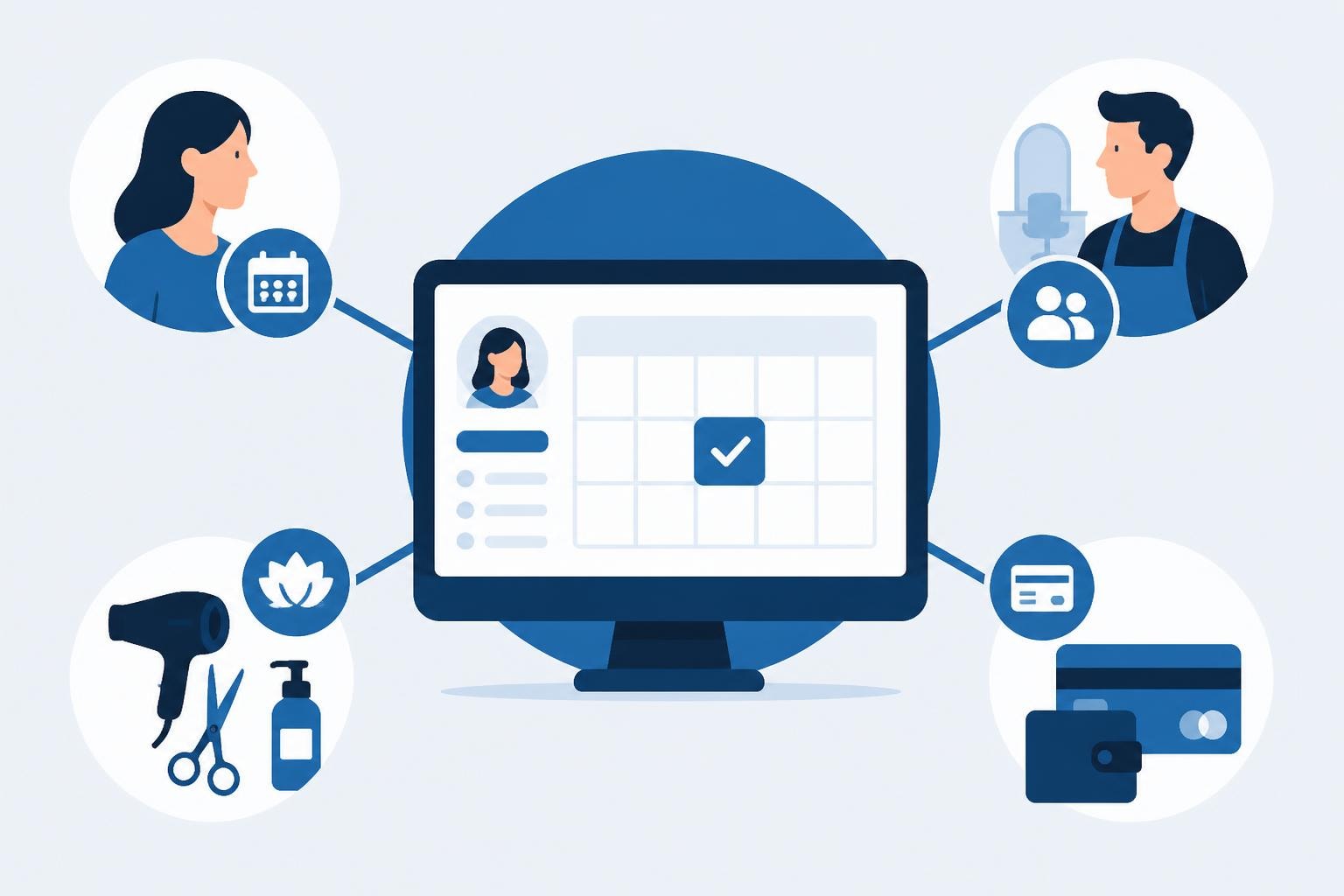
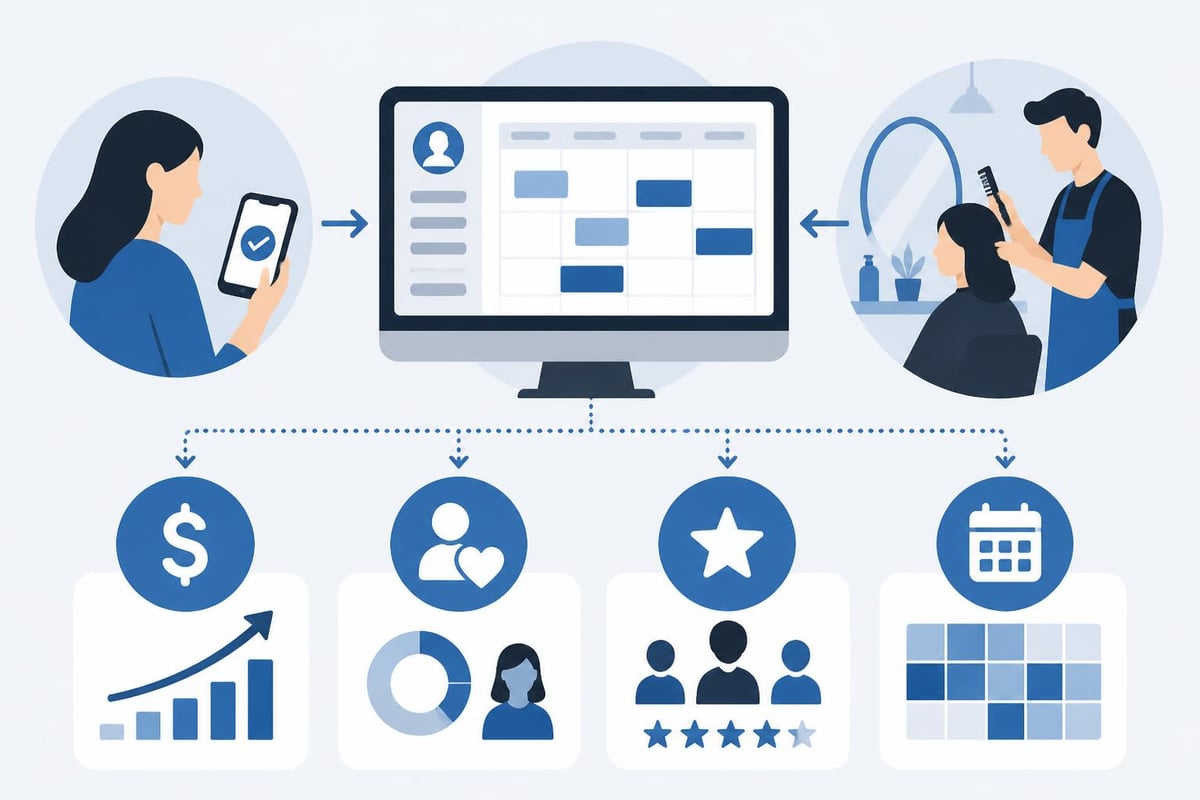
A comprehensive salon booking system encompasses multiple interconnected features that work together to create a seamless operational framework. These components extend far beyond simple calendar management.
Essential Booking Infrastructure
The foundation of any effective scheduling solution includes several critical elements that determine its practical value for daily operations.
Service catalog management allows salons to define treatments with specific durations, pricing tiers, and resource requirements. This granular control ensures accurate scheduling and prevents double-bookings or insufficient time allocation.
Staff availability tracking synchronizes employee schedules, breaks, time-off requests, and skill-based service assignments. Advanced systems recognize that not all stylists perform all services, enabling intelligent matching between client needs and staff expertise.
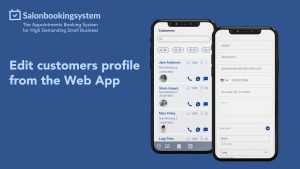
Client profile management maintains comprehensive records including appointment history, service preferences, product purchases, and communication preferences. This data foundation enables personalized experiences and targeted marketing efforts.

Automation and Communication Features
Modern salon booking systems distinguish themselves through intelligent automation that reduces administrative burden while improving client satisfaction.
| Feature Category | Functionality | Business Impact |
|---|---|---|
| Automated Reminders | SMS and email notifications 24-48 hours before appointments | Reduces no-shows by 30-40% |
| Waitlist Management | Automatic client notification when cancellations occur | Maximizes chair utilization and revenue |
| Online Payments | Pre-booking deposits and contactless checkout | Improves cash flow and reduces payment friction |
| Review Requests | Automated follow-up for feedback after service completion | Builds online reputation and social proof |
According to salon scheduling statistics, salons using automated reminder systems experience no-show rates below 5%, compared to industry averages of 15-20% without such technology.
Financial Impact and Revenue Optimization
The business case for implementing professional scheduling software extends well beyond operational convenience. Quantifiable financial benefits make the investment compelling for salons of all sizes.
Direct Revenue Enhancement
Reduced no-shows and cancellations represent one of the most immediate financial impacts. When clients fail to appear for scheduled appointments, salons lose not only the service revenue but also the opportunity cost of filling that time slot with another paying customer. Automated reminders and confirmation requests dramatically reduce this revenue leakage.
Optimized appointment density occurs when scheduling software intelligently fills gaps in the calendar. Rather than leaving 15-minute holes that cannot accommodate services, advanced systems suggest optimal booking times that maximize chair utilization throughout the day.
Upselling opportunities emerge through integrated product recommendations and service package suggestions during the booking process. When clients book a haircut online, the system can prompt them to add a conditioning treatment or color service, increasing average ticket values by 15-25%.
Operational Cost Reduction
Labor efficiency improves measurably when staff members spend less time answering phone calls and managing paper appointment books. Industry data suggests that salons transition 60-70% of bookings to self-service channels after implementing online scheduling, freeing reception staff for higher-value client interactions and retail sales.
Payment processing costs decrease when clients can prepay or settle bills through integrated digital payment systems. This eliminates cash handling risks, reduces credit card processing fees through optimized payment gateways, and accelerates cash flow through deposit requirements for high-value services.
Implementation Strategy and Best Practices
Successfully deploying a salon booking system requires thoughtful planning and systematic execution. The technical installation represents only one component of a broader organizational change.
Pre-Implementation Assessment
Before selecting a platform, conduct a comprehensive audit of your current scheduling processes and pain points:
- Document current booking volume across all channels (phone, walk-in, online)
- Analyze peak demand periods to ensure adequate system capacity
- Identify staff technical proficiency levels to inform training requirements
- Review existing software integrations such as point-of-sale systems and accounting platforms
- Establish baseline metrics including no-show rates, average booking lead time, and client acquisition costs
This assessment provides essential context for vendor selection and success measurement after implementation.
Configuration and Customization
The essential components of a salon booking system must be configured to match your specific business model and service offerings.
Service menu structuring requires careful consideration of treatment durations, including preparation and cleanup time. A 60-minute color service actually requires 75-90 minutes when accounting for consultation, application, processing, and styling. Accurate time allocation prevents scheduling conflicts and client dissatisfaction.
Pricing strategy integration allows for dynamic pricing based on stylist experience level, peak versus off-peak times, and package deals. Some salons charge premium rates for senior stylists or Saturday appointments, which the system should automatically calculate.
Booking rules and restrictions prevent common scheduling problems. These might include minimum advance booking windows for complex services, maximum daily appointments per stylist to prevent burnout, or requirements that certain services must be booked consecutively with specific staff members.
Staff Training and Adoption
Technology implementation fails not from technical inadequacy but from insufficient human adoption. A structured training program addresses this critical success factor.
Role-based training modules ensure each team member learns relevant functionality. Receptionists need expertise in calendar management and customer service features, while stylists primarily need mobile app proficiency for viewing their schedules and updating availability.
Phased rollout approaches reduce overwhelm and allow for iterative improvement. Consider beginning with existing clients before opening online booking to new customers, or starting with simple services before adding complex multi-step treatments.
Champion identification accelerates adoption when one or two tech-savvy staff members become internal experts who provide peer support and troubleshooting assistance.
Client Experience Optimization
The true measure of scheduling software effectiveness lies in enhanced client satisfaction and retention. According to emerging trends in salon booking software, personalized client experiences have become the primary differentiator among competitive salons.
Self-Service Convenience
Modern consumers expect 24/7 booking capability without phone calls or business hour constraints. A robust salon booking system provides this convenience while maintaining service quality standards.
Visual service selection with detailed descriptions, duration estimates, and pricing transparency helps clients make informed decisions without staff assistance. Including before-and-after photos or video demonstrations reduces uncertainty about unfamiliar treatments.
Stylist profiles and selection allow clients to view credentials, specialties, and availability for their preferred service provider. This transparency builds trust and ensures appropriate matching between client expectations and stylist expertise.
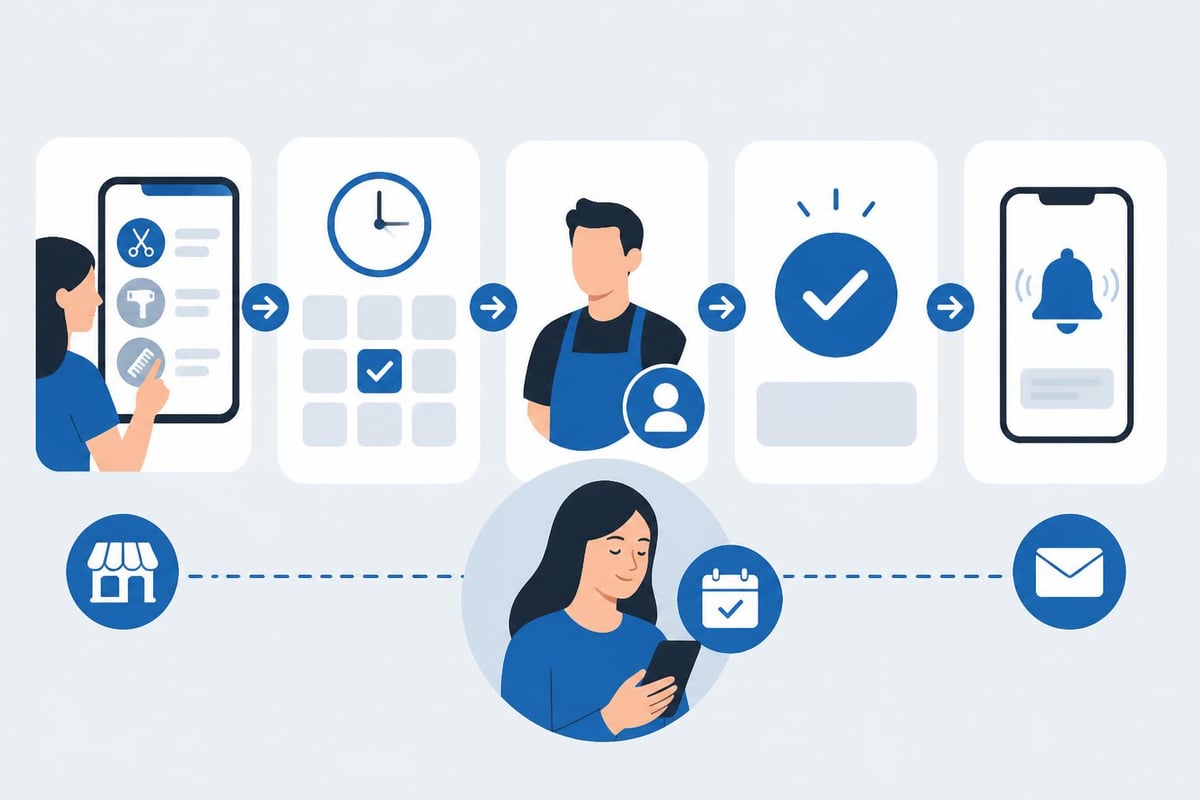
Real-time availability displays eliminate the frustration of callback scheduling or multiple interaction loops. Clients see open time slots instantly and receive immediate confirmation of their booking.
Mobile-First Design Principles
With smartphone usage dominating internet access, mobile responsiveness is non-negotiable. The booking interface must function flawlessly on small screens with touch-based navigation.
Key mobile optimization considerations include:
- Single-column layouts that eliminate horizontal scrolling
- Large touch targets for buttons and selection options
- Minimal text input requirements through dropdown menus and date pickers
- Progressive disclosure that shows information in logical steps rather than overwhelming single screens
- Native app integration for push notifications and offline schedule viewing
Advanced Features and Competitive Differentiation
As salon booking systems mature, advanced capabilities separate basic scheduling tools from comprehensive business management platforms.
Integrated Marketing Automation
Email campaign management transforms appointment data into marketing intelligence. Birthday promotions, re-engagement campaigns for lapsed clients, and service-specific offers can be automatically triggered based on booking patterns and client preferences.
Loyalty program integration rewards repeat business through points accumulation, tiered membership levels, and exclusive booking privileges. Clients who reach certain spending thresholds might receive priority scheduling or special time slot access.
Social media connectivity enables clients to share appointments, reviews, and results directly from the booking platform, creating organic marketing momentum and social proof for prospective clients.
Analytics and Business Intelligence
Data-driven decision making requires robust reporting capabilities that transform raw appointment information into actionable insights.
| Metric Category | Key Performance Indicators | Strategic Application |
|---|---|---|
| Revenue Analytics | Average ticket value, revenue per service category, revenue per stylist | Identify high-performing services and staff, optimize pricing strategy |
| Operational Efficiency | Chair utilization rate, average gap time between appointments, peak demand periods | Staff scheduling optimization, capacity planning |
| Client Behavior | Booking lead time, repeat visit frequency, service migration patterns | Marketing campaign targeting, inventory management |
| Marketing Attribution | New client source tracking, promotional campaign effectiveness, referral conversion rates | Marketing budget allocation, partnership evaluation |
These insights enable salon owners to make evidence-based decisions about staffing levels, inventory purchases, marketing investments, and service menu adjustments.
Multi-Location Management
Salon chains and franchises require centralized oversight with location-specific customization. Enterprise-grade booking systems provide hierarchical management structures where corporate administrators set brand standards while individual locations maintain operational autonomy.
Cross-location booking allows clients to visit any branch location with seamless profile portability. A client who regularly visits the downtown location can easily book at the suburban branch when convenient without recreating their service preferences and payment information.
Consolidated reporting aggregates performance metrics across all locations while enabling location-specific drill-down analysis. This visibility helps franchisors identify best practices at top-performing locations and address operational challenges at underperforming sites.
Common Implementation Challenges and Solutions
Even well-planned technology deployments encounter obstacles. Anticipating these challenges and preparing mitigation strategies increases implementation success rates. Research on common salon booking mistakes reveals recurring patterns across the industry.
Technical Integration Issues
Legacy system compatibility often creates friction when new scheduling software must exchange data with existing point-of-sale, inventory management, or accounting platforms. Prioritize vendors with established API connections to your current systems or those offering comprehensive all-in-one solutions that eliminate integration needs.
Data migration complexities arise when transferring years of client records, appointment history, and service preferences from old systems. Budget adequate time and resources for data cleaning, mapping, and validation to ensure accuracy in the new platform.
Staff Resistance and Change Management
Comfort with existing processes makes some team members reluctant to adopt new tools, especially if they've used manual booking methods for years. Address this resistance through inclusive decision-making processes where staff members contribute to vendor selection and configuration decisions, increasing their ownership of the outcome.
Training time constraints in busy salon environments make comprehensive education challenging. Develop microlearning modules that staff can complete during slow periods, and provide quick-reference guides for common tasks.
Client Transition Management
Communication about new booking channels must be clear, frequent, and multi-modal. Announce the online booking launch through email, social media, in-salon signage, and receipt inserts to ensure all clients receive the message regardless of their preferred communication channel.
Dual-channel support during transition maintains service quality while clients adapt to new processes. Continue accepting phone bookings even after launching online scheduling, gradually encouraging digital adoption through incentives like priority time slots or small discounts for self-service bookings.
Regulatory Compliance and Data Security
Salon booking systems store sensitive client information including contact details, payment methods, and personal preferences. Robust security measures and regulatory compliance protect both the business and its clients.
Data Protection Standards
Payment Card Industry (PCI) compliance is mandatory for any system processing credit card transactions. Ensure your chosen platform maintains PCI DSS certification and uses tokenization to avoid storing actual card numbers in your database.
General Data Protection Regulation (GDPR) requirements apply to salons serving European clients, even if your business is located elsewhere. Features like data portability, the right to be forgotten, and explicit consent tracking must be built into your booking system architecture.
State-specific privacy laws in California, Virginia, and other jurisdictions impose additional obligations regarding data collection, usage disclosure, and consumer rights. Verify that your platform's privacy policy and consent mechanisms satisfy applicable regulations.
Cybersecurity Best Practices
Beyond compliance minimums, proactive security measures protect against data breaches and system compromises:
- Multi-factor authentication for staff access to administrative functions
- Role-based access controls limiting data visibility based on job responsibilities
- Encrypted data transmission using SSL/TLS protocols for all client interactions
- Regular security audits and penetration testing to identify vulnerabilities
- Automated backup systems with geographically distributed storage for disaster recovery
Future Trends and Emerging Technologies
The salon booking system landscape continues evolving as new technologies create fresh possibilities for client engagement and operational efficiency. According to industry analysis, artificial intelligence and predictive analytics represent the next frontier in scheduling optimization.
AI-powered demand forecasting analyzes historical booking patterns, local events, weather forecasts, and social trends to predict appointment demand with increasing accuracy. This enables proactive staffing adjustments and dynamic pricing strategies that maximize revenue during peak periods while maintaining accessibility during slower times.
Virtual consultation integration allows clients to conduct preliminary assessments through video calls before booking in-person services. This proves particularly valuable for color consultations, bridal styling discussions, or complex corrective treatments where understanding client expectations beforehand prevents disappointment and reduces service time.
Augmented reality try-on features help clients visualize potential hairstyles, colors, or treatments before committing to appointments. While still emerging, these tools reduce consultation time and increase client confidence in their service selections.
Voice-activated booking through smart speakers and virtual assistants creates hands-free scheduling convenience. Clients can say "book a haircut at my usual salon for next Saturday morning" and receive available time slot suggestions without opening an app or website.
The integration of AI and advanced simulation technology in the beauty industry demonstrates the broader technological evolution affecting salon operations, though practical implementation of such cutting-edge tools remains primarily in research and high-end facilities.
Vendor Selection Criteria
Choosing the right salon booking system requires systematic evaluation of multiple factors beyond initial cost considerations. A comprehensive comparison of top platforms should examine both immediate needs and long-term scalability.
Functional Requirements Checklist
Prioritize platforms offering these essential capabilities:
- Unlimited appointments and clients without artificial restrictions or tiered pricing based on volume
- Customizable booking rules for complex scheduling scenarios specific to your service mix
- Mobile-responsive client interface that functions identically on smartphones, tablets, and desktop computers
- Two-way calendar synchronization with Google Calendar, Outlook, or Apple Calendar
- Comprehensive reporting suite with exportable data for external analysis
- Flexible cancellation and rescheduling policies with automated waitlist management
- Multi-language support if serving diverse client populations
- Accessibility compliance ensuring clients with disabilities can navigate the booking process
Total Cost of Ownership Analysis
Look beyond advertised monthly subscription rates to calculate true platform costs:
- Base subscription fees per location or user
- Transaction fees on payments processed through the system
- SMS messaging costs for appointment reminders and marketing campaigns
- Setup and training fees for initial implementation
- Integration costs for connecting to existing business systems
- Feature upgrade charges if advanced capabilities require higher-tier plans
Understanding the financial implications of platform economics helps salons make informed vendor selections that align with their budget constraints and growth projections.
Vendor Stability and Support Quality
Company longevity matters when selecting software that will house years of critical business data. Established vendors with proven track records reduce the risk of platform abandonment or service disruptions.
Customer support responsiveness becomes critical when technical issues affect daily operations. Evaluate support channels (phone, email, chat), availability hours, and average response times through trial periods or reference customer interviews.
Product development trajectory indicates whether the platform will keep pace with industry evolution. Review release notes, feature roadmaps, and community feedback to assess whether the vendor actively innovates or maintains legacy code without meaningful enhancement.
Measuring Return on Investment
Quantifying the business impact of a salon booking system justifies the investment and identifies optimization opportunities. Establish baseline metrics before implementation and track these indicators monthly.
Key Performance Indicators
Appointment volume growth measures whether easier booking access increases overall business activity. Compare monthly appointment counts before and after implementation, controlling for seasonal variations.
No-show and cancellation rates should decrease significantly with automated reminders. Calculate the revenue value of reduced no-shows by multiplying prevented missed appointments by average service value.
Labor cost per booking declines when self-service channels replace staff-mediated phone scheduling. Track total labor hours spent on booking-related activities and divide by total appointments scheduled.
Client retention rates improve when booking convenience reduces friction in the relationship. Monitor the percentage of clients booking second, third, and subsequent appointments within defined timeframes.
Online booking adoption percentage indicates client acceptance of the new channel. Track the proportion of appointments booked online versus other methods, with targets of 60-70% online booking within six months.
Continuous Optimization
Software implementation represents the beginning, not the conclusion, of the optimization journey. Regular analysis of booking data reveals refinement opportunities:
- Service duration accuracy adjustments based on actual completion times
- Popular time slot identification for premium pricing or senior stylist allocation
- Underutilized capacity recognition suggesting promotional targeting or service bundling
- Client preference patterns enabling personalized marketing and retention campaigns
Implementing a professional scheduling solution transforms salon operations through automation, data-driven insights, and enhanced client experiences that drive measurable revenue growth. For salon owners seeking a comprehensive platform that balances powerful functionality with intuitive usability, Salon Booking System offers a proven solution trusted by beauty businesses since 2016, combining advanced scheduling rules, integrated payments, and automated client communications into a single platform designed specifically for the unique needs of salons and wellness businesses.