The beauty industry has experienced a dramatic digital transformation over the past decade, with salon apps emerging as essential tools for managing appointments, processing payments, and maintaining client relationships. These specialized software solutions have become the backbone of successful salon operations, replacing traditional paper booking systems and phone-based scheduling. As customer expectations continue to evolve in 2026, salon owners who leverage mobile-first technology gain significant competitive advantages in efficiency, revenue generation, and client retention.
The Current State of Salon Management Technology
The salon management software market has grown substantially, with the global market reaching $1.8 billion in 2024 and projected to continue expanding through 2034. This growth reflects fundamental shifts in how beauty professionals operate their businesses. Cloud-based solutions now dominate the landscape, offering flexibility and accessibility that traditional on-premise systems cannot match.
Key market drivers include:
- Increasing smartphone penetration among salon clients
- Growing demand for 24/7 booking capabilities
- Rising adoption of contactless payment systems
- Need for integrated marketing and customer relationship management
- Desire for real-time business analytics and reporting
The transition to digital management systems isn't merely a technological upgrade. It represents a strategic business decision that impacts every aspect of salon operations, from staff productivity to customer satisfaction metrics.
Understanding the Core Functions of Modern Salon Apps
Today's salon apps serve multiple functions beyond basic appointment scheduling. They act as comprehensive business management platforms that centralize operations under a single interface.
The fundamental capabilities of effective salon apps include appointment management, staff scheduling, client database management, payment processing, inventory tracking, and marketing automation. Each function connects to others, creating an integrated ecosystem that eliminates data silos and reduces manual work.
| Function | Business Impact | Time Saved Weekly |
|---|---|---|
| Automated Booking | Reduces phone interruptions | 8-12 hours |
| Payment Processing | Eliminates manual reconciliation | 3-5 hours |
| Client Notifications | Decreases no-show rates by 30-40% | 4-6 hours |
| Staff Scheduling | Optimizes labor allocation | 2-4 hours |
| Inventory Management | Prevents stockouts and overstocking | 2-3 hours |
Selecting the Right Solution for Your Salon
Choosing appropriate salon apps requires careful evaluation of your specific business needs, budget constraints, and growth objectives. Not all solutions offer the same features, and price points vary dramatically across the market.
Critical Selection Criteria
Business size and complexity determine which features matter most. A single-chair operation requires different functionality than a multi-location salon chain. Consider your current client volume, number of service providers, and expansion plans when evaluating options.
Integration requirements play a crucial role in long-term success. Your salon app should connect seamlessly with existing tools such as accounting software, marketing platforms, and payment processors. Data silos create inefficiencies that undermine the benefits of digital management.
Mobile accessibility has become non-negotiable in 2026. Both staff and clients expect full functionality through smartphone applications, not just desktop interfaces. Test the mobile experience thoroughly before committing to any platform.
The salon management software market faces challenges including cost concerns for small businesses and data privacy considerations that affect vendor selection. Understanding these industry-wide issues helps you ask better questions during the evaluation process.
Implementation Timeline and Change Management
Transitioning to new salon apps involves more than technical setup. Successful implementations require structured change management processes that address staff training, client communication, and data migration.
Week 1-2: Planning and Preparation
- Audit current processes and pain points
- Define success metrics and KPIs
- Select implementation team members
- Create client communication plan
Week 3-4: System Configuration
- Import client database and service menu
- Configure scheduling rules and policies
- Set up payment processing integration
- Customize notification templates
Week 5-6: Staff Training and Testing
- Conduct hands-on training sessions
- Run parallel operations with old system
- Gather staff feedback and adjust workflows
- Perform end-to-end transaction testing
Week 7-8: Client Onboarding and Launch
- Notify clients about new booking methods
- Provide tutorial resources and support
- Monitor system performance and user adoption
- Address issues and optimize configurations
Maximizing Revenue Through Smart Scheduling Features
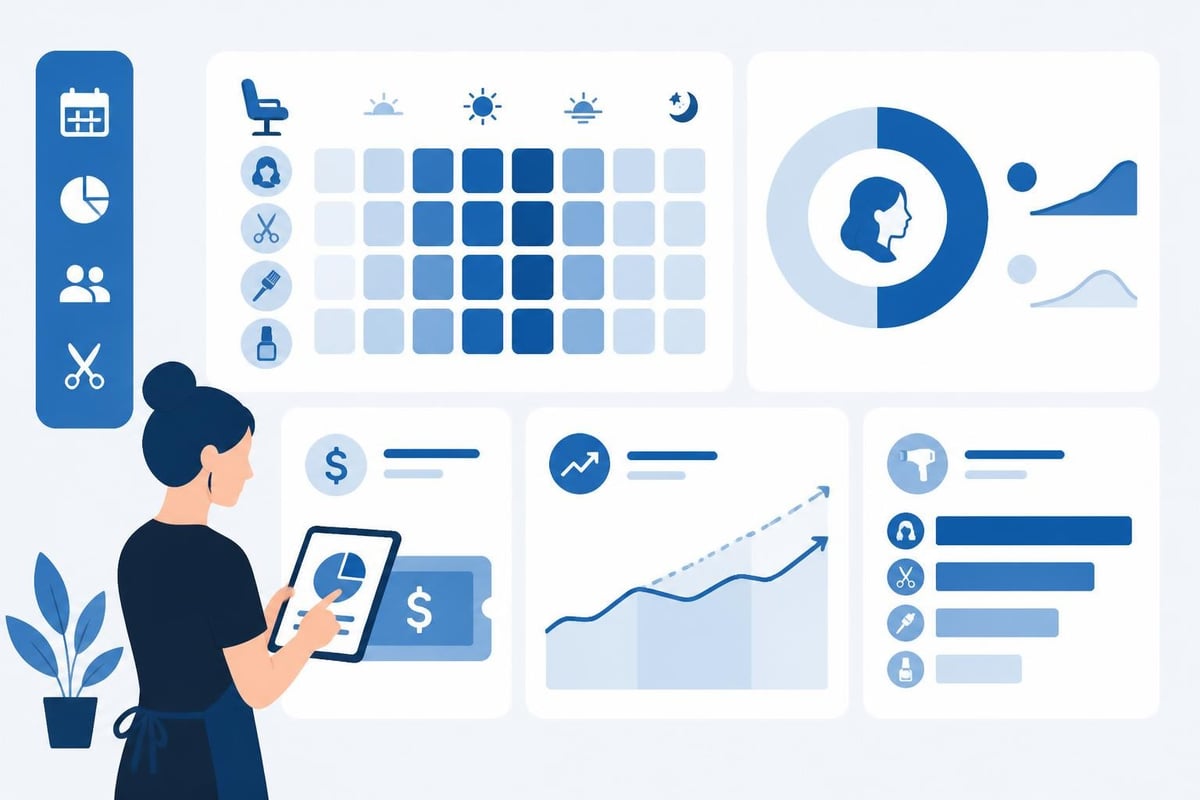
Advanced scheduling capabilities within salon apps directly impact revenue generation. Strategic use of these features optimizes chair utilization, reduces gaps between appointments, and captures booking opportunities that traditional systems miss.
Dynamic Pricing and Peak Time Management
Implementing variable pricing based on demand patterns represents a sophisticated revenue strategy. Salon apps enable you to charge premium rates during high-demand periods while offering discounts during slower times to maintain consistent utilization.
Analysis of booking patterns reveals specific opportunities for revenue optimization. Review your historical data to identify peak hours, seasonal trends, and service-specific demand fluctuations. Configure your system to automatically adjust availability and pricing recommendations based on these insights.
Revenue optimization strategies include:
- Buffer time automation that prevents double-booking while maximizing daily capacity
- Service bundling recommendations that increase average ticket size
- Waitlist management that fills last-minute cancellations
- Deposit requirements that reduce no-show financial impact
- Upsell prompts at booking and check-in touchpoints
Reducing No-Shows and Improving Client Retention
No-shows represent one of the most significant revenue drains for salon businesses, typically accounting for 15-20% of scheduled appointments without intervention. Salon apps address this challenge through automated reminder systems and strategic booking policies.
The most effective salon scheduling best practices include multi-channel notification sequences sent at strategic intervals before appointments. Research indicates that three-touch reminder sequences reduce no-shows by approximately 35-40% compared to single reminders.
Building an Effective Reminder Strategy
| Reminder Timing | Channel | Content Focus | Conversion Impact |
|---|---|---|---|
| 7 days before | Appointment details, add-on services | 12% reduction in cancellations | |
| 48 hours before | SMS | Confirmation request, rescheduling link | 18% reduction in no-shows |
| 2 hours before | Push notification | Final reminder, arrival instructions | 8% additional improvement |
Customize reminder content based on client segments and appointment types. First-time clients benefit from additional information about parking, arrival time, and what to expect. Regular clients prefer concise confirmations with one-click options.
Implementing Smart Cancellation Policies
Salon apps enable enforcement of cancellation policies that protect revenue without creating friction for legitimate schedule changes. Configure graduated policies that distinguish between advance notice cancellations and last-minute no-shows.
Policy framework examples:
- Cancellations with 48+ hours notice: No penalty, full flexibility
- Cancellations with 24-48 hours notice: Optional rescheduling credit
- Cancellations under 24 hours: 50% service charge
- No-shows without notification: Full service charge
Communicate these policies clearly during the booking process and in confirmation messages. Transparency builds trust while establishing professional expectations.
Leveraging Client Data for Personalized Experiences
Modern salon apps capture detailed client information that enables personalization at scale. This data transforms transactional relationships into ongoing engagements that drive loyalty and lifetime value.
Creating Comprehensive Client Profiles
Effective client profiles extend beyond basic contact information. Document service history, product preferences, pricing sensitivity, appointment patterns, and personal notes that enable customized experiences.
Essential profile elements include:
- Complete service history with dates, stylists, and formulas used
- Product purchase records and preferences
- Communication preferences and opt-in status
- Special considerations (allergies, sensitivities, accessibility needs)
- Birthday and anniversary dates for celebration marketing
- Referral source and relationship network
This information enables staff to deliver personalized service without relying on memory. New team members can provide continuity when serving existing clients, maintaining relationship quality during staff transitions.
Automated Marketing Campaigns Based on Client Behavior
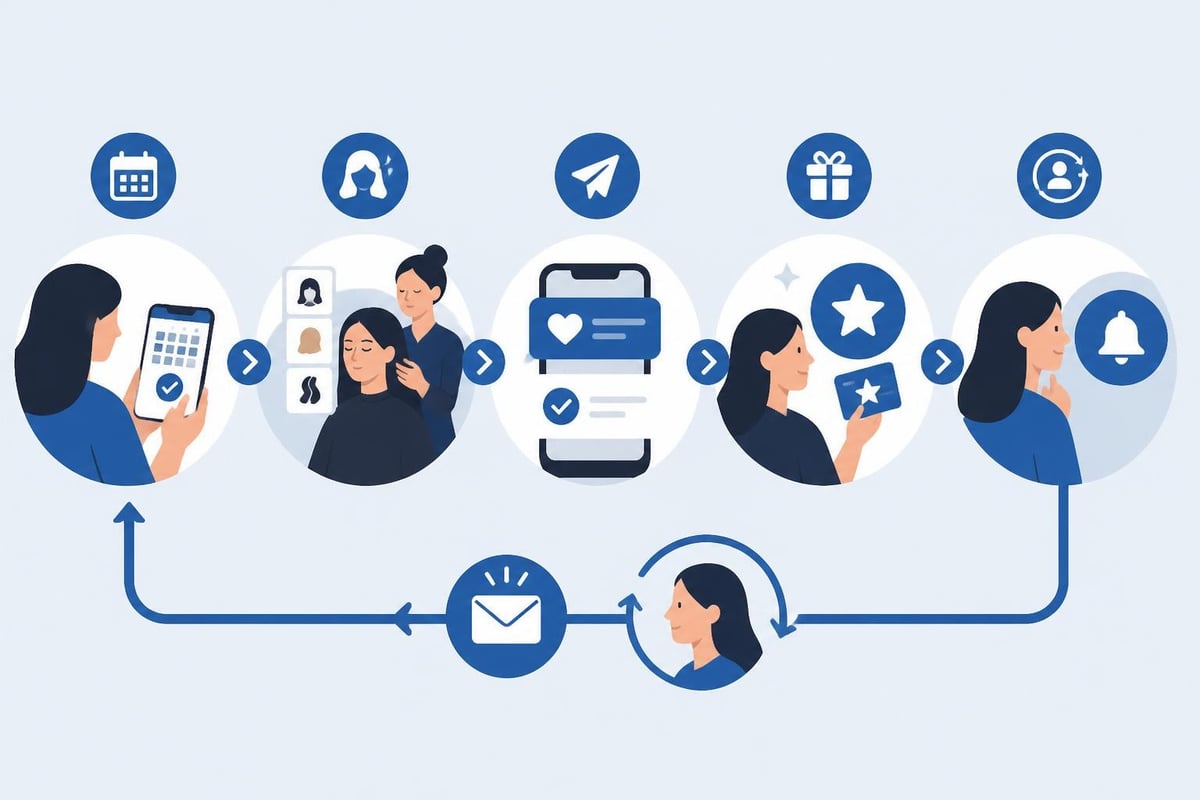
Salon apps with integrated marketing automation trigger targeted communications based on specific client actions or inactions. These campaigns operate continuously without manual intervention, nurturing relationships and recovering dormant clients.
High-performing automation sequences:
-
Post-appointment follow-up (sent 24 hours after visit)
- Request feedback and online reviews
- Recommend complementary services
- Provide at-home care instructions
-
Re-engagement campaign (triggered after 6-8 weeks without booking)
- Remind clients about recommended service intervals
- Offer limited-time returning client incentives
- Highlight new services or team members
-
Birthday recognition (sent 1 week before birthday)
- Provide birthday discount or complimentary service
- Enable easy gift card purchases for friends
- Create shareable social media content
-
Product replenishment reminder (based on typical usage rates)
- Alert clients when retail products likely need replacement
- Offer online ordering with in-salon pickup
- Suggest product upgrades or alternatives
Staff Management and Performance Optimization
Salon apps provide workforce management tools that improve scheduling fairness, track individual performance, and optimize labor costs relative to revenue generation.
Equitable Appointment Distribution
Commission-based compensation models require transparent appointment allocation systems. Configure your salon app to distribute bookings fairly among qualified team members while respecting client preferences for specific stylists.
Distribution strategies include:
- Round-robin assignment for walk-ins and new clients
- Skills-based routing for specialized services
- Preference matching for returning clients
- Load balancing to prevent overwhelming popular stylists
- Training opportunity creation for junior team members
Track distribution metrics weekly to identify imbalances and adjust algorithms. Fairness perceptions directly impact team morale and retention.
Performance Analytics and Development
Individual performance dashboards within salon apps quantify productivity, client satisfaction, and revenue contribution. Use these metrics for coaching conversations, compensation decisions, and career development planning.
| Performance Metric | Measurement Method | Target Benchmark |
|---|---|---|
| Client retention rate | Repeat bookings within 90 days | 65-75% |
| Average ticket value | Total revenue / appointments | $75-125 |
| Service time efficiency | Actual vs. scheduled duration | 95-105% |
| Product attachment rate | Retail sales / services performed | 25-35% |
| Online review generation | Reviews received / appointments | 8-12% |
Share performance data transparently with team members. When stylists understand how they compare to benchmarks and peers, they become motivated to improve specific metrics.
Payment Processing and Financial Management
Integrated payment processing within salon apps eliminates reconciliation headaches while providing financial insights that inform business decisions. Modern systems support multiple payment methods and automate accounting tasks that previously required manual effort.
Supporting Diverse Payment Preferences
Client payment preferences vary significantly by demographic and geographic factors. Comprehensive salon apps accept credit cards, debit cards, digital wallets, gift cards, loyalty points, and account credits through a unified interface.
Payment feature priorities:
- Contactless tap-to-pay options for hygiene-conscious clients
- Saved payment methods for frictionless checkout
- Split payment capabilities for shared services
- Automatic gratuity calculation and distribution
- Flexible deposit and prepayment configurations
Processing fees vary by payment type and processor. According to market analysis from Industry Research, integrated payment systems reduce processing costs by 0.3-0.5% compared to standalone terminals through negotiated rates and reduced PCI compliance complexity.
Financial Reporting and Business Intelligence
Real-time financial dashboards replace monthly accounting cycles with continuous visibility into revenue trends, expense patterns, and profitability metrics. This immediacy enables rapid response to emerging opportunities or challenges.
Generate custom reports that answer specific business questions: Which services generate the highest margins? What times of day produce peak revenue? Which marketing campaigns drive the most valuable clients? How do seasonal patterns affect cash flow?
Critical financial reports include:
- Daily sales summary with category breakdowns
- Service performance analysis comparing revenue and time investment
- Stylist productivity rankings and commission calculations
- Client lifetime value segmentation
- Inventory turnover and cost of goods sold
- Marketing ROI by campaign and channel
- Cash flow forecasting based on booking pipeline
Security, Privacy, and Compliance Considerations
Salon apps store sensitive client information including contact details, payment methods, and sometimes health-related data. Robust security measures protect this information while maintaining regulatory compliance.
Data Protection Requirements
Privacy regulations vary by jurisdiction, but best practices remain consistent globally. Choose salon apps that implement encryption for data in transit and at rest, maintain regular security audits, and provide granular access controls for staff members.
Essential security features:
- Role-based permissions limiting data access by job function
- Audit trails documenting who accessed what information when
- Automatic logout after inactivity periods
- Two-factor authentication for administrative accounts
- Regular automated backups with disaster recovery capabilities
- PCI DSS compliance for payment card processing
Review vendor security certifications and compliance documentation before selecting a platform. The market report from Research and Markets identifies data privacy concerns as a significant consideration for salon owners evaluating management software options.
Client Consent and Communication Preferences
Maintain detailed records of client communication preferences and consent status. Privacy regulations require documented opt-in for marketing messages and clear mechanisms for preference updates or complete opt-out.
Configure your salon app to respect these preferences automatically. Tag clients who have requested limited contact, opted out of specific channels, or withdrawn consent entirely. Violating communication preferences damages relationships and potentially triggers regulatory penalties.
Future Trends Shaping Salon Technology
The salon app landscape continues evolving rapidly, with emerging technologies creating new capabilities and competitive dynamics. Understanding upcoming trends helps you plan strategic investments and avoid platforms approaching obsolescence.
Artificial Intelligence and Predictive Features
AI-powered salon apps analyze historical patterns to generate predictive insights about client behavior, optimal pricing, inventory needs, and staffing requirements. These capabilities move beyond descriptive reporting to prescriptive recommendations.
AI applications in development:
- Demand forecasting for dynamic pricing and staff scheduling
- Automated response systems for common booking inquiries
- Personalized service recommendations based on client history
- Image recognition for consultation documentation
- Churn prediction identifying at-risk client relationships
Early adopters of AI-enhanced salon apps report 12-18% revenue improvements through better inventory management, reduced no-shows, and optimized pricing strategies.
Augmented Reality Consultations
Virtual try-on technology enables clients to preview hair colors, styles, and treatments before committing to services. Integration of AR capabilities within booking flows increases conversion rates while managing client expectations.
These features address the primary barrier to trying new services: uncertainty about results. When clients visualize outcomes with reasonable accuracy, they become more willing to book higher-value transformative services rather than maintaining conservative choices.
Ecosystem Integration and Open APIs
Modern salon apps increasingly function as platforms rather than standalone applications. Open APIs enable connections with specialized tools for specific functions like advanced marketing automation, accounting systems, or inventory management.
This architectural approach provides flexibility to construct best-of-breed technology stacks. Rather than accepting mediocre functionality across all features, you can integrate specialized tools while maintaining centralized data and workflows.
Salon apps have evolved from basic scheduling tools into comprehensive business management platforms that drive efficiency, revenue growth, and client satisfaction. The strategic selection and implementation of these systems directly impacts your competitive position in an increasingly digital beauty industry. Salon Booking System provides the comprehensive features, intuitive interface, and reliable performance that salon professionals need to thrive in 2026, with proven solutions for appointment management, payment processing, client communications, and business analytics that have served the industry since 2016.