The spa industry has undergone a significant digital transformation over the past decade, with client expectations evolving beyond traditional phone-based booking systems. Modern spa guests demand convenience, transparency, and immediate access to appointment scheduling. For spa owners and managers in 2026, implementing robust online scheduling software for spa operations has become essential rather than optional, directly impacting revenue, client retention, and operational efficiency.
The Business Case for Digital Spa Scheduling
Spa businesses that rely exclusively on phone bookings face measurable disadvantages in today's competitive market. According to research from the International Spa Association, 67% of spa clients prefer booking appointments online rather than calling, and this percentage increases to 82% among millennials and Gen Z demographics. Missing these booking opportunities translates directly to lost revenue.
The financial impact extends beyond missed bookings. Manual scheduling consumes approximately 8-12 hours weekly for a mid-sized spa with three to five treatment rooms, representing significant labor costs that could be redirected toward client-facing activities. Additionally, phone-based systems lack the automated reminder functionality that reduces no-shows, which cost the spa industry an estimated $4.7 billion annually in 2025.
Key business benefits of digital scheduling include:
- Revenue recovery through 24/7 booking availability
- Reduced administrative labor costs by 40-60%
- No-show reduction of 30-45% through automated reminders
- Improved staff utilization and treatment room optimization
- Enhanced data collection for marketing and client retention strategies
Essential Features in Online Scheduling Software for Spa Businesses
Selecting the right scheduling platform requires understanding which features deliver measurable operational improvements. Not all scheduling solutions accommodate the unique requirements of spa environments, where treatment durations vary, specialized equipment must be coordinated, and multiple service providers need synchronized calendars.
Real-Time Treatment Room and Therapist Management
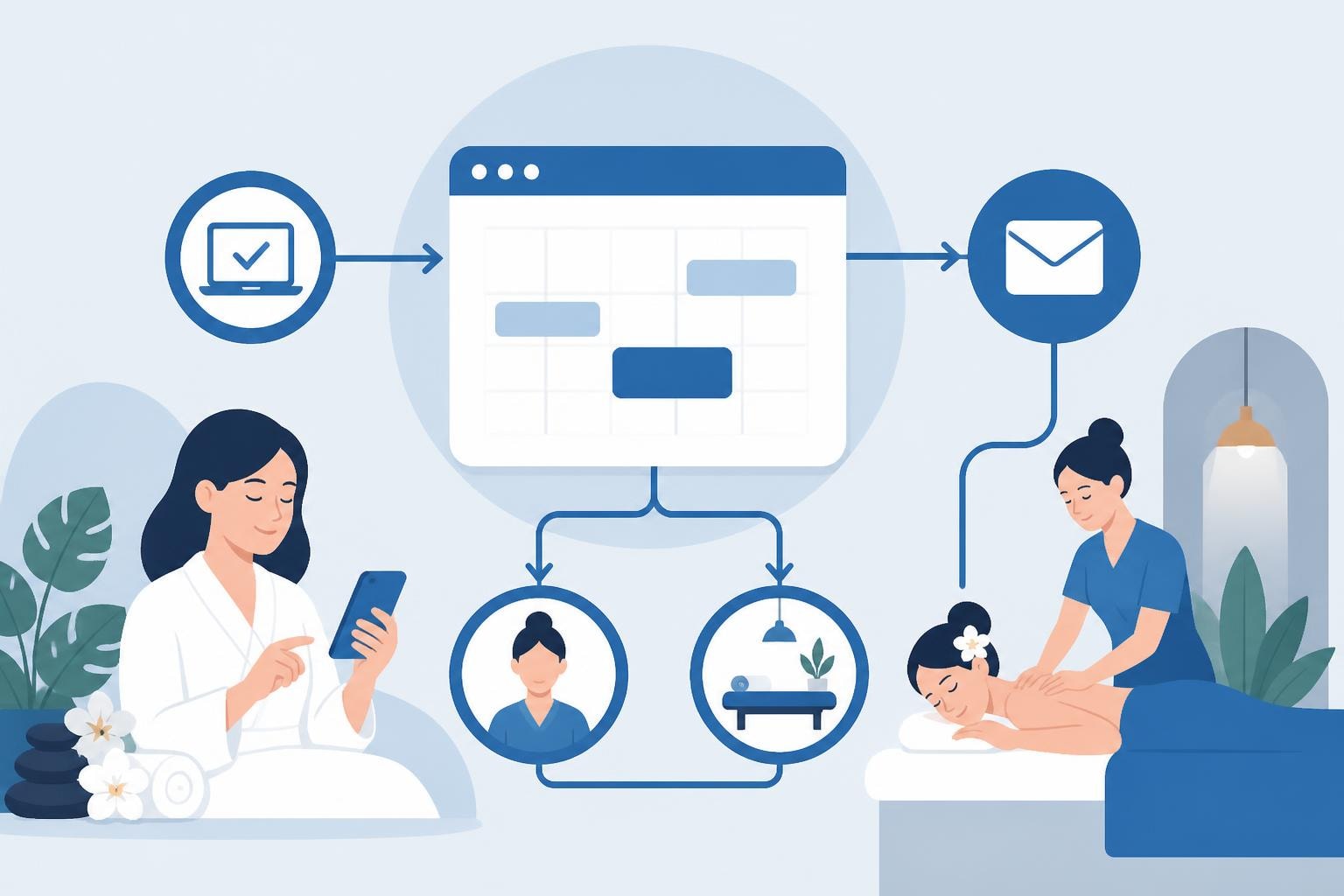
Spa scheduling differs fundamentally from standard appointment booking because it requires coordinating three variables simultaneously: service provider availability, treatment room capacity, and specialized equipment access. Effective spa booking software must prevent double-bookings while maximizing facility utilization.
Advanced scheduling systems display real-time availability across all resources, automatically blocking time slots when rooms or therapists reach capacity. This prevents the common scenario where a client books a massage but no treatment room remains available during that time slot. The software should also account for setup and cleanup time between appointments, ensuring quality service delivery.
Service-Specific Booking Configurations
Different spa treatments require different scheduling parameters. A 30-minute express facial has entirely different resource requirements than a 90-minute hot stone massage or a four-hour spa package. Your online scheduling software for spa services must accommodate these variations through customizable service settings.
| Feature | Basic Systems | Advanced Spa Systems |
|---|---|---|
| Variable appointment duration | Yes | Yes |
| Buffer time between services | Limited | Fully customizable |
| Multi-service package booking | No | Yes |
| Equipment/room assignment | Manual | Automated |
| Therapist skill-based routing | No | Yes |
| Seasonal pricing rules | Limited | Comprehensive |
Professional spa scheduling platforms allow you to define specific parameters for each service: duration, required resources, pricing variations, and eligible providers. This ensures that when a client books a couples massage, the system automatically reserves two therapists and a couples treatment room for the appropriate duration.
Client Self-Service and Mobile Accessibility
Modern clients expect to manage their spa appointments independently without phone calls or email exchanges. Research published in the Journal of Service Management indicates that 73% of service industry clients prefer businesses offering self-service booking options. This preference has intensified since 2020, making mobile-responsive booking interfaces essential.
Your scheduling platform should provide clients with intuitive self-service capabilities:
- Browse available services with detailed descriptions and pricing
- View real-time availability across multiple days and service providers
- Select preferred therapists or request the next available provider
- Add special requests or health considerations to appointments
- Modify or cancel bookings within policy parameters
- Manage recurring appointments for regular treatments
Mobile optimization extends beyond responsive design. The booking process should require minimal clicks and information entry, with smart features like saved client profiles, one-click rebooking of previous services, and integrated digital payment processing.
Automation Capabilities That Transform Spa Operations
The true value of online scheduling software for spa businesses emerges through intelligent automation that eliminates repetitive manual tasks while improving client communication and reducing revenue loss.
Strategic Reminder and Confirmation Sequences
No-shows and last-minute cancellations create costly gaps in spa schedules. When a therapist sits idle due to a missed appointment, the spa loses not only the treatment revenue but also the opportunity to serve another client. Industry data shows that appointment reminder systems reduce no-shows by 38% on average, with multi-channel reminder strategies achieving even higher success rates.
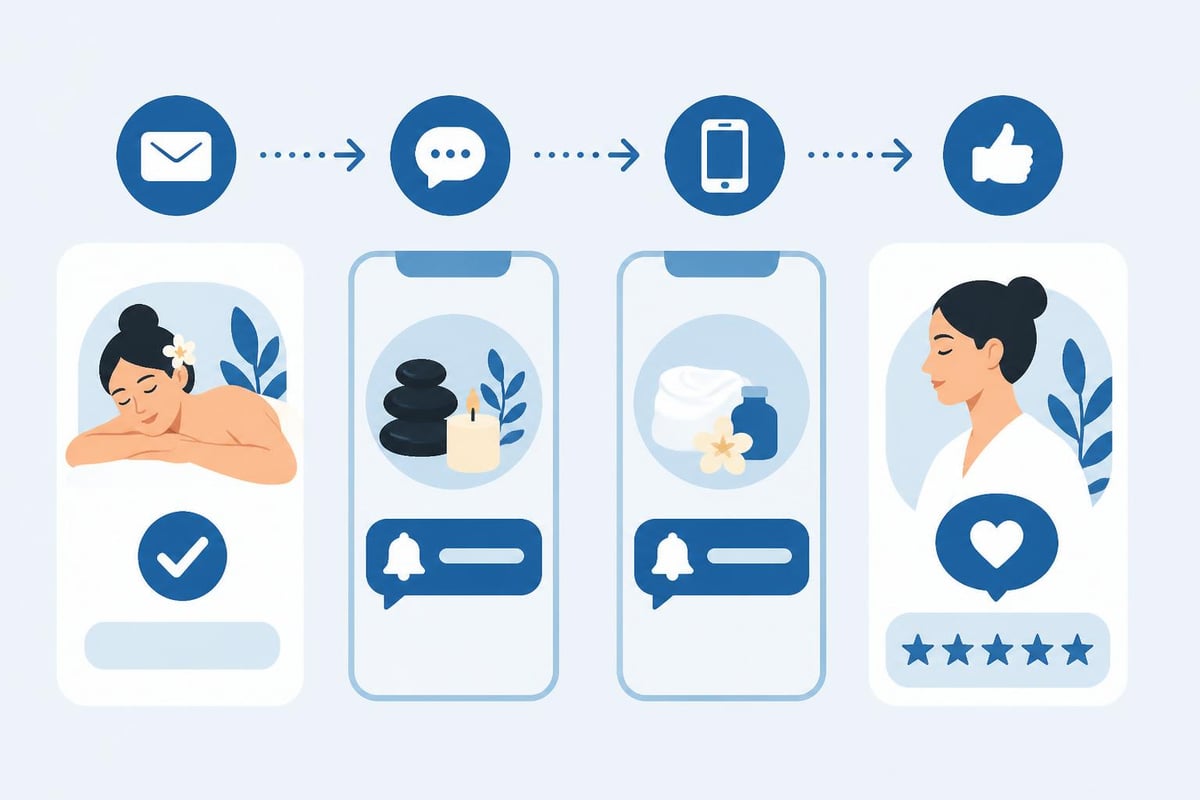
Effective reminder automation includes multiple touchpoints:
- Immediate booking confirmation via email and SMS
- 48-hour advance reminder with appointment details and directions
- 24-hour final reminder with option to confirm or reschedule
- 2-hour day-of reminder for same-day bookings
- Post-appointment thank-you message with rebooking incentive
Advanced platforms allow customization of reminder timing, content, and delivery channels based on client preferences. Some clients prefer text messages exclusively, while others want email confirmations with calendar attachments. Accommodation of these preferences improves client satisfaction and reminder effectiveness.
Intelligent Waitlist Management
Treatment slots become available through cancellations, but manually tracking and filling these openings consumes significant staff time. Automated waitlist functionality converts cancellations into revenue opportunities without administrative burden. Best practices for appointment management emphasize automated waitlist systems as critical revenue optimization tools.
When a cancellation occurs, the system immediately notifies waitlisted clients via their preferred communication channel, offering the newly available time slot on a first-come basis. This automation typically fills 60-75% of cancelled appointments within two hours, dramatically reducing schedule gaps.
Pre-Appointment Forms and Health Questionnaires
Spa treatments often require health and preference information before service delivery. Traditional paper intake forms create delays during check-in and make information difficult to access during subsequent visits. Digital pre-appointment forms streamline this process while improving data quality and accessibility.
Online scheduling software for spa operations should trigger customizable intake forms immediately after booking, allowing clients to complete health questionnaires, allergy disclosures, and treatment preferences from home. Staff receive completed forms before the appointment, enabling personalized service preparation and eliminating check-in delays.
Integration Requirements for Comprehensive Spa Management
Scheduling systems don't operate in isolation. Effective spa management requires coordination between appointment booking, point-of-sale transactions, inventory management, and client relationship management. Your scheduling platform should integrate seamlessly with these operational components.
Payment Processing and Deposit Collection
Requiring deposits or prepayment for appointments significantly reduces no-shows while improving cash flow. Research from the service industry indicates that deposits reduce no-show rates by an additional 23% beyond reminder systems alone. Your online scheduling software for spa bookings should support flexible payment policies.
Essential payment capabilities include:
- Secure deposit collection during online booking
- Full prepayment options for packages and special treatments
- Stored payment methods for regular clients
- Automated refund processing for cancellations within policy
- Integration with major payment processors (Stripe, Square, PayPal)
- Compliance with PCI-DSS security standards
Client Relationship Management Integration
Appointment history represents valuable data for personalization and marketing. When scheduling software integrates with CRM systems, spas can leverage booking patterns to improve service delivery and retention. A client who books deep tissue massages monthly might appreciate targeted communications about new massage therapists or related services.
CRM integration enables sophisticated client segmentation and automated marketing workflows. You can identify clients who haven't booked recently and trigger personalized reactivation campaigns, or recognize high-value clients for VIP treatment and exclusive offers.
Multi-Provider Coordination for Complex Spa Environments
Larger spas and wellness centers face additional scheduling complexity when managing multiple service providers with varying specialties, schedules, and service capabilities. Managing multiple service providers requires sophisticated calendar coordination and resource allocation.
Provider-Specific Calendars and Availability
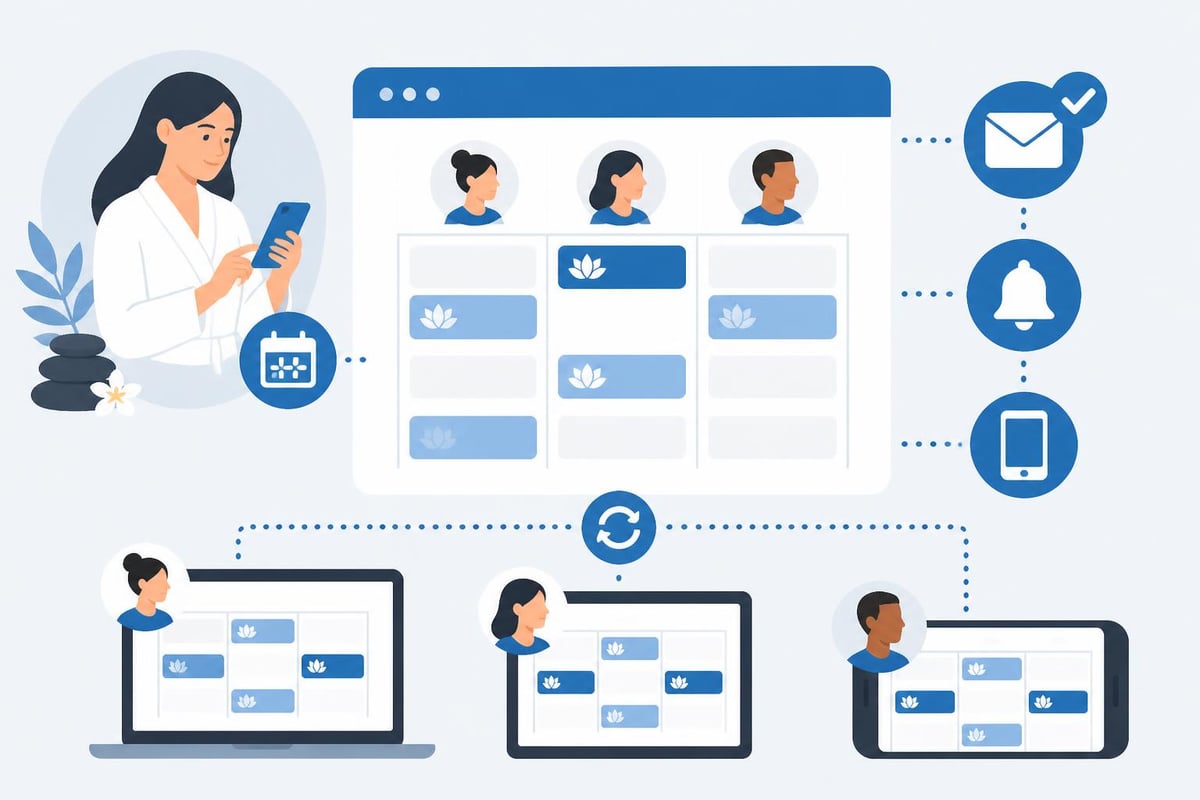
Each therapist maintains unique availability patterns based on employment status, skills, and personal schedules. Part-time providers work specific days, while some therapists specialize in particular treatments. Your scheduling system must accommodate these variations while presenting clients with accurate, aggregated availability.
Advanced platforms support:
- Individual provider schedule management with recurring availability patterns
- Time-off requests and approval workflows
- Service-specific provider eligibility (only certified therapists for specific treatments)
- Provider preference settings allowing clients to book favorite therapists
- Automatic load balancing to distribute appointments equitably among providers
Skills-Based Routing and Service Matching
Not every provider can deliver every service. Advanced certifications, specialized training, and equipment proficiency create natural service restrictions. When a client books a prenatal massage or medical-grade facial, the system must automatically filter providers to only those qualified for that specific treatment.
This capability prevents booking errors that create service delivery problems and potential client dissatisfaction. It also optimizes provider utilization by ensuring specialized skills match client needs.
Data Analytics for Informed Business Decisions
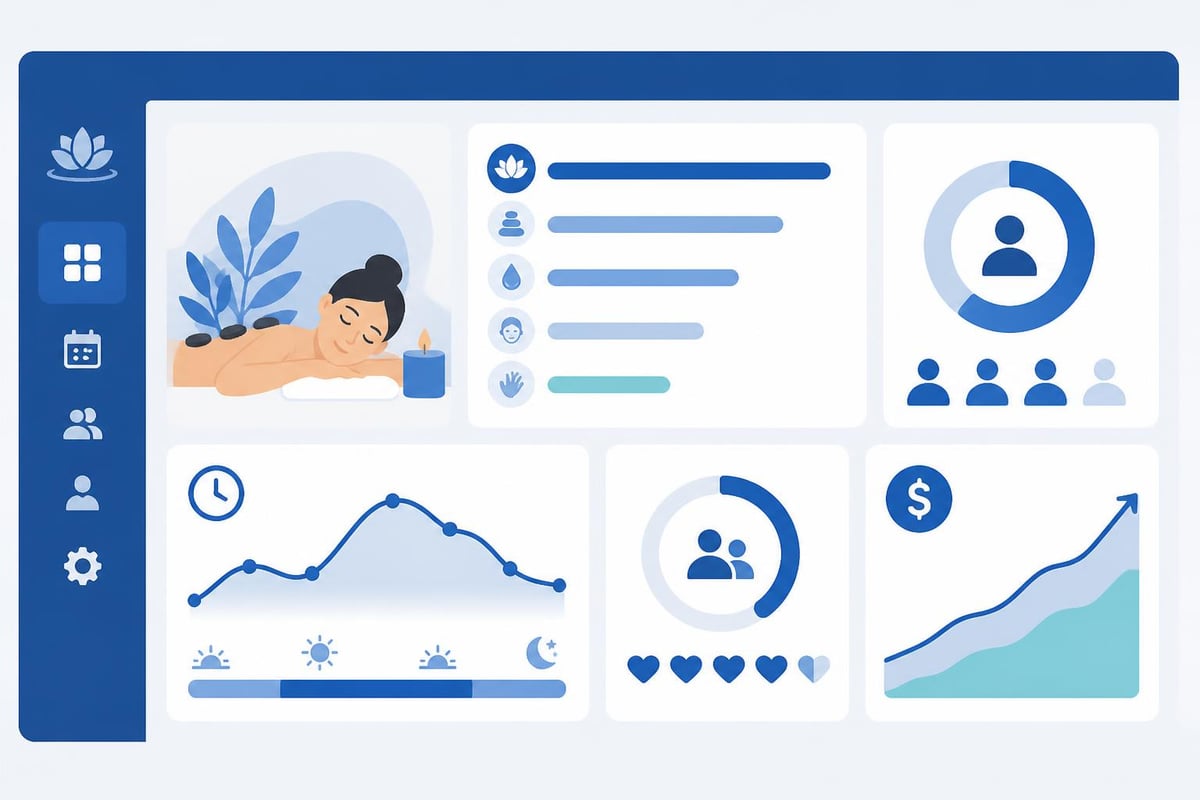
Beyond scheduling efficiency, modern booking platforms generate valuable operational insights through appointment data analysis. Spa owners who leverage these analytics identify revenue opportunities, optimize pricing strategies, and improve resource allocation.
Utilization Metrics and Revenue Analysis
Understanding which treatment rooms, time slots, and service providers generate maximum revenue guides strategic planning. Comprehensive reporting should reveal:
| Metric Category | Key Indicators | Business Application |
|---|---|---|
| Time Utilization | Booked vs. available hours by provider and room | Staff scheduling optimization |
| Service Performance | Revenue by treatment type and package | Menu development and pricing |
| Booking Patterns | Peak booking times and seasonal trends | Marketing timing and promotions |
| Client Retention | Rebooking rates and visit frequency | Retention strategy development |
| Cancellation Analysis | No-show patterns by service and client segment | Policy refinement and deposit strategies |
Regular analysis of these metrics, ideally monthly or quarterly, reveals patterns that inform operational improvements. You might discover that Thursday evenings consistently show low booking rates, suggesting an opportunity for promotional pricing or staff schedule adjustments.
Client Behavior and Preference Tracking
Individual client data reveals opportunities for personalized service and targeted marketing. When your scheduling system tracks each client's service history, preferences, and spending patterns, you can identify high-value relationships requiring special attention and clients at risk of attrition.
Scheduling and booking software designed for spas should automatically segment clients into actionable categories: new clients requiring nurture campaigns, regular visitors eligible for loyalty rewards, and lapsed clients needing reactivation outreach.
Membership and Package Management Capabilities
Many spas generate sustainable revenue through membership programs and treatment packages. Your online scheduling software for spa operations must support these business models with appropriate booking rules and usage tracking.
Recurring Appointment Automation
Membership-based spas often include monthly treatments as member benefits. Online spa scheduling software for membership-based spas should automatically facilitate recurring appointment booking, either through scheduled series or prompted rebooking.
Automation options include:
- Standing appointments automatically placed on the calendar monthly
- Automated booking reminders for members to schedule their monthly treatment
- Usage tracking showing remaining membership benefits
- Expiration alerts for unused treatments or credits
- Automatic renewal processing for ongoing memberships
Package Credits and Expiration Management
Prepaid treatment packages require careful tracking to ensure clients use purchased services before expiration while preventing overuse. The scheduling system should automatically verify package eligibility during booking, decrement remaining treatments, and alert clients approaching expiration dates.
This automation prevents the customer service issues that arise when clients arrive for treatments they haven't actually purchased or when packages expire unused, generating negative experiences despite being the client's responsibility.
Security, Compliance, and Data Protection
Spa scheduling systems collect sensitive client information including health conditions, payment details, and contact information. Selecting appointment scheduling software requires careful evaluation of security measures and compliance capabilities.
HIPAA Considerations for Medical Spas
Medical spas providing treatments under medical supervision may face HIPAA compliance requirements. While traditional day spas typically don't qualify as covered entities, any spa offering medical-grade treatments or operating under physician oversight should verify their scheduling software supports HIPAA compliance.
Required security features include:
- End-to-end data encryption for all client information
- Secure authentication with password complexity requirements
- Role-based access controls limiting staff data visibility
- Complete audit trails of all system access and modifications
- Business Associate Agreement availability from the software provider
Payment Card Industry Compliance
Processing payments through your scheduling platform requires PCI-DSS compliance to protect client payment information. Rather than storing card details directly, secure systems use tokenization, storing only encrypted references while the actual payment data resides with certified payment processors.
Verify that your scheduling provider maintains current PCI compliance certifications and follows security best practices including regular security audits and penetration testing.
Implementation Strategy for Successful Adoption
Selecting quality online scheduling software for spa businesses represents only the first step. Successful implementation requires careful planning, staff training, and client communication to ensure smooth transition and rapid adoption.
Data Migration and Calendar Setup
Transitioning from manual scheduling or legacy software requires migrating existing client records, appointment history, and service menus. Quality scheduling providers offer migration assistance, but preparation improves accuracy and speed. Before migration, clean existing data by removing duplicates, updating contact information, and standardizing service names.
Initial calendar configuration should replicate current scheduling rules while incorporating improvements identified during the selection process. Define each service with appropriate duration, pricing, and resource requirements. Set up provider schedules reflecting accurate availability patterns. Configure booking windows, cancellation policies, and deposit requirements.
Staff Training and Change Management
Technology adoption succeeds or fails based on staff engagement. Comprehensive training ensures that team members understand both operational procedures and client-facing benefits. Best practices for scheduling software implementation emphasize hands-on training with realistic scenarios.
Training should cover:
- Processing online bookings and calendar management
- Assisting clients with account creation and booking questions
- Managing waitlists and filling cancelled appointments
- Running reports and interpreting scheduling analytics
- Handling technical issues and accessing support resources
Designate scheduling system champions among staff who receive advanced training and provide peer support during the transition period.
Client Communication and Adoption Campaigns
Introducing online booking to existing clients requires clear communication about benefits and simple onboarding. Don't assume clients will automatically discover and use the new system. Proactive campaigns accelerate adoption while demonstrating your commitment to improved convenience.
Effective approaches include:
- Email announcement with tutorial video and booking link
- In-spa signage and tablet-based booking demonstrations
- Staff mentions during checkout with assisted first booking
- Incentive offers for first online bookings (discount on next visit)
- Follow-up communications with non-adopters offering assistance
Track adoption rates weekly during the first month, identifying clients who continue phone booking for targeted outreach and support.
Selecting the Right Platform for Your Spa's Needs
The spa scheduling software market offers numerous options ranging from basic calendar tools to comprehensive management platforms. Making the optimal choice requires evaluating current needs, growth plans, and budget constraints while avoiding common selection mistakes.
Feature Prioritization and Requirements Definition
Begin by documenting essential requirements versus desirable features. Essential requirements might include multi-provider calendars, automated reminders, and mobile booking, while desirable features could encompass advanced analytics or membership management. This prioritization prevents feature overwhelm while ensuring core needs are met.
Consider these evaluation questions:
- How many treatment rooms and service providers require coordination?
- What percentage of revenue comes from packages, memberships, or retail?
- Do you need integrated point-of-sale or separate systems?
- What existing software requires integration (accounting, marketing, inventory)?
- What level of reporting and analytics will inform business decisions?
Pricing Models and Total Cost Analysis
Scheduling software pricing typically follows subscription models with per-provider or per-location fees. Understand total costs including setup fees, transaction fees for payment processing, training costs, and potential charges for premium features or support.
Calculate return on investment by estimating administrative time savings, no-show reduction, and increased booking volume from 24/7 availability. Most spas recover implementation costs within 3-6 months through operational efficiencies and revenue improvements.
Trial Periods and Vendor Evaluation
Reputable scheduling software providers offer trial periods allowing hands-on evaluation before commitment. Use trial periods strategically by testing with realistic scenarios including complex bookings, cancellations, reporting functions, and client-facing interfaces.
Evaluate vendor stability and support quality alongside software features. Read recent reviews, verify how long the company has operated, and test support responsiveness during your trial period. The scheduling system becomes central to daily operations, making vendor reliability critical.
Optimizing Booking Conversion Rates
Installing online scheduling software creates opportunity, but maximizing its value requires optimization of the booking experience to convert browsers into confirmed appointments. Small improvements in conversion rates generate significant revenue increases.
Streamlined Booking Flow Design
Each additional step in the booking process increases abandonment risk. The optimal booking flow requires minimum clicks while collecting necessary information. Analysis of booking funnel metrics reveals where potential clients abandon the process, guiding targeted improvements.
High-converting booking flows follow this structure:
- Service selection with clear descriptions and pricing
- Date and time selection showing real-time availability
- Provider preference (optional) with option for next available
- Account creation or guest checkout (minimize required fields)
- Payment collection (if required) with saved payment options
- Confirmation with calendar export and directions
Reduce friction by allowing guest checkout for first-time clients rather than forcing account creation. Capture essential information only, requesting additional details through post-booking forms.
Clear Service Descriptions and Pricing Transparency
Uncertainty creates booking hesitation. Comprehensive service descriptions addressing common client questions reduce barriers to booking. Each treatment listing should include duration, pricing, what's included, and what clients should expect during the appointment.
Pricing transparency builds trust and eliminates phone calls for price inquiries. Display all costs including base pricing, optional enhancements, and any required deposits or cancellation fees.
Implementing the right online scheduling software for spa operations transforms how your business attracts, serves, and retains clients while dramatically reducing administrative burden. The strategic advantages extend beyond convenience, directly impacting profitability through improved utilization, reduced no-shows, and data-driven decision making. Salon Booking System offers comprehensive scheduling features specifically designed for spa and salon environments, providing the automation, flexibility, and client-facing tools needed to compete effectively in 2026's digital-first marketplace. Since launching in 2016, our platform has helped countless spa and salon businesses streamline operations while enhancing client satisfaction through intuitive online booking, automated communications, and powerful scheduling management.