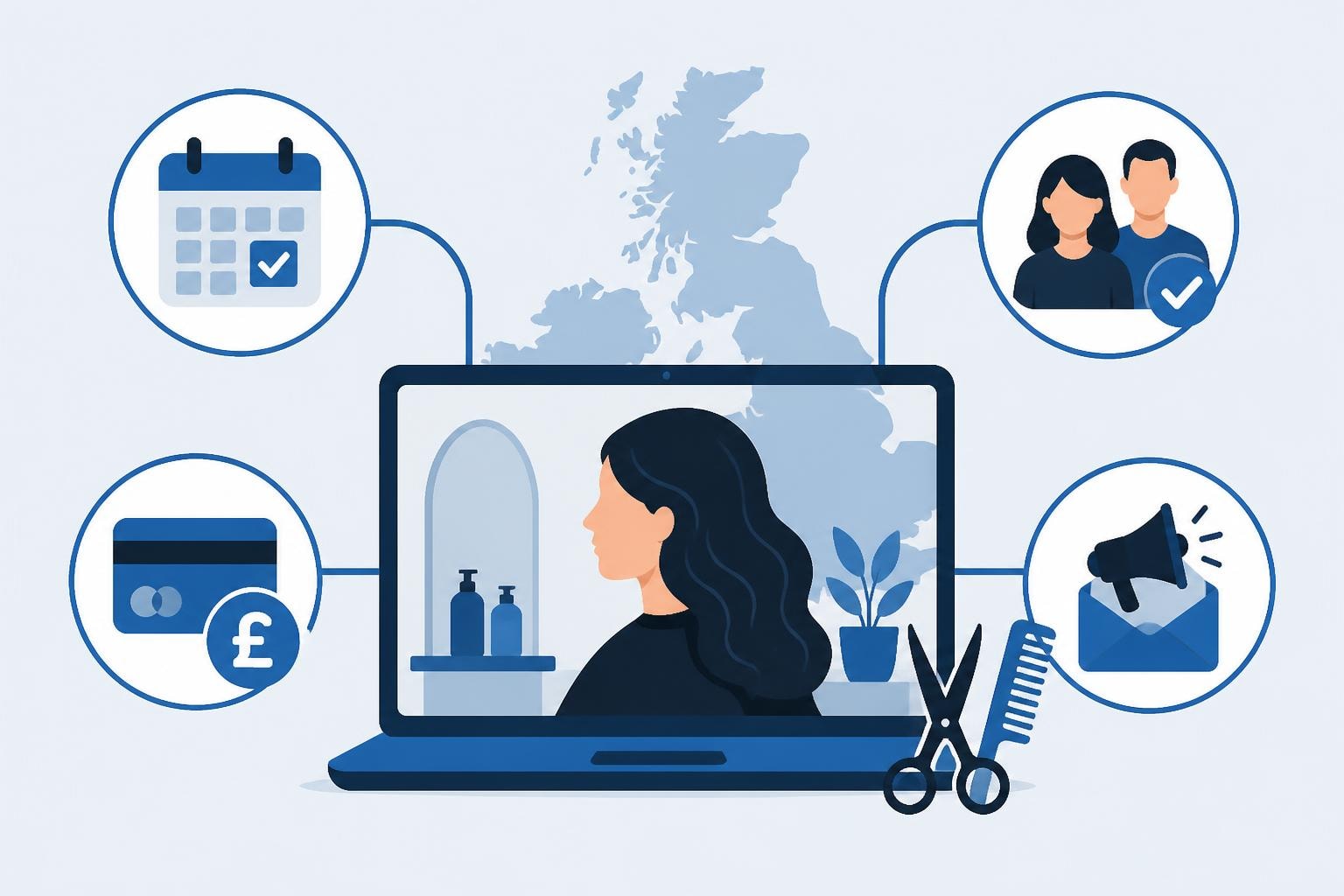
The UK hair and beauty industry generated over £7.3 billion in revenue in 2025, with projections showing continued growth through 2026 despite economic uncertainties. For salon owners navigating this competitive landscape, operational efficiency directly impacts profitability and client satisfaction. Modern hair salon software UK platforms have evolved from basic appointment diaries into comprehensive business management systems that handle everything from online bookings to inventory tracking. Understanding which features matter most and how to evaluate platforms can mean the difference between a salon that struggles with administrative burden and one that thrives through streamlined operations.
Why UK Salons Are Transitioning to Digital Management Systems
The shift toward digital salon management reflects fundamental changes in consumer behavior and business requirements. According to NHBF industry statistics, the UK hair and beauty sector employs over 277,000 people across approximately 47,000 businesses. This fragmented market creates fierce competition for client attention and loyalty.
Traditional paper-based booking systems create multiple points of failure. Double bookings occur when staff members don't communicate schedule changes. No-shows cost salons an average of £35-75 per missed appointment without automated reminders. Client data scattered across physical files makes targeted marketing campaigns nearly impossible to execute.
Digital systems address these pain points through:
- Real-time appointment synchronization across all devices and staff members
- Automated SMS and email reminders that reduce no-shows by 40-60%
- Centralized client databases with service history and preferences
- Online booking portals that capture appointments 24/7, even when the salon is closed
Research from the Institute of Chartered Accountants in England and Wales highlights that labor costs typically represent 45-55% of salon revenue. Software that optimizes staff scheduling and reduces administrative time directly improves this critical metric.
The Financial Case for Hair Salon Software Investment
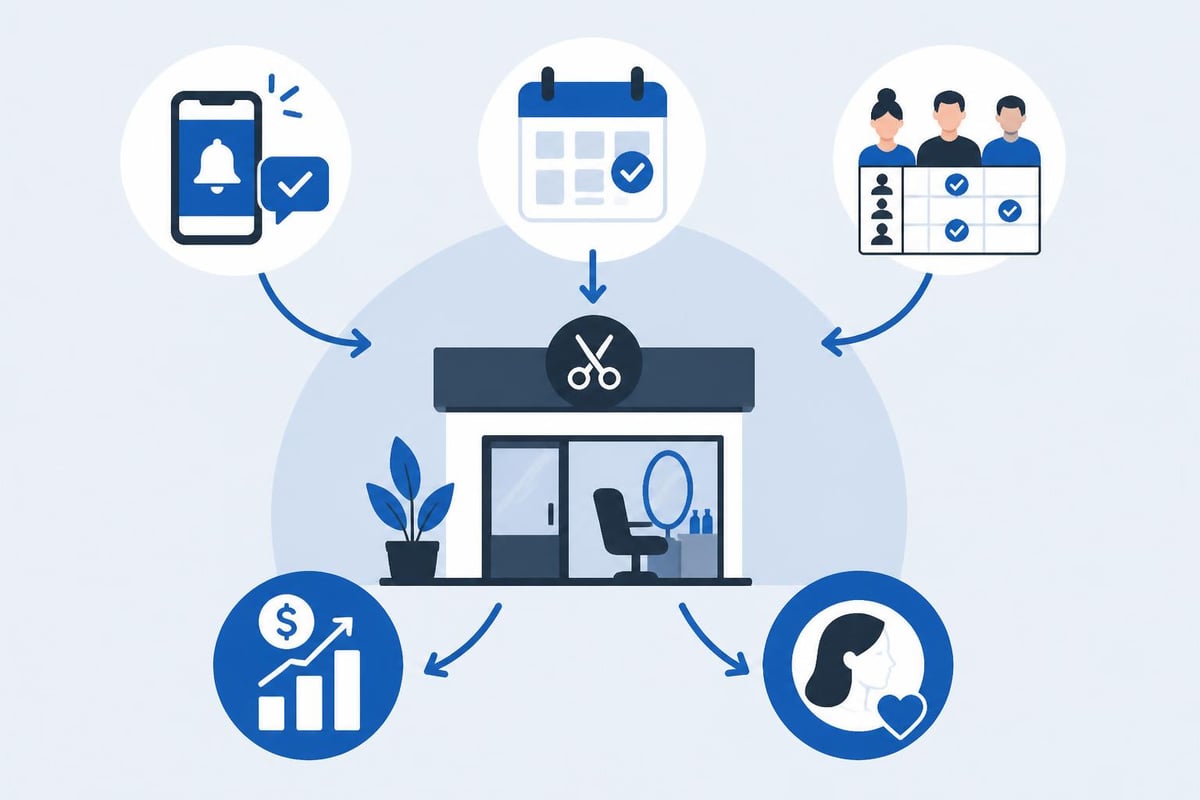
Calculating return on investment for hair salon software UK solutions requires examining both cost savings and revenue opportunities. Most platforms charge between £25-150 per month depending on features and salon size.
| Cost Category | Monthly Without Software | Monthly With Software | Annual Savings |
|---|---|---|---|
| No-show revenue loss | £800 | £320 | £5,760 |
| Administrative hours (at £12/hr) | £240 | £80 | £1,920 |
| Marketing expenses | £200 | £100 | £1,200 |
| Missed after-hours bookings | £400 | £50 | £4,200 |
| Total | £1,640 | £550 | £13,080 |
These calculations assume a mid-sized salon with four chairs. Even accounting for £100 monthly software costs, the net annual benefit exceeds £11,000. Larger salons or those in high-traffic locations typically see even greater returns.
The revenue opportunity extends beyond cost reduction. Online booking systems capture appointments during evenings and weekends when phones go unanswered. Data from understanding what salon software offers indicates that 35-40% of online bookings occur outside traditional business hours. For a salon generating £10,000 monthly revenue, this represents an additional £3,500-4,000 in otherwise lost business.
Core Features That Define Effective Hair Salon Software UK Platforms
Not all salon management systems deliver equal value. Understanding which capabilities drive meaningful business outcomes helps salon owners make informed purchasing decisions.
Appointment Scheduling and Calendar Management
The scheduling engine forms the foundation of any salon software. Advanced platforms handle complex scenarios that manual systems cannot efficiently manage.
Essential scheduling capabilities include:
- Color-coded calendar views showing multiple stylists simultaneously
- Service duration templates that automatically block appropriate time slots
- Buffer time configuration between appointments for cleanup and preparation
- Recurring appointment booking for regular clients
- Waitlist management when preferred time slots fill up
The system should prevent double bookings while maximizing chair utilization. Smart algorithms identify gaps in the schedule and suggest optimal appointment times to clients. Some platforms analyze historical booking patterns to predict busy periods and recommend staffing adjustments.
Client Relationship Management Tools
Client data represents one of your salon's most valuable assets. Effective hair salon software UK solutions transform scattered information into actionable insights.
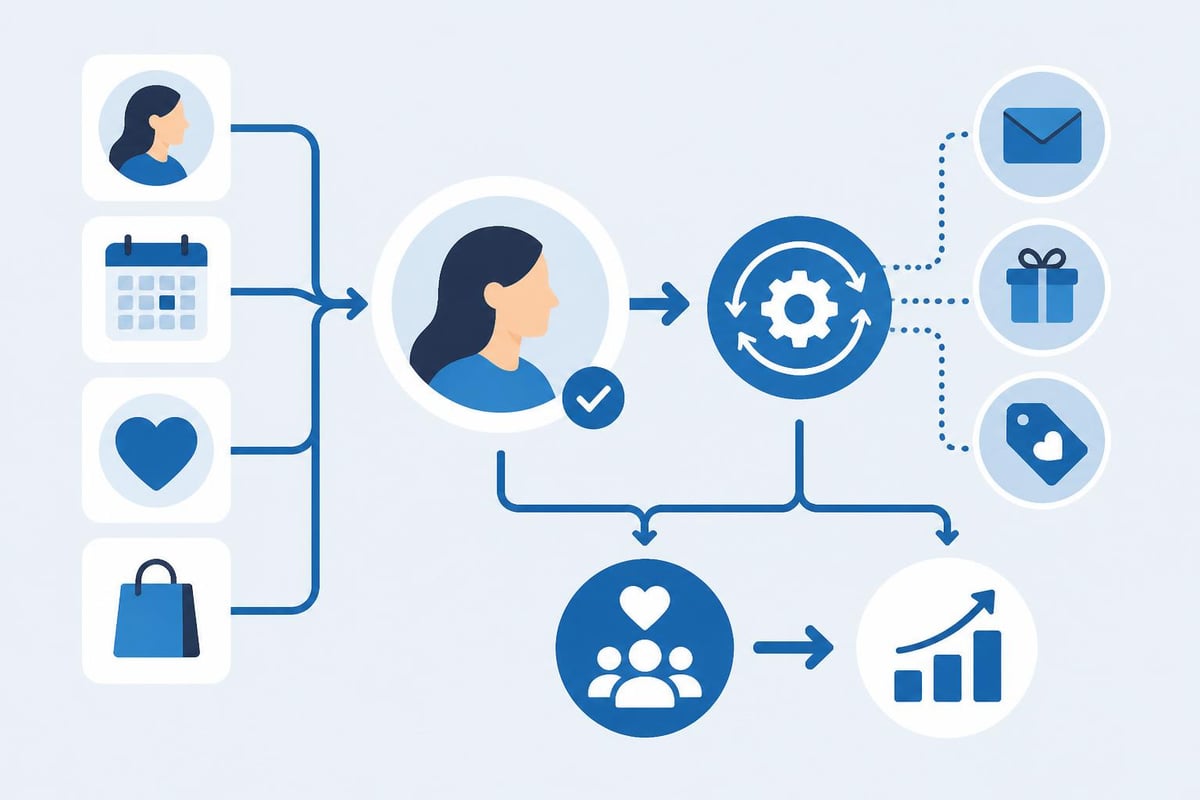
A robust CRM module tracks comprehensive client profiles including contact details, service history, product purchases, preferences, and notes. This information enables personalized service that builds loyalty. When a client books their next appointment, the stylist can review notes from the previous visit about their preferred coffee, upcoming vacation, or color formula adjustments.
Automated marketing features leverage this data for targeted campaigns. Birthday emails with discount offers, reminders when clients are due for color touch-ups based on their service interval, or personalized product recommendations based on purchase history all drive repeat visits and increase average transaction values.
Payment Processing and Financial Reporting
Integrated payment processing eliminates the friction between service completion and payment collection. Modern systems accept card payments, contactless transactions, and digital wallets while automatically reconciling transactions with appointment records.
Financial management features should include:
- Deposit collection for high-value services to reduce no-shows
- Package and membership payment plans with automatic billing
- Gift voucher creation and redemption tracking
- Commission calculation for stylists on different compensation structures
- Daily, weekly, and monthly revenue reports broken down by service, stylist, and product
The financial reporting capabilities help salon owners identify their most profitable services, peak revenue periods, and underperforming areas. This data-driven approach to business management replaces guesswork with concrete metrics.
Evaluating Hair Salon Software UK Options for Your Business
The UK market offers numerous salon management platforms, each with different strengths and pricing models. Comparing the best salon software in the UK reveals significant variation in feature sets, user experience, and total cost of ownership.
Cloud-Based vs. On-Premise Solutions
Cloud-based platforms dominate the current market due to their accessibility and lower upfront costs. These systems run entirely online, allowing access from any device with internet connectivity. Updates deploy automatically without requiring IT expertise. Monthly subscription pricing makes budgeting predictable.
On-premise solutions require installation on local computers and typically involve higher initial costs but lower ongoing fees. They offer more control over data security and function without internet connectivity. However, updates require manual installation, and multi-location access proves more challenging.
For most UK salons, cloud-based hair salon software UK platforms offer superior value. The ability to check schedules from home, manage bookings on mobile devices, and ensure all staff work from synchronized data outweighs the benefits of local installation.
Mobile Accessibility and App Functionality
Mobile capability has transitioned from luxury to necessity. Stylists need to view their schedules, access client notes, and process payments without being tethered to a front desk computer. Clients expect to book appointments from their smartphones.
Evaluate mobile features across three dimensions:
| User Type | Critical Mobile Functions | Impact on Operations |
|---|---|---|
| Salon Staff | Schedule viewing, client lookup, payment processing | Improves service speed and client interaction quality |
| Salon Owners | Real-time reporting, approval workflows, schedule oversight | Enables remote management and faster decision-making |
| Clients | Online booking, appointment modifications, service history | Increases booking conversion and reduces phone call volume |
Platforms with native mobile apps generally provide better performance and user experience than mobile-optimized websites. However, the app must stay synchronized with the main system in real-time to prevent booking conflicts.
Integration Capabilities
Your hair salon software UK solution shouldn't exist in isolation. Integration with other business tools multiplies its value.
Email marketing platforms like Mailchimp or Constant Contact should connect with your salon software to automatically sync client lists. This ensures your marketing campaigns target current clients and capture accurate contact information.
Accounting software integration with platforms like Xero or QuickBooks eliminates double data entry. Revenue, expenses, and tax information flow automatically from your salon software to your accounting system.
Social media integration allows clients to book appointments directly through Facebook or Instagram. This reduces friction in the booking process and captures business from social media engagement.
Point-of-sale system connectivity ensures that product inventory updates when items are sold. Low stock alerts trigger reorders before you run out of popular retail products.
Implementation Strategy for Maximum Adoption Success
Purchasing software represents only the first step. Successful implementation requires careful planning and change management. According to industry research on UK salons, businesses that invest time in proper training see 3-4 times higher adoption rates than those that expect staff to "figure it out."
Pre-Implementation Planning
Begin by documenting your current processes in detail. Map how clients book appointments, how stylists access schedules, how payments are processed, and how client information is recorded. This baseline helps you configure the new system to match or improve existing workflows.
Identify a champion within your team who will become the primary expert. This person should participate in all vendor training sessions and serve as the first point of contact for staff questions. Having an internal expert proves more effective than relying solely on vendor support.
Clean your existing client data before migration. Remove duplicate entries, update incorrect contact information, and standardize formatting. Migrating messy data creates messy databases that undermine the system's effectiveness.
Staff Training and Change Management
Resistance to new technology typically stems from fear of the unknown rather than genuine system limitations. Address this through comprehensive training that builds confidence.
Effective training programs include:
- Group sessions demonstrating core functions everyone needs to know
- Role-specific training for receptionists, stylists, and managers
- Hands-on practice in a test environment before going live
- Quick reference guides for common tasks
- Scheduled refresher sessions two weeks and one month after launch
Emphasize how the system makes staff members' jobs easier rather than focusing on management benefits. Stylists care about accessing client notes quickly and avoiding schedule confusion. Receptionists appreciate not juggling multiple phone calls while managing the desk.
Plan a gradual transition rather than an abrupt switch. Run both the old and new systems in parallel for one week. This safety net allows staff to verify that appointments are correctly entered and builds confidence in the new platform.
Measuring Success and Optimizing Usage
Define specific metrics to track improvement. These might include no-show rates, percentage of appointments booked online versus by phone, average booking lead time, or client retention rates.
Monitor these metrics weekly for the first month, then monthly thereafter. Share results with staff to celebrate wins and identify areas needing adjustment.
Most hair salon software UK platforms include analytics dashboards showing system usage. Track which features staff use regularly and which they ignore. Low adoption of valuable features often indicates confusion rather than lack of value. Address this with targeted training.
Solicit feedback regularly through brief staff meetings or anonymous surveys. Questions like "What's one thing that still frustrates you about the system?" and "What would make your job easier?" uncover specific pain points you can address.
Advanced Features That Separate Leading Platforms
As your salon grows and operations become more sophisticated, advanced features deliver incremental value that basic systems cannot provide.
Automated Marketing and Client Retention Tools
Client acquisition costs 5-7 times more than client retention, yet many salons invest disproportionately in attracting new clients. Sophisticated hair salon software UK platforms automate retention strategies that consistently bring clients back.
Automated campaigns trigger based on client behavior rather than manual effort. When a client hasn't booked an appointment within their typical service interval plus two weeks, the system sends a personalized "We miss you" message with a small discount incentive. For clients who typically color their hair every six weeks, an automatic reminder at week five encourages rebooking before gray roots become urgent.
Birthday campaigns build goodwill while driving revenue. Automated birthday emails with exclusive offers feel personal at scale, converting approximately 15-20% of recipients into bookings according to industry benchmarks.
Review request automation capitalizes on client satisfaction while it's fresh. Sending a Google or Facebook review request 24 hours after a successful appointment generates 3-4 times more reviews than manual requests weeks later.
Multi-Location Management
Salons operating multiple locations face coordination challenges that single-site businesses never encounter. Enterprise-grade platforms provide centralized control with location-specific customization.
Multi-location features include:
- Consolidated reporting across all locations with drill-down capability
- Centralized gift voucher redemption at any location
- Cross-location appointment booking for client convenience
- Standardized service menus with location-specific pricing
- Staff transfer tracking when stylists work at multiple sites
This infrastructure supports growth without proportionally increasing management complexity. A salon owner can review performance across three locations from a single dashboard rather than logging into three separate systems.
Inventory Management and Retail Optimization
Product retail typically represents 15-25% of total salon revenue but receives insufficient management attention. Integrated inventory systems transform retail from an afterthought to a strategic profit center.
The system tracks stock levels for both professional products used in services and retail items sold to clients. Low stock alerts prevent running out of essential supplies. Integration with service records identifies which products each client uses during their appointment, enabling targeted retail recommendations.
Automatic reordering based on usage patterns ensures optimal inventory levels. The system learns that you typically use three bottles of specific color developer per week and triggers reorder alerts when stock drops below a two-week supply.
Sales analytics identify your highest-margin products and bestsellers. This data informs decisions about shelf space allocation, promotional campaigns, and whether to continue carrying slow-moving items.
Data Security and Compliance Considerations
Hair salon software UK platforms store sensitive client information including names, contact details, payment data, and service histories. Understanding security measures and regulatory compliance isn't optional.
GDPR Compliance for UK Salons
The General Data Protection Regulation establishes strict requirements for how businesses collect, store, and use personal data. Your salon software must support compliance through built-in features.
Essential GDPR capabilities include:
- Client consent tracking with dated records of permissions granted
- Data export functionality allowing clients to request their information
- Complete data deletion to honor "right to be forgotten" requests
- Access logs showing who viewed or modified client records
- Data retention policies that automatically purge old records
The platform should enable collection of explicit consent for marketing communications. Pre-checked boxes don't satisfy GDPR requirements. Clients must actively opt in to receive promotional messages.
Payment Security Standards
Any system processing card payments must comply with Payment Card Industry Data Security Standards (PCI DSS). This involves encrypting cardholder data, maintaining secure networks, and regularly testing security systems.
Most cloud-based platforms achieve compliance by partnering with certified payment processors rather than directly handling card data. The payment processor securely stores card information while your salon software maintains only transaction records and non-sensitive customer identifiers.
Verify that your chosen hair salon software UK provider maintains current PCI compliance certifications. Reputable vendors prominently display this information and provide compliance documentation upon request.
Pricing Models and Total Cost of Ownership
Understanding true software costs requires looking beyond monthly subscription fees to encompass implementation, training, payment processing, and potential add-ons.
Subscription Tier Structures
Most platforms offer tiered pricing based on salon size, feature requirements, and number of staff members. Entry-level plans typically start around £25-40 monthly and include basic scheduling and client management for one or two stylists.
Mid-tier plans ranging from £60-100 monthly add marketing automation, advanced reporting, and support for 3-10 staff members. These plans suit established salons with steady client bases seeking operational efficiency.
Enterprise plans exceeding £150 monthly provide multi-location support, API access for custom integrations, priority support, and unlimited staff accounts. Large salon groups or rapidly growing businesses find value in these comprehensive platforms.
| Pricing Tier | Monthly Cost | Best For | Key Features Included |
|---|---|---|---|
| Basic | £25-40 | Solo stylists, chair renters | Calendar, basic client records, online booking |
| Professional | £60-100 | Single-location salons (3-10 staff) | Marketing automation, reporting, inventory |
| Enterprise | £150+ | Multi-location businesses | Consolidated management, API access, custom features |
Transaction Fees and Payment Processing
Payment processing represents a significant ongoing cost. Providers typically charge 1.5-2.9% plus £0.20-0.30 per transaction. These fees apply whether using integrated payment processing or third-party processors.
Integrated processing often costs slightly more but provides seamless reconciliation between appointments and payments. Third-party processing might offer lower rates but requires manual reconciliation and creates workflow friction.
Calculate projected annual processing fees based on your revenue. A salon processing £120,000 annually at 2.5% pays £3,000 in transaction fees. Factor this into total cost comparisons between platforms.
Hidden Costs and Unexpected Fees
Review contracts carefully for charges beyond advertised subscription rates. Common additional costs include:
- Setup or onboarding fees ranging from £100-500
- Data migration charges to import existing client information
- Training session fees beyond initial orientation
- SMS messaging costs for appointment reminders (typically £0.03-0.08 per message)
- Premium support packages for priority assistance
- Early termination fees if you switch providers before contract expiration
Request detailed pricing documentation that itemizes all potential charges. Reputable vendors provide transparent pricing without hiding costs in fine print.
Future Trends Shaping Hair Salon Software UK Development
The salon software industry continues evolving rapidly. Understanding emerging trends helps salon owners make future-proof purchasing decisions.
Artificial Intelligence and Predictive Analytics
AI-powered features are transitioning from experimental to mainstream. Intelligent scheduling algorithms predict optimal appointment times by analyzing historical patterns, weather data, and local events. The system might recognize that rainy Saturdays generate 20% more bookings and suggest staff scheduling adjustments.
Predictive analytics identify at-risk clients before they churn. Machine learning models analyze booking frequency, service value trends, and engagement with marketing communications to flag clients likely to stop visiting. Automated retention campaigns target these clients with personalized offers.
Virtual consultation tools using AI-powered image analysis help clients visualize different hair colors or styles before committing. These tools reduce consultation time while increasing client confidence in their service choices.
Enhanced Client Self-Service Capabilities
Clients increasingly expect control over their appointments without phone calls or staff intervention. Advanced platforms enable comprehensive self-service including:
- Appointment modifications and cancellations within policy guidelines
- Service browsing with detailed descriptions and pricing
- Stylist selection based on availability, specialties, and reviews
- Package and membership purchases directly through the client portal
- Automated rebooking suggestions based on service history
Self-service reduces reception workload while accommodating clients who prefer digital interactions over phone conversations. This proves particularly valuable for younger demographics accustomed to on-demand digital services.
Integration with Social Commerce
Social media platforms increasingly function as commerce channels rather than purely marketing tools. Modern hair salon software UK solutions integrate booking capabilities directly into Instagram, Facebook, and TikTok profiles.
Clients discover your salon through social content, view available appointments without leaving the platform, and book services in a seamless flow. This reduces booking friction from six or seven steps to two or three, significantly improving conversion rates.
Social commerce integration also enables influencer partnerships where recommended stylists link directly to booking pages. This transforms social proof into immediate revenue rather than requiring potential clients to remember and search for your salon later.
Modern hair salon software UK platforms transform operational efficiency, client experience, and business growth potential for salons of all sizes. The right system reduces administrative burden, captures more bookings, and provides data-driven insights that inform strategic decisions. Since 2016, Salon Booking System has helped salons and small businesses streamline appointment management through comprehensive features including online payments, automated notifications, and advanced scheduling rules. Whether you're operating a single chair or managing multiple locations, exploring how a purpose-built booking solution fits your specific needs represents a valuable investment in your salon's future success.