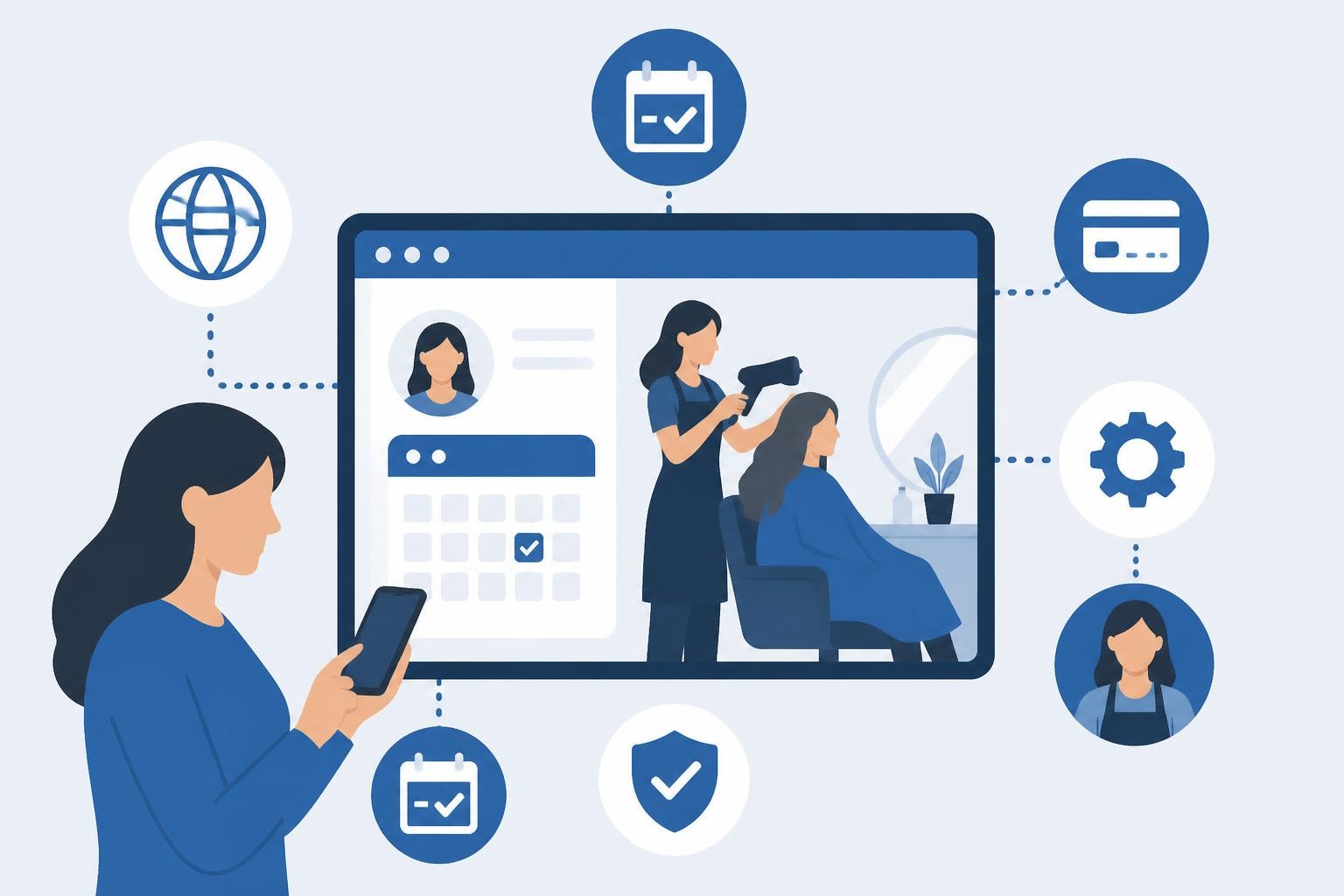
The salon and beauty industry continues to evolve rapidly, with 72% of consumers now preferring to book appointments online rather than by phone, according to recent data from the International Spa Association. For small salon owners and independent beauty professionals, investing in expensive software can strain already tight budgets. This is where a free salon booking system becomes not just attractive, but essential for competing in today's market. These platforms offer powerful scheduling capabilities without the financial burden, enabling salons to modernize their operations while maintaining healthy profit margins.
Understanding What Makes a Booking System Truly Free
When evaluating a free salon booking system, it's crucial to understand exactly what "free" means. Not all free solutions are created equal, and the differences can significantly impact your business operations.
The Free Forever Model vs. Freemium Approach
Genuinely free booking systems typically fall into two categories. The first includes open-source solutions and community-supported platforms that require some technical knowledge to implement. The second encompasses commercial products offering limited features permanently at no cost, allowing small salons to operate without ever upgrading.
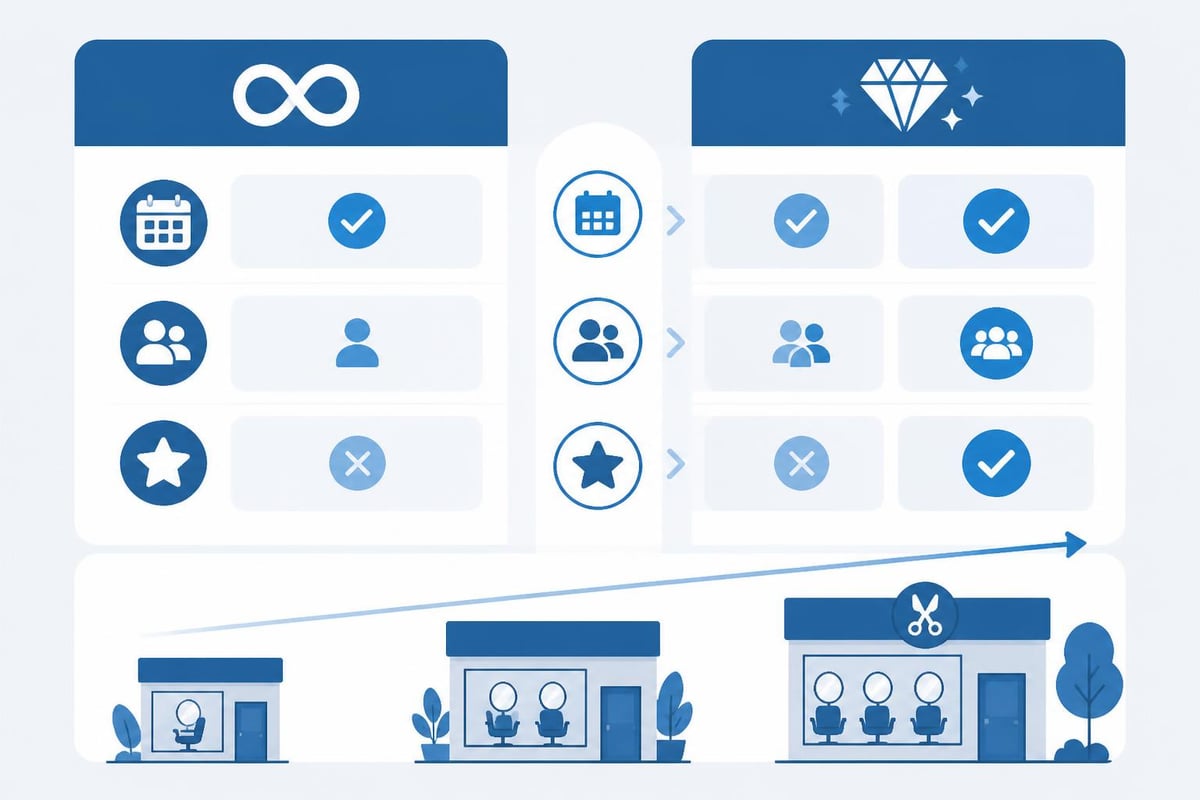
The freemium model offers basic functionality free while reserving advanced features for paid tiers. This approach works well for growing salons that may need additional capabilities as they expand. Key considerations include:
- Client capacity limits (often 50-100 clients per month on free plans)
- Staff member restrictions (typically 1-3 service providers)
- Feature availability (calendar sync, reporting, marketing tools)
- Branding requirements (some free systems display their logo on booking pages)
According to software review platform Capterra's 2025 Small Business Software Report, 43% of beauty businesses start with free scheduling tools and 28% never need to upgrade, demonstrating that free solutions can genuinely serve as permanent platforms for many salons.
Essential Features Your Free System Must Include
A functional free salon booking system should provide core capabilities that directly address your daily operational needs. Without these foundational features, you'll find yourself supplementing with manual processes that defeat the purpose.
| Feature Category | Must-Have Capabilities | Business Impact |
|---|---|---|
| Scheduling | Real-time availability, multiple services, staff assignments | Eliminates double-bookings, reduces phone time |
| Client Management | Contact database, appointment history, preferences | Enables personalization, improves retention |
| Notifications | SMS/email confirmations, reminders | Reduces no-shows by 30-40% on average |
| Calendar Integration | Google Calendar, Outlook sync | Prevents scheduling conflicts across platforms |
| Mobile Access | Responsive design or native app | Staff can manage bookings anywhere |
The National Coalition of Estheticians reported in their 2025 Industry Survey that salons using automated reminders experienced a 35% reduction in no-show rates compared to those relying solely on confirmation calls. This single feature alone can justify adopting a free salon booking system.
Evaluating Top Free Solutions for Different Salon Types
Different salon specialties have unique booking requirements. Hair salons need precise timing for complex services like color treatments, while nail salons might prioritize quick turnover and walk-in management.
Platforms Designed for Hair Salons
Hair salons require sophisticated scheduling that accounts for service duration variability and stylist specializations. Setmore offers a free salon booking system with industry-specific features that accommodate these complexities, including customizable service durations and stylist-to-service matching.
Key considerations for hair salon booking systems:
- Service chaining capabilities for appointments requiring multiple steps (cut, color, style)
- Buffer time settings between appointments for cleanup and consultation
- Product tracking integration for inventory used during services
- Color formula storage within client profiles for consistency
For salons operating WordPress websites, CutQueue is a free WordPress plugin that integrates directly into your existing site, eliminating the need to redirect clients to third-party booking pages. This seamless integration can improve conversion rates by up to 25%, according to e-commerce optimization research from the Baymard Institute.
Solutions for Beauty Specialists and Estheticians
Beauty professionals offering specialized services like facials, microblading, or permanent makeup need booking systems with detailed service descriptions and consultation scheduling. Miora offers a free booking system tailored for beauty professionals, allowing detailed service categorization and pre-appointment questionnaires.
The consultation component proves particularly valuable. Research from the Professional Beauty Association indicates that 68% of clients booking advanced beauty treatments want to review detailed service information and practitioner credentials before committing. A robust free salon booking system addresses this need through:
- Detailed service descriptions with pricing transparency
- Portfolio galleries showcasing previous work
- Practitioner biography and certification information
- Pre-service consent forms and allergy questionnaires
Multi-Platform Desktop Solutions
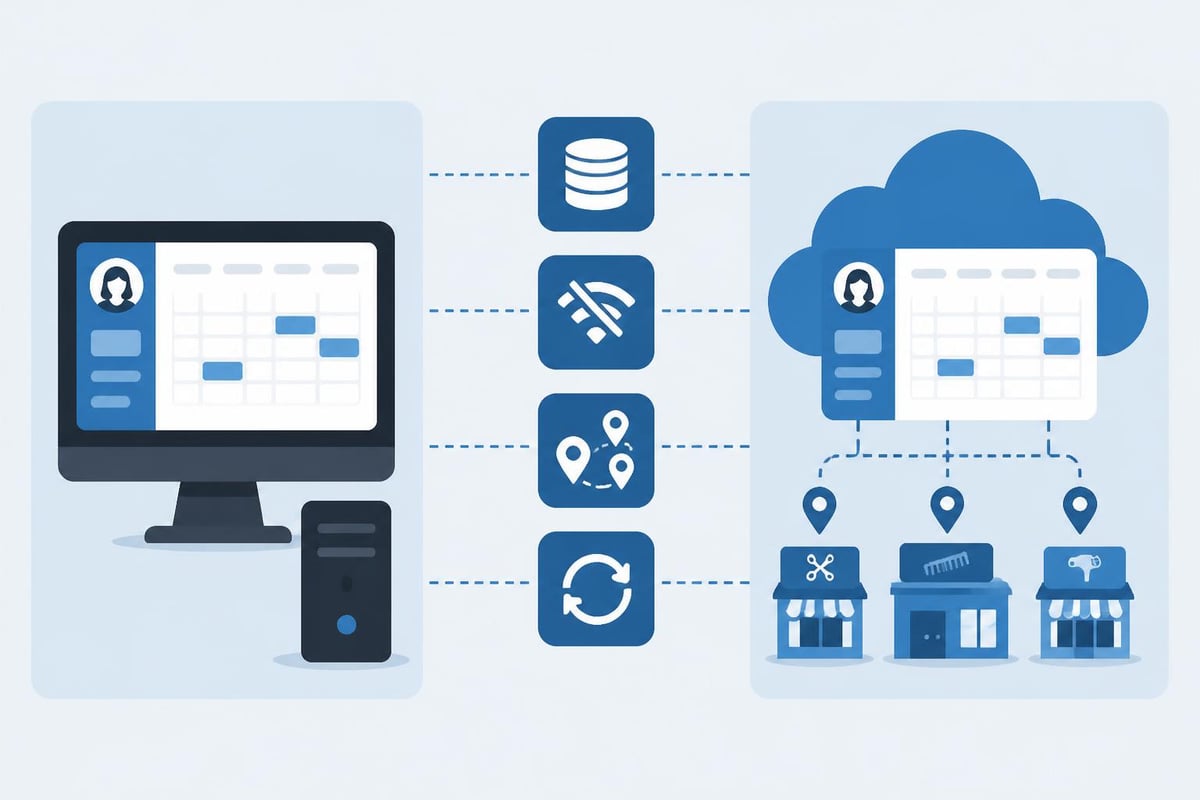
For salons preferring desktop-based management rather than cloud systems, Jeyla Studio offers free salon management software compatible with Windows, MacOS, and Linux. This approach benefits salons concerned about internet connectivity reliability or data privacy.
Desktop solutions typically provide:
- Complete offline functionality during internet outages
- Local data storage for enhanced privacy control
- No monthly client limits based on subscription tiers
- One-time setup without ongoing platform dependencies
Implementation Strategy for Maximum Adoption
Selecting a free salon booking system represents just the first step. Successful implementation requires strategic rollout to ensure both staff and clients embrace the new technology.
Staff Training and Buy-In
According to McKinsey's research on technology adoption in small businesses, 62% of digital tool implementations fail due to insufficient staff training and resistance to change. Your team needs to understand not just how to use the system, but why it benefits them personally.
Effective training approaches include:
- Hands-on practice sessions with test appointments before going live
- Role-specific training focusing on features each team member will actually use
- Quick reference guides posted at workstations for common tasks
- Designated "super users" who receive advanced training and support colleagues
Create incentive alignment by demonstrating how the free salon booking system reduces their administrative burden. Stylists spend an average of 4.3 hours weekly on scheduling-related tasks, according to data from the Professional Beauty Federation. Automation recovers this time for revenue-generating activities.
Client Migration Without Service Disruption
Transitioning existing clients to online booking requires careful communication and dual-system operation during the migration period.
Phase 1: Soft Launch (Weeks 1-2)
- Enable online booking while maintaining phone scheduling
- Test system with tech-comfortable clients first
- Gather feedback and refine settings
- Train staff on managing hybrid booking flows
Phase 2: Active Promotion (Weeks 3-6)
- Add booking links to email signatures and receipts
- Promote convenience benefits through social media
- Offer small incentives for first online booking (5% off, free add-on service)
- Display QR codes at checkout and in marketing materials
Phase 3: Primary Channel (Week 7+)
- Position online booking as the preferred method
- Reserve phone booking for complex requests or elderly clients
- Monitor adoption metrics and address barriers
Research from Accenture's Consumer Behavior Study shows that businesses offering booking incentives during transition periods achieve 73% online adoption within 60 days, compared to 41% for those relying solely on passive promotion.
Advanced Optimization for Free System Users
Even within the constraints of a free salon booking system, significant optimization opportunities exist to maximize business value.
Configuring Scheduling Rules to Minimize Gaps
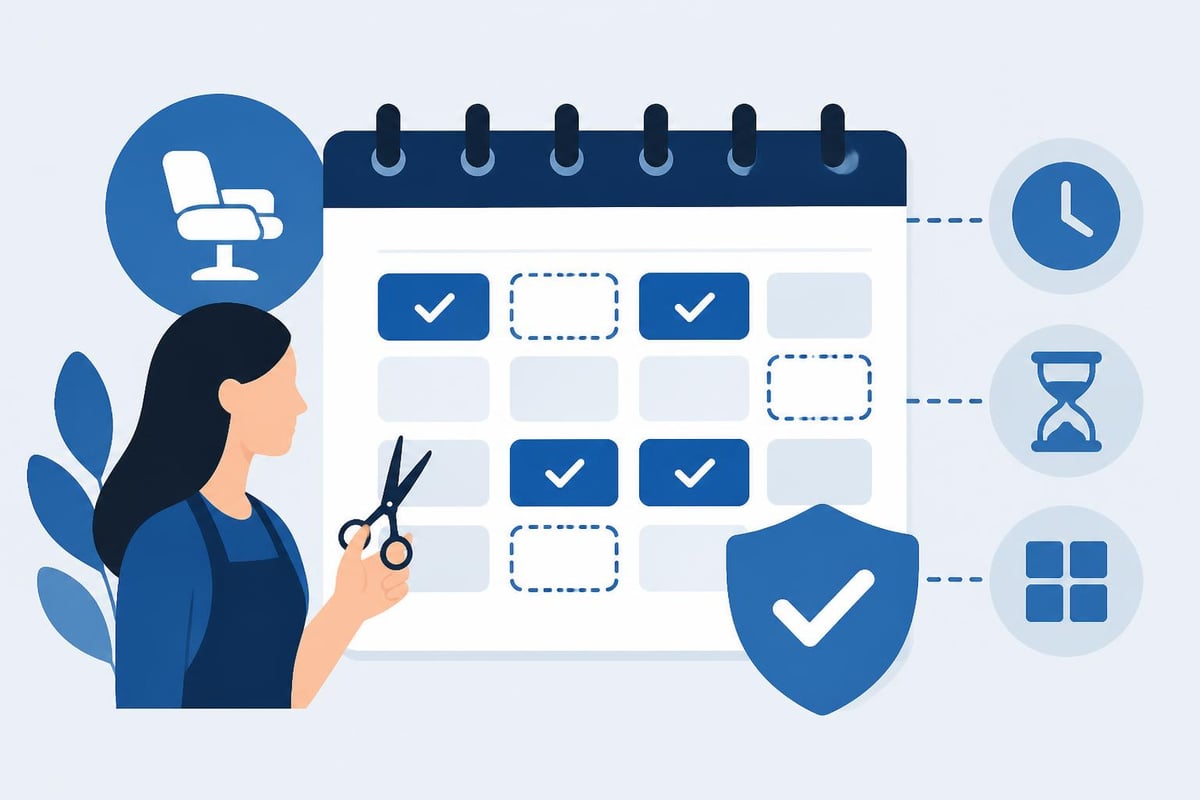
Strategic scheduling rules prevent calendar inefficiencies that cost salons thousands annually in lost revenue. The average salon experiences 12-15% schedule gaps due to poor booking patterns, representing approximately $18,000 in annual lost revenue for a typical three-chair operation.
| Scheduling Rule Type | Configuration Example | Revenue Impact |
|---|---|---|
| Minimum advance booking | 4 hours for all services | Reduces last-minute cancellations by 22% |
| Maximum future booking | 60 days out | Decreases forgotten appointments |
| Buffer time | 15 minutes after color services | Improves service quality, reduces delays |
| Service stacking | Allow only compatible sequential bookings | Optimizes stylist productivity |
| Time slot intervals | 15-minute increments | Maximizes calendar utilization |
Leveraging Automated Communications
The reminder and confirmation capabilities within a free salon booking system deliver immediate, measurable value. However, optimization extends beyond basic functionality.
Confirmation timing optimization:
- Immediate confirmation upon booking (establishes commitment)
- 48-hour reminder (primary no-show prevention, optimal timing per Cornell hospitality research)
- 4-hour reminder for same-day bookings (catches last-minute conflicts)
Message personalization elements:
- Client name and service details
- Assigned service provider name
- Parking or arrival instructions
- Pre-appointment preparation requirements
Data from Setmore’s salon industry analysis indicates that salons sending three-touch confirmation sequences (booking, 48-hour, 4-hour) achieve no-show rates below 8%, compared to industry averages of 15-20%.
Analytics and Performance Tracking
Even free platforms typically provide basic reporting capabilities that inform strategic decisions. Focus on metrics that directly correlate with revenue and operational efficiency.
Critical metrics to monitor weekly:
- Booking conversion rate: (completed bookings / booking page visits)
- Average appointment value: total revenue / number of appointments
- Utilization rate: (booked hours / available hours) × 100
- No-show percentage: (no-shows / total bookings) × 100
- Rebooking rate: percentage of clients scheduling next appointment
Establish baseline metrics during your first month, then track month-over-month changes. According to operational research from Harvard Business School, salons that review performance metrics weekly make data-informed adjustments that improve revenue by 8-12% annually compared to those without systematic measurement.
Addressing Common Limitations and Workarounds
Understanding the constraints of a free salon booking system helps you develop effective workarounds that maintain functionality without triggering upgrade requirements.
Working Within Client Capacity Limits
Many free platforms cap monthly bookings at 50-100 appointments. For growing salons approaching these limits, strategic approaches preserve free access.
Capacity management strategies:
- Reserve online booking for new clients and self-service regulars
- Manage VIP and high-value clients through direct scheduling
- Use online booking primarily for peak times when phone volume is highest
- Implement waitlist features to fill cancellations without counting as new bookings
Supplementing Missing Features
Free systems may lack advanced capabilities like inventory management, point-of-sale integration, or sophisticated marketing automation. Strategic supplementation maintains operations without expensive upgrades.
| Missing Feature | Free Supplemental Tool | Integration Method |
|---|---|---|
| Email marketing | Mailchimp (free tier) | Export client list monthly |
| Inventory tracking | Google Sheets | Manual updates after service |
| Financial reporting | Wave Accounting | Import appointment data weekly |
| Social media scheduling | Later or Buffer (free versions) | Link to booking page in bio |
| Review management | Google Business Profile | Include review request in follow-up |
This modular approach allows you to access enterprise-level functionality through interconnected free tools, though it requires more manual coordination than all-in-one paid platforms.
Maintaining Professional Branding
Some free salon booking systems display provider branding on booking pages and confirmation emails. While this represents the trade-off for free access, you can minimize its impact:
- Choose systems offering white-label options even on free tiers
- Create custom booking page URLs that include your salon name
- Design surrounding website elements that reinforce your brand
- Use custom email domains for notifications when possible
Research from the Small Business Administration indicates that consistent branding across customer touchpoints increases brand recall by 33% and perceived professionalism by 28%, making this optimization worthwhile even within free platform constraints.
Security and Compliance Considerations
Client data protection isn't optional, regardless of whether you're using free or paid software. Your free salon booking system must meet regulatory requirements and industry security standards.
Data Protection Requirements
Beauty businesses collect sensitive personal information including contact details, payment data, and sometimes medical information relevant to services. GDPR in Europe and various state-level privacy laws in the United States establish obligations that apply to businesses of all sizes.
Essential compliance features:
- SSL encryption for all data transmission
- Secure password requirements for client accounts
- Data export capabilities (clients have right to access their data)
- Deletion functionality (right to be forgotten)
- Clear privacy policy disclosure during booking
Before selecting any free salon booking system, verify that the provider maintains SOC 2 certification or equivalent security standards. A 2025 study by the Ponemon Institute found that small business data breaches cost an average of $149,000, far exceeding any savings from free software.
Payment Processing Security
If your free booking system includes payment processing, PCI DSS (Payment Card Industry Data Security Standard) compliance becomes mandatory. Reputable providers handle this through tokenization, ensuring your business never stores actual card numbers.
Safe payment integration indicators:
- Third-party processor integration (Stripe, Square, PayPal)
- No card data stored on your local systems
- Encrypted transmission for all financial information
- Automatic fraud detection and prevention
- Documented security protocols and incident response plans
According to the Federal Trade Commission, payment security breaches affect consumer trust more severely than other data incidents, with 67% of affected customers never returning to a business after a payment security incident.
Scaling Strategies When You Outgrow Free Options
Eventually, many successful salons outgrow free salon booking system limitations. Recognizing the right time to upgrade ensures you capture growth opportunities rather than hitting artificial constraints.
Clear Upgrade Indicators
Volume-based signals:
- Consistently hitting monthly booking limits
- Managing three or more service providers
- Operating multiple locations
- Processing 50+ appointments weekly per provider
Capability-based signals:
- Need for advanced reporting and business analytics
- Desire for marketing automation and client segmentation
- Requirement for inventory management integration
- Point-of-sale system consolidation needs
Professional signals:
- Branding limitations affecting perceived professionalism
- Client requests for features unavailable on free tier
- Competitive disadvantage compared to other local salons
- Staff frustration with system limitations affecting productivity
The transition decision should be data-driven. Calculate the revenue opportunity cost of current limitations against upgrade pricing. If manual workarounds consume 5+ staff hours weekly, and those hours could generate $50+ per hour in service revenue, paid software delivers positive ROI.
Migration Planning for Business Continuity
Transitioning from a free to paid system (or between platforms) requires careful data migration and communication planning to prevent appointment loss or client confusion.
30-day migration checklist:
- Export all client data including contact information, service history, and preferences
- Document current scheduling rules and customizations for replication
- Set up new system in parallel without disrupting current operations
- Import and verify client database accuracy before going live
- Test all critical workflows including booking, modifications, and cancellations
- Train staff on new interface with hands-on practice sessions
- Communicate changes to clients emphasizing improved features
- Maintain old system temporarily as backup during transition
- Monitor adoption metrics and address issues immediately
- Decommission old system only after 100% successful migration
Industry data suggests that well-planned migrations achieve 98%+ data accuracy and less than 5% client confusion, while rushed transitions often lose 15-20% of the client database and create significant service disruptions.
Implementing a free salon booking system delivers immediate operational benefits while positioning your business for modern consumer expectations. The key lies in selecting a platform aligned with your specific service offerings, optimizing its features within free tier constraints, and recognizing when growth justifies investment in advanced capabilities. Salon Booking System provides a comprehensive appointment scheduling solution that grows with your business, offering the essential features you need today with the flexibility to scale as your salon expands. Since 2016, the platform has helped salons streamline operations, reduce no-shows, and enhance customer satisfaction through intuitive scheduling, automated notifications, and flexible payment processing.