The salon industry continues to evolve rapidly, with client expectations shifting toward seamless digital experiences. According to a 2025 study by McKinsey & Company, 73% of consumers now expect businesses to offer online booking capabilities, and this percentage rises to 85% among millennials and Gen Z clients. For salon owners, selecting the best salon booking system has become a critical business decision that directly impacts revenue, client retention, and operational efficiency. The right platform does more than manage appointments; it serves as the operational backbone that coordinates staff schedules, processes payments, communicates with clients, and provides actionable business insights.
Understanding the Core Components of Modern Booking Platforms
The best salon booking system in 2026 must deliver a comprehensive suite of capabilities that address every touchpoint in the client journey. These platforms have evolved far beyond simple calendar tools, incorporating sophisticated features that mirror the complexity of salon operations.
Essential Feature Categories
Modern booking systems typically organize their functionality into several key areas. Client-facing tools include online booking portals, mobile apps, and automated communication channels. Staff management features encompass scheduling, performance tracking, and commission calculations. Business intelligence components provide reporting dashboards, analytics, and financial insights.
When evaluating platforms, salon owners should assess how well these components integrate with each other. A fragmented system that requires manual data transfer between modules creates inefficiency and increases error rates. Research from the International Journal of Service Industry Management found that integrated booking systems reduce administrative time by an average of 42% compared to standalone solutions.
Multi-Channel Booking Capabilities
Today's clients expect to book appointments through multiple channels. Understanding service booking system capabilities reveals that the most effective platforms enable bookings through:
- Website widgets that embed directly into salon websites
- Mobile applications optimized for iOS and Android
- Social media integrations with Facebook and Instagram
- Google My Business integration for local search visibility
- Third-party marketplace partnerships
According to data from Square's 2025 Beauty Industry Report, salons that offer three or more booking channels experience 34% higher appointment volume compared to those relying solely on phone bookings. This multi-channel approach also reduces no-show rates by providing clients with convenient confirmation and reminder touchpoints.
Evaluating Pricing Models and Total Cost of Ownership
Understanding the financial implications of different booking systems requires looking beyond monthly subscription fees. The best salon booking system delivers value through reduced operational costs, increased booking efficiency, and improved client retention rates.
Common Pricing Structures
| Pricing Model | Typical Range | Best For | Hidden Costs to Consider |
|---|---|---|---|
| Per-Location | $99-$299/month | Multi-location salons | Additional user fees, SMS costs |
| Per-Provider | $25-$75/month/stylist | Independent stylists, small teams | Transaction fees, feature limitations |
| Flat Rate + Transaction | $49-$149/month + 1-3% | Growing salons | Processing fees stack up quickly |
| Tiered Subscription | $79-$399/month | Salons needing scalability | Costs jump significantly between tiers |
When calculating total cost of ownership, factor in payment processing fees, SMS notification charges, custom domain costs, and potential setup or training expenses. A platform advertising a $79 monthly fee might actually cost $150-$200 monthly when these variables are included.
Return on Investment Metrics
The best salon booking system should demonstrate clear ROI through measurable improvements. According to research published by the Professional Beauty Association, salons implementing comprehensive booking systems report:
- 18-27% reduction in no-show rates through automated reminders and confirmation requests
- 31% increase in online bookings within the first six months of implementation
- 22% improvement in appointment book density through optimized scheduling rules
- 15-20% decrease in administrative labor costs as manual scheduling tasks are automated
These improvements translate directly to revenue gains. A salon with $25,000 in monthly revenue experiencing a 20% reduction in no-shows could recapture approximately $5,000 monthly in previously lost appointments.
Critical Features That Separate Leading Platforms
While basic scheduling functionality is table stakes, several advanced features distinguish the best salon booking system options from mediocre alternatives. Comprehensive salon booking software guides emphasize the importance of evaluating these differentiators carefully.
Intelligent Scheduling and Resource Management
Advanced scheduling engines use algorithms to optimize appointment placement based on multiple variables. These systems consider:
- Service duration variations and buffer times between appointments
- Stylist specializations, skill levels, and preferred service types
- Equipment availability and processing station requirements
- Client preferences and historical booking patterns
- Revenue optimization to prioritize high-value services during peak hours
For example, a color correction appointment might require specific stylists with advanced training, access to specialized equipment, and a four-hour time block. The system automatically identifies valid scheduling options while preventing conflicts.
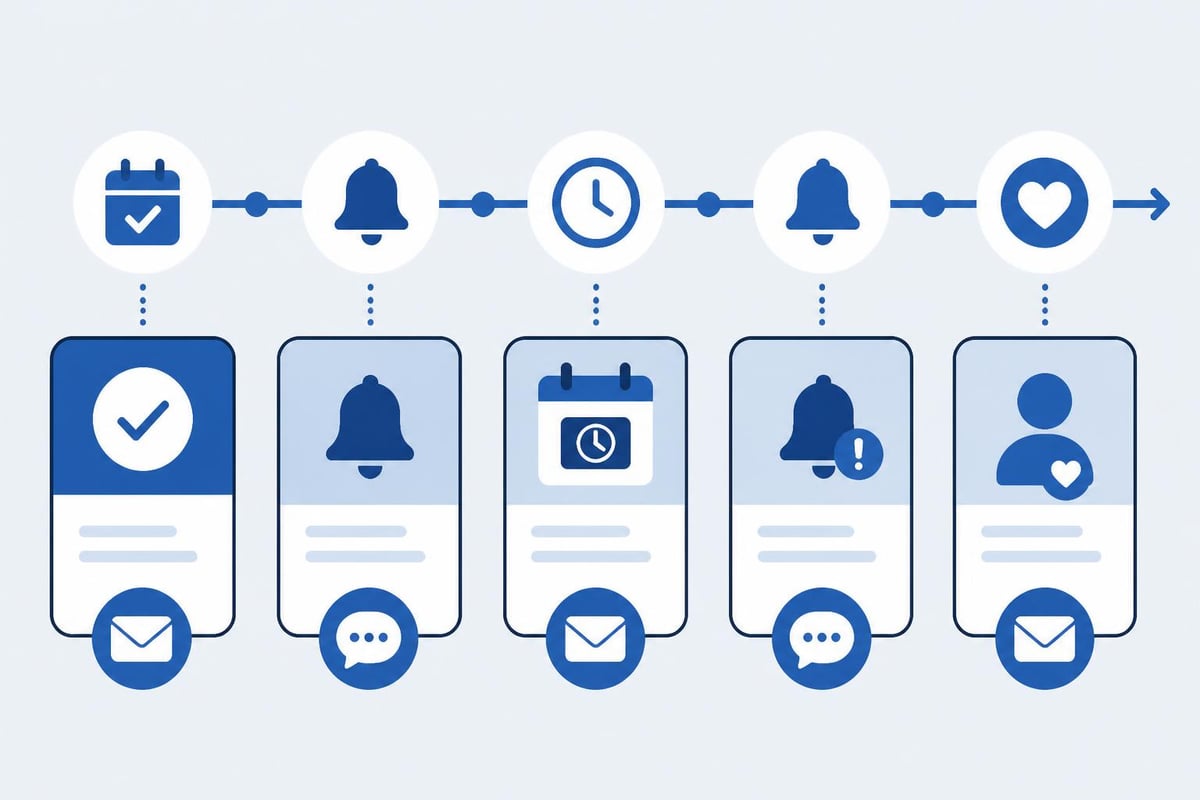
Automated Client Communication Workflows
Modern platforms orchestrate complex communication sequences without manual intervention. A typical workflow includes:
- Immediate booking confirmation via email and SMS
- Pre-appointment reminder 48 hours before the scheduled time
- Final reminder 2-4 hours before appointment
- Post-appointment follow-up requesting feedback and encouraging rebooking
- Re-engagement campaigns for clients who haven't booked within 60-90 days
According to data from Acuity Scheduling's 2025 industry analysis, automated reminder sequences reduce no-show rates by 67% compared to salons relying solely on manual phone reminders. The time savings alone-typically 8-12 hours weekly for a mid-sized salon-justify the investment in quality booking software.
Payment Processing and Financial Management
Integrated payment processing eliminates friction in the booking process and improves cash flow management. The best salon booking system options offer:
- Deposits and prepayment options to secure appointments and reduce no-shows
- Automatic gratuity calculations with customizable default percentages
- Package and membership billing with recurring payment automation
- Split payment handling for group appointments or gift certificate redemptions
- Comprehensive financial reporting that tracks revenue by service, provider, and time period
Research from the National Association of Barber Boards of America indicates that salons accepting deposits reduce no-show rates by 43% and last-minute cancellations by 38%. These improvements have substantial financial impact, particularly for high-value services like bridal styling or extensive color treatments.
Integration Capabilities and Ecosystem Compatibility
The best salon booking system functions as a hub that connects with other essential business tools. Evaluating booking apps for beauty professionals requires understanding how different platforms approach integration.
Critical Integration Points
Point-of-sale systems enable seamless transaction processing and inventory management. When booking software integrates with POS systems, product sales during appointments automatically update inventory levels and contribute to comprehensive sales reporting.
Email marketing platforms like Mailchimp, Constant Contact, or Klaviyo allow salons to leverage booking data for targeted campaigns. Segmenting clients based on service preferences, visit frequency, or spending patterns enables personalized marketing that drives rebooking rates.
Accounting software integration with QuickBooks, Xero, or FreshBooks streamlines financial management by automatically syncing revenue data, eliminating manual entry errors and saving hours during monthly reconciliation.
Social media platforms should connect bidirectionally, allowing clients to book through Facebook or Instagram while the booking system posts availability updates and promotional content to social channels.
API Access and Custom Development
Salons with unique operational requirements benefit from platforms offering robust API access. This enables custom integrations with specialized tools or proprietary systems. When choosing the best salon booking software, consider whether the platform provides:
- RESTful API documentation for developers
- Webhook support for real-time event notifications
- OAuth authentication for secure third-party connections
- Rate limits that accommodate business-level usage
- Technical support for integration development
Security, Compliance, and Data Protection
Modern booking systems handle sensitive client information, payment data, and business metrics. The best salon booking system prioritizes security through multiple layers of protection.
Industry Compliance Standards
PCI DSS compliance is mandatory for any platform processing credit card payments. This comprehensive security standard includes requirements for encryption, access control, network monitoring, and regular security audits. Never compromise on this requirement-non-compliant systems expose your business to devastating financial liability and reputational damage.
GDPR and CCPA compliance protect client privacy rights and regulate how businesses collect, store, and use personal information. Platforms should provide:
- Clear consent management for marketing communications
- Data export capabilities allowing clients to download their information
- Deletion workflows that completely remove client data upon request
- Transparent privacy policies explaining data usage practices
Data Backup and Recovery
A 2025 study by the Uptime Institute found that 60% of small businesses that experience catastrophic data loss close within six months. The best salon booking system implements:
- Automated daily backups stored in geographically distributed data centers
- Point-in-time recovery enabling restoration to specific moments before data corruption
- Redundant infrastructure that maintains service availability during hardware failures
- Disaster recovery testing with documented recovery time objectives
User Experience and Adoption Considerations
Even the most feature-rich platform fails if staff members resist using it or clients find booking cumbersome. Comparing the best salon management software for 2026 reveals that usability often determines long-term success more than feature lists.
Staff Interface and Learning Curve
The back-end interface should accommodate varying technical skill levels. Key usability factors include:
- Intuitive navigation that places frequently used functions within two clicks
- Visual scheduling displays using color coding and drag-and-drop functionality
- Mobile responsiveness allowing schedule management from smartphones or tablets
- Contextual help providing guidance without leaving the current screen
- Keyboard shortcuts that accelerate tasks for power users
According to training data from salon software implementations, staff typically require 3-5 hours of initial training for basic booking systems, but 12-20 hours for complex platforms with extensive features. Factor training time into your implementation timeline and budget.
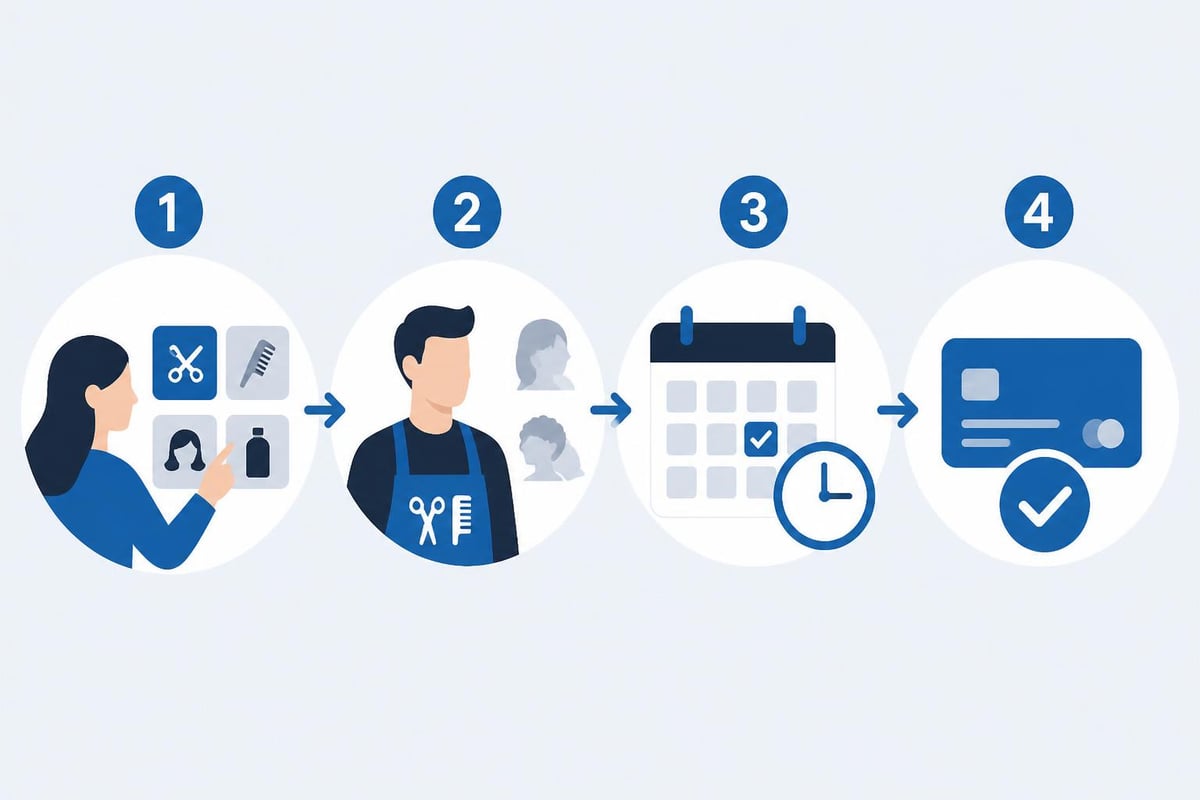
Client-Facing Booking Flow
The booking experience directly impacts conversion rates. Research from Baymard Institute indicates that 68% of online booking attempts are abandoned due to friction in the scheduling process. Optimize conversion by ensuring:
- Service selection takes fewer than three clicks
- Provider profiles include photos, specializations, and client reviews
- Available time slots display clearly with timezone awareness
- The booking form requests only essential information
- Confirmation appears immediately with calendar export options
Testing the booking flow from a client perspective before launch identifies friction points that reduce conversion rates. Recruiting regular clients for usability testing provides valuable feedback on pain points your team might overlook.
Scalability and Long-Term Growth Alignment
The best salon booking system grows alongside your business, accommodating expansion without requiring platform migration. Features and benefits of salon booking systems should align with both current needs and five-year growth projections.
Multi-Location Management
Salons planning expansion need platforms that handle multiple locations through a unified dashboard. Essential multi-location features include:
| Feature | Single Location | Multi-Location Value |
|---|---|---|
| Centralized reporting | Standard dashboard | Comparative analytics across locations |
| Staff management | One team schedule | Cross-location scheduling and performance tracking |
| Inventory tracking | Single stock count | Transfer management and consolidated ordering |
| Client databases | One location list | Shared profiles with visit history across all locations |
| Marketing campaigns | Location-specific | Coordinated campaigns with local customization |
Franchising and White-Label Capabilities
Salon owners developing franchise operations require booking systems with white-label functionality. This allows each franchise location to maintain brand consistency while benefiting from centralized technology infrastructure. White-label features typically include custom domain mapping, branded mobile apps, and configurable visual themes.
Making the Final Selection Decision
After evaluating features, pricing, and platform capabilities, narrow your selection through structured comparison and hands-on testing. Comprehensive comparisons of the best salon booking software provide baseline understanding, but direct experience reveals how platforms perform in real-world conditions.
Trial Period Evaluation Checklist
Most reputable platforms offer 14-30 day trial periods. Maximize this evaluation window by:
- Setting up complete service menus with realistic pricing and duration variations
- Creating staff profiles reflecting actual team structure and availability patterns
- Processing test bookings through all available channels (website, mobile, phone)
- Exploring reporting dashboards to assess data presentation and export capabilities
- Testing payment processing with small transactions to verify fund transfer timing
- Evaluating customer support through multiple channels during different times
Document experiences systematically, rating each platform against weighted criteria. Features you use daily deserve higher weight than occasionally accessed capabilities. For instance, if you run a specialized curly hair salon where clients consistently book with preferred stylists, provider selection functionality matters more than random assignment algorithms.
Vendor Evaluation Beyond the Software
The company behind the software impacts long-term success as much as the platform itself. Assess vendors by examining:
- Company stability and funding to ensure long-term platform viability
- Development roadmap indicating planned feature releases and platform evolution
- Customer support structure including response times, available channels, and escalation processes
- User community activity suggesting engagement levels and peer support availability
- Update frequency demonstrating ongoing platform improvement and security maintenance
Companies that have operated successfully since 2016 or earlier demonstrate resilience through market changes and technology evolution. This longevity suggests sustainable business models and commitment to their customer base.
Industry-Specific Considerations
Different salon specializations have unique booking requirements. The best salon booking system for a high-volume barbershop differs significantly from optimal solutions for a luxury spa or bridal hair studio.
Service Type Variations
Quick-service environments like barbershops prioritize rapid check-in, walk-in accommodation, and minimal booking friction. Features supporting this model include:
- Queue management for walk-in clients
- Express booking flows requiring minimal information
- SMS-based check-in notifications
- Rapid provider rotation for balanced workloads
Appointment-based salons focus on maximizing book density and ensuring appropriate time allocation. Priority features include:
- Complex service duration calculations accounting for hair length, density, and condition
- Consultation time blocks before technical services
- Processing time management for color services
- Equipment and station resource allocation
Luxury and spa services emphasize experience quality and premium positioning. Booking systems should support:
- Detailed client preference tracking and service notes
- Package and membership management
- Upgrade and add-on service recommendations during booking
- Concierge-level communication with personalized messaging
Understanding your specific operational model ensures feature priorities align with actual business needs rather than generic "best practices" that may not apply to your situation.
Selecting the best salon booking system requires careful evaluation of features, pricing, integration capabilities, and alignment with your specific operational needs. The right platform reduces administrative burden, improves client experience, and provides actionable business insights that drive revenue growth. Salon Booking System has helped salon owners streamline their operations since 2016, offering comprehensive scheduling tools, automated client communications, and flexible payment processing in one integrated platform. Explore how our user-friendly solution can transform your appointment management and enhance client satisfaction.