Managing appointments in the beauty industry has evolved dramatically over the past decade. What once required physical appointment books, phone calls, and manual tracking now demands digital precision. A time booking system has become essential infrastructure for modern salons, barbershops, and spas seeking to compete effectively while delivering exceptional client experiences. Understanding how these systems function and implementing them correctly can mean the difference between a thriving salon with optimized revenue and one struggling with scheduling chaos and missed opportunities.
What Makes a Time Booking System Essential for Salon Operations
The beauty industry operates on time-sensitive appointments where every 15-minute block represents potential revenue. According to research by the Professional Beauty Association, salons lose an average of 15-20% of potential revenue due to scheduling inefficiencies, no-shows, and booking gaps. A properly implemented time booking system addresses these challenges through automated scheduling, real-time availability updates, and intelligent resource allocation.
Modern clients expect instant booking gratification. A 2025 consumer behavior study found that 67% of salon clients prefer booking appointments online outside of business hours, with peak booking activity occurring between 8 PM and 11 PM. Without a digital time booking system, salons miss these high-intent booking opportunities.
Core Components That Define Effective Time Management
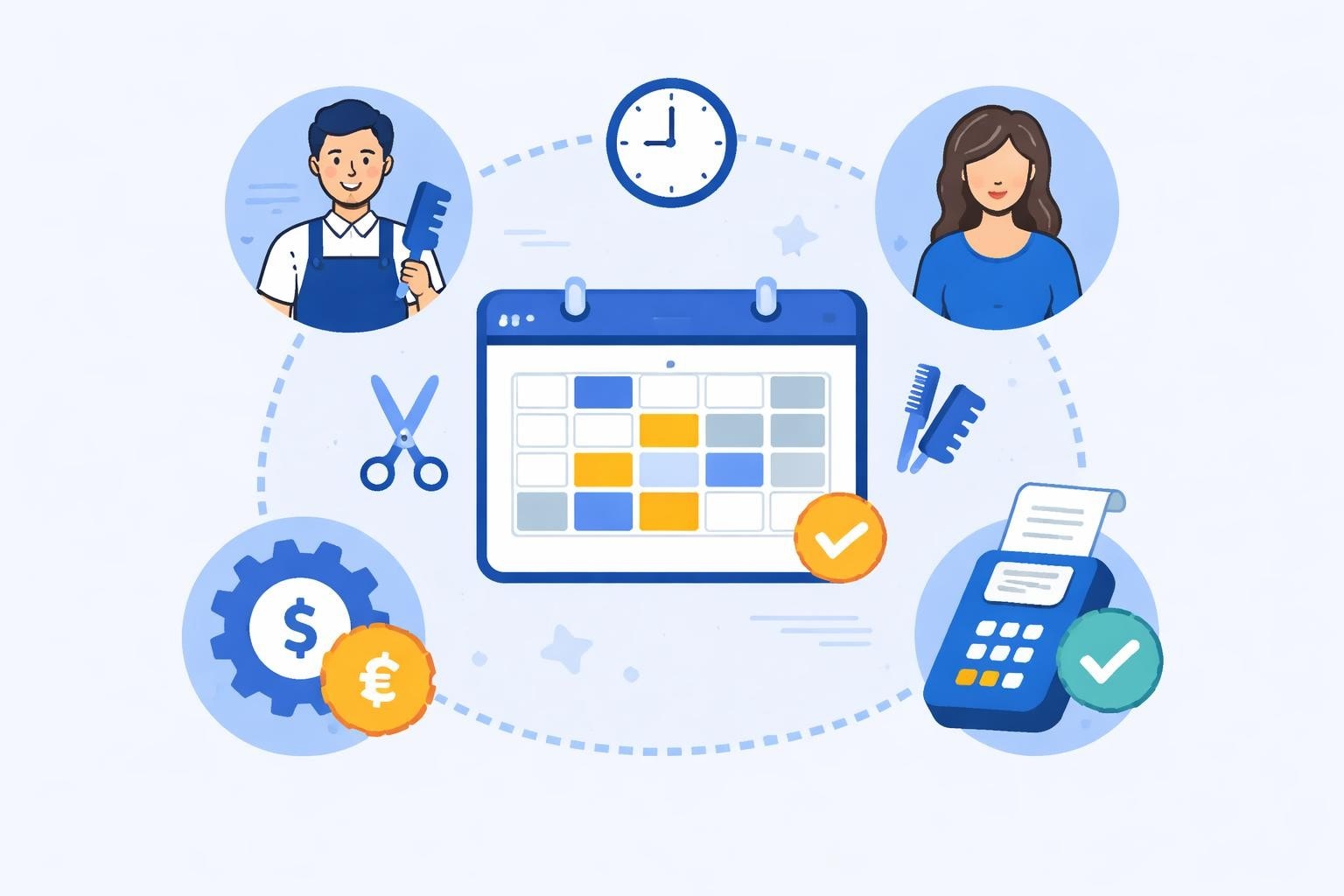
A comprehensive time booking system integrates several critical elements that work together seamlessly:
- Real-time availability calendars that prevent double-bookings and scheduling conflicts
- Service duration management that accounts for setup, treatment, and cleanup time
- Staff assignment logic that matches client preferences with stylist expertise and availability
- Buffer time automation that builds in necessary breaks between appointments
- Multi-location support for salon groups operating across different sites
The infrastructure must also handle complex scheduling rules that reflect salon realities. For example, color services require different timing considerations than cuts, and senior stylists may have different booking parameters than junior staff members.
Implementation Strategy for Maximum Adoption and Efficiency
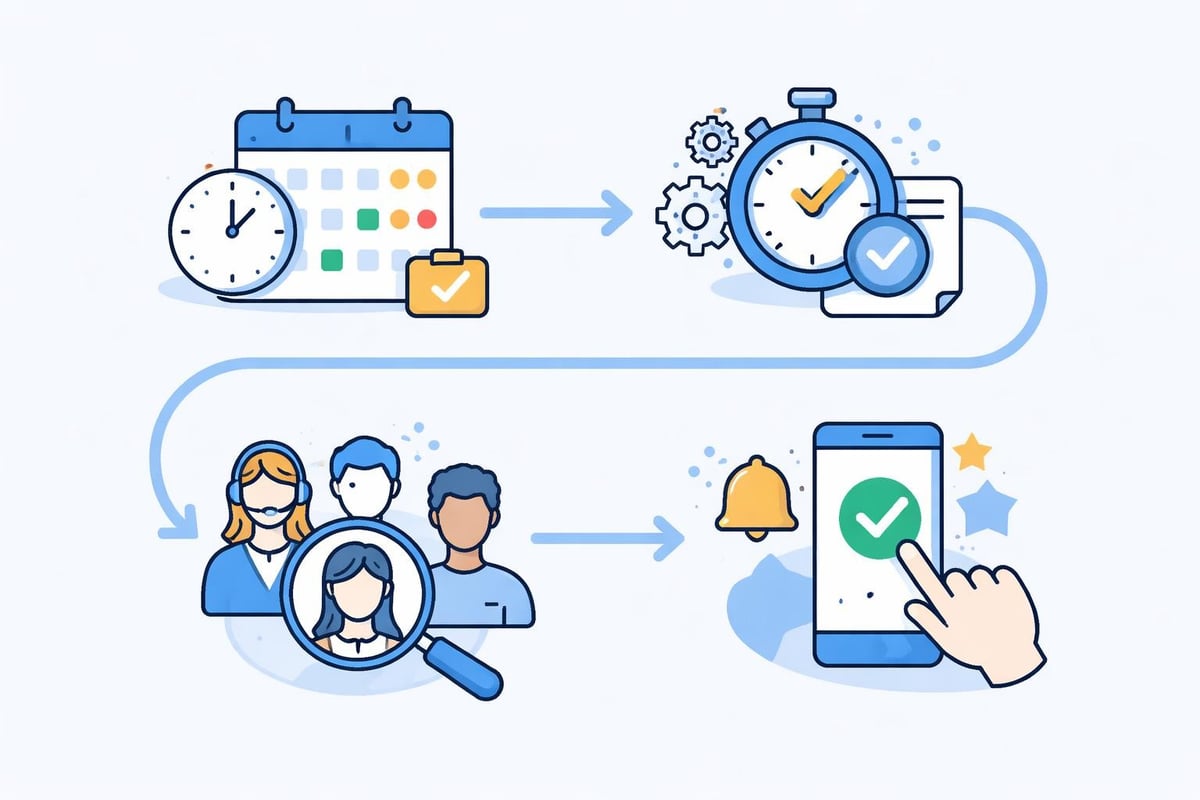
Rolling out a time booking system requires thoughtful planning that considers both operational needs and team readiness. Successful implementation follows a structured approach that minimizes disruption while building staff confidence.
Phase One: System Configuration and Data Migration
Begin by auditing your current scheduling practices. Document service menus with accurate duration times, including preparation and cleanup. Research shows that salons often underestimate service times by 10-15%, creating cascading delays throughout the day. Your time booking system configuration should reflect realistic timing.
Service catalog setup checklist:
- List all services with precise duration (including buffer time)
- Define pricing tiers for different staff levels
- Establish service combinations and package offerings
- Set capacity limits for simultaneous bookings
- Configure seasonal or promotional service variations
Next, migrate existing client data, including contact information, service history, preferences, and notes. Clean data during migration by removing duplicates, updating outdated information, and standardizing formats. This foundation ensures your time booking system can leverage client intelligence for better scheduling decisions.
Phase Two: Staff Training and Workflow Integration
Technology adoption fails when teams don't understand the "why" behind the change. Present your time booking system as a tool that reduces their administrative burden, not as additional complexity. According to best practices for designing user-friendly booking systems, simplified workflows and intuitive interfaces drive staff adoption rates above 85%.
Conduct hands-on training sessions that cover:
- Checking daily schedules and understanding color-coded appointment types
- Managing last-minute changes and cancellations
- Blocking personal time off and coordinating coverage
- Viewing client history before appointments
- Processing payments and rebooking future appointments
Create quick-reference guides for common scenarios. Role-play difficult situations like handling double-bookings or accommodating urgent requests within an already full schedule.
Phase Three: Client Communication and Transition Management
Announce your new time booking system through multiple channels at least two weeks before launch. Send email notifications, post on social media, display signage in your salon, and have staff mention it during appointments. Emphasize client benefits: 24/7 booking convenience, instant confirmation, automated reminders, and easier rescheduling.
For your first month, maintain parallel systems where clients can still book by phone while you encourage online adoption. Track which clients embrace the new system versus those who resist, then create targeted outreach to address concerns.
| Transition Strategy | Timeline | Success Metric |
|---|---|---|
| Soft launch with existing clients | Week 1-2 | 20% adoption rate |
| Full promotion across channels | Week 3-4 | 45% adoption rate |
| Phone booking surcharge introduction | Month 2 | 70% adoption rate |
| Digital-first operations | Month 3+ | 85%+ adoption rate |
Advanced Features That Separate Basic from Strategic Systems
Entry-level scheduling tools handle simple appointment placement, but strategic time booking systems deliver measurable business improvements through sophisticated capabilities. Understanding these differentiators helps salons select platforms that grow with their needs.
Intelligent Scheduling Rules and Resource Optimization
Premium systems employ logic that maximizes both revenue and stylist satisfaction. For instance, when a client requests a color service, the system should recognize that certain colorists have specific expertise and automatically suggest appropriate matches. It should also identify whether combining that appointment with a cut makes sense based on timing and stylist capability.
Resource optimization through smart scheduling:
- Gap filling algorithms that suggest shorter services to fill scheduling holes
- Revenue prioritization that favors higher-value appointments during peak hours
- Stylist workload balancing that distributes appointments fairly across team members
- Service pairing suggestions that increase average ticket value through logical add-ons
The system should also prevent problematic bookings automatically. If a client books a 90-minute keratin treatment at 4 PM but the salon closes at 6 PM, the time booking system should either block that slot or suggest an earlier time. This prevents situations where stylists must rush or stay late.
Integration Ecosystem and Data Flow
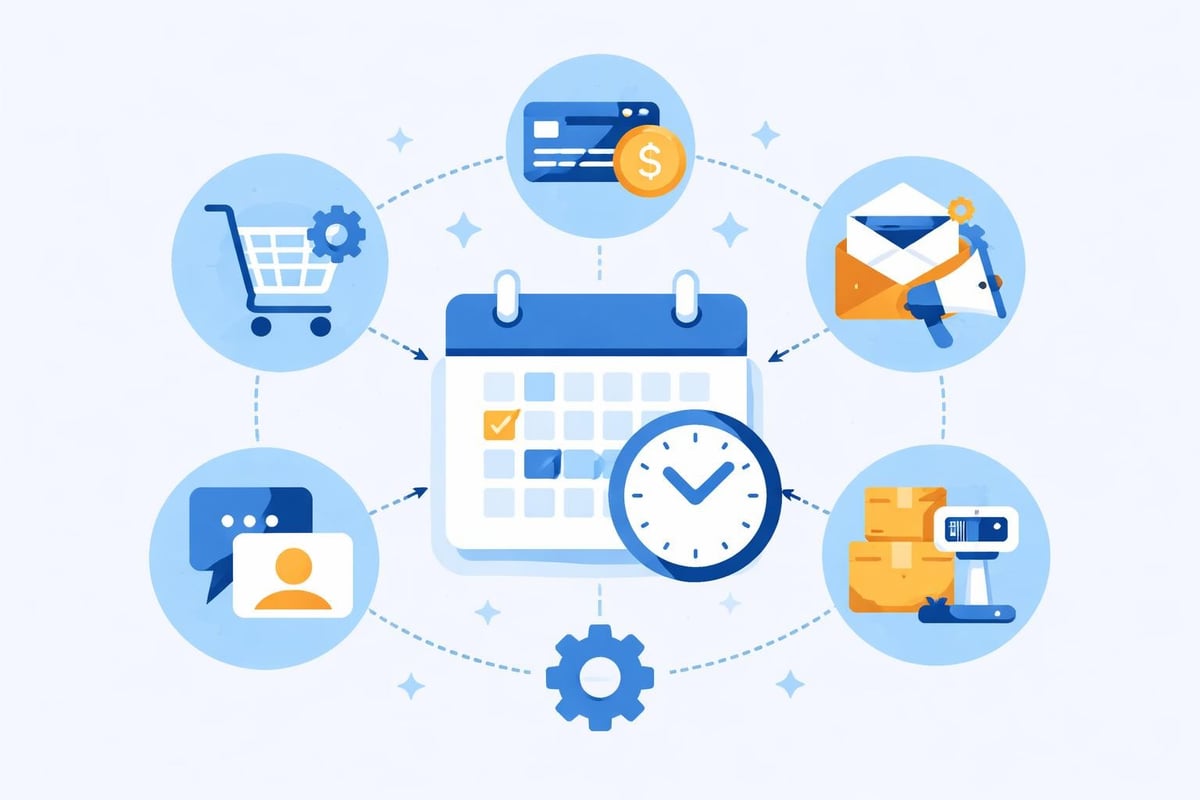
Your time booking system shouldn't operate in isolation. According to essential features for effective booking processes, integration capabilities rank among the top three requirements for modern scheduling platforms. Consider how your system connects with:
- Point-of-sale systems for seamless payment processing and sales tracking
- Marketing platforms for automated campaigns based on booking behavior
- Inventory management to track product usage during services
- Accounting software for financial reconciliation and reporting
- Client communication tools for SMS reminders and feedback collection
Data should flow bidirectionally, updating across all platforms in real-time. When a client reschedules through your time booking system, that change should immediately reflect in your POS, update reminder schedules, and adjust inventory allocations if services changed.
Optimization Techniques That Drive Revenue and Retention
Installing a time booking system creates the foundation, but ongoing optimization unlocks its full potential. Salons that treat their scheduling platform as a strategic asset rather than a static tool see measurably better results.
Dynamic Pricing and Peak Time Management
Advanced time booking systems support variable pricing based on demand, stylist expertise, and timing. Premium slots (Friday evenings, Saturdays) can command 10-15% premiums, while typically slow periods (Tuesday mornings) might offer modest discounts to stimulate demand. This approach, borrowed from hospitality and airline industries, helps flatten demand curves and improve overall utilization.
Implement tiered booking strategies:
- Designate senior stylists as premium providers with corresponding rates
- Create express service options at reduced prices for quick appointments
- Offer first-time client incentives to fill new client acquisition goals
- Build loyalty pricing that rewards regular booking patterns
Your time booking system should handle these variations automatically, presenting appropriate pricing based on who's booking what service with which provider at what time. Transparency remains critical; clients should clearly see why prices differ and feel the value justification.
Analytics-Driven Schedule Refinement
The data your time booking system collects becomes increasingly valuable over time. Monthly analysis should examine booking patterns, cancellation rates, peak demand periods, and service popularity. According to salon industry benchmarks, data-informed scheduling decisions improve utilization rates by 12-18% within six months.
| Metric | What to Track | Action Threshold |
|---|---|---|
| No-show rate | Percentage by client segment | >8% requires intervention |
| Average booking window | Days between booking and appointment | <3 days suggests capacity issues |
| Schedule density | Gaps between appointments | >15% empty time needs attention |
| Service mix | Distribution across service types | Monitor against target ratios |
| Rebook rate | Percentage scheduling next visit | <40% indicates retention problem |
When patterns emerge, adjust your time booking system configuration accordingly. If Tuesday afternoons consistently show low bookings, consider adjusting staff schedules, running promotions, or blocking that time for administrative work and training.
Client Behavior Optimization Through System Design
How you structure your time booking system influences client behavior in subtle but powerful ways. Strategic design choices guide clients toward beneficial booking patterns while maintaining their sense of autonomy.
Implement these behavioral nudges:
- Default to rebooking by prompting appointment scheduling at checkout
- Highlight package deals that encourage commitment to multiple visits
- Show scarcity indicators when popular time slots fill up
- Suggest optimal timing based on service type and hair growth cycles
- Reward advance booking through small incentives or priority access
The principles of user-friendly booking design emphasize that systems should make the desired behavior the easiest path. If you want clients to book four weeks in advance, make that option prominent and attractive within your interface.
Managing Complex Scheduling Scenarios and Edge Cases
Real-world salon operations involve complications that basic time booking systems struggle to handle. Preparing for these scenarios ensures smooth operations even during unusual circumstances.
Handling Overlapping Services and Multi-Stylist Coordination
Large services like bridal party preparations or makeover events require coordinating multiple team members simultaneously. Your time booking system should support complex appointments where:
- Multiple stylists work on different party members concurrently
- Services overlap but staff members rotate based on their specialties
- Shared resources (washing stations, treatment rooms) get allocated efficiently
- Group discounts apply automatically when booking thresholds are met
Configure your system to block appropriate resources across the team when these appointments book. If a bridal party reserves three stylists from 9 AM to 1 PM, the time booking system should prevent other appointments from creating conflicts with those stylists during that window.
Emergency Accommodations and VIP Client Management
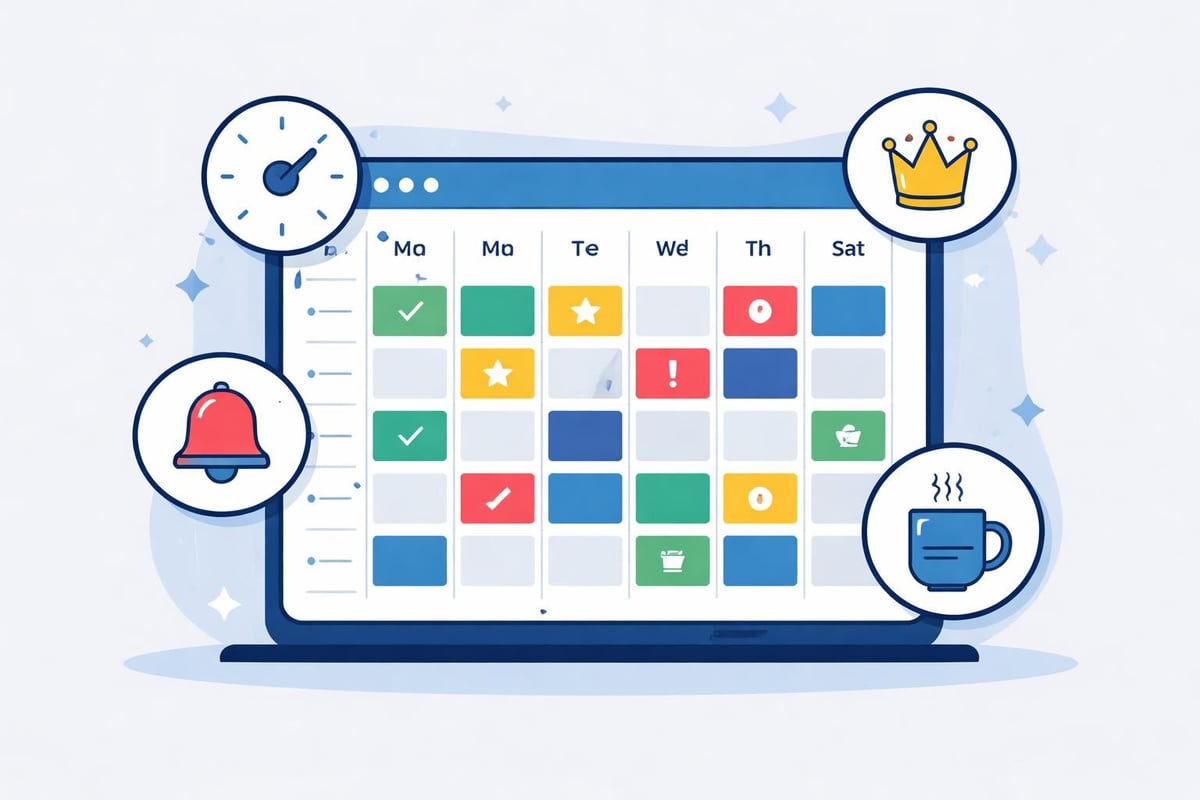
Every salon faces urgent requests from valued clients who need immediate attention. While maintaining schedule integrity matters, strategic flexibility for high-value relationships drives long-term success. Your time booking system should support priority booking tiers where VIP clients can access reserved capacity.
Create a two-tier availability structure where 85% of slots appear for general booking while 15% remain hidden for manager-approved requests. This approach, detailed in advanced booking management practices, maintains schedule efficiency while preserving relationship flexibility.
Staff Absence and Schedule Recovery Protocols
When team members call in sick or face emergencies, your time booking system becomes critical for managing disruption. Automated protocols should:
- Identify all appointments affected by the absence
- Determine which services other team members can absorb
- Send immediate notifications to impacted clients with rebooking options
- Update online availability to reflect reduced capacity
- Track recovery metrics to assess business impact
According to facility management and booking best practices, systems with robust absence-handling protocols reduce client frustration by 60% compared to manual notification approaches.
Best Practices for Sustaining Time Booking System Performance
Technology requires ongoing maintenance and optimization. Treating your time booking system as "set and forget" infrastructure leads to degraded performance and missed opportunities.
Regular System Audits and Configuration Updates
Schedule quarterly reviews of your time booking system settings. Services evolve, staff capabilities change, and client preferences shift. Your system configuration should reflect current reality, not outdated assumptions from initial setup.
Quarterly audit checklist:
- Verify service duration accuracy based on actual completion times
- Update staff profiles with new skills, certifications, or specializations
- Review and adjust pricing across all service categories
- Examine automated messaging templates for tone and accuracy
- Test booking flow from client perspective on mobile and desktop
- Analyze system-generated reports for anomalies or concerning trends
Documentation matters too. Maintain clear records of configuration changes, noting why adjustments were made and what results they produced. This historical context proves invaluable when troubleshooting issues or training new team members.
Client Feedback Integration and Continuous Improvement
Your time booking system should facilitate feedback collection immediately after appointments. Short, mobile-friendly surveys capture insights while experiences remain fresh. Pay special attention to booking process feedback separately from service quality ratings.
Questions to ask about the booking experience:
- How easy was it to find an available appointment that worked for your schedule?
- Did you receive timely reminders about your appointment?
- Was the online booking process intuitive and straightforward?
- Did your appointment start on time as scheduled?
- Would you prefer any additional features in our booking system?
Aggregate this feedback monthly and act on patterns. If 30% of clients report difficulty finding weekend availability, that signals a capacity or pricing issue requiring attention. When feedback highlights specific pain points, address them systematically through system configuration or process changes.
Team Performance Metrics and Accountability
While your time booking system primarily serves clients, it also generates valuable data about team performance. Track metrics that indicate both efficiency and quality:
| Performance Indicator | Calculation Method | Target Range |
|---|---|---|
| Appointment adherence | On-time starts / Total appointments | >90% |
| Service duration variance | Actual time / Scheduled time | 0.95 – 1.05 |
| Client retention by stylist | Repeat bookings / Total clients | >65% |
| Revenue per hour | Total sales / Scheduled hours | Stylist-specific |
| Cancellation rate by stylist | Cancellations / Total bookings | <5% |
Share these metrics transparently with your team, framing them as development opportunities rather than punitive measures. When stylists consistently run over scheduled times, address it through training or adjusted time booking system allocations. If certain team members generate exceptional retention, study their practices and share insights broadly.
Security, Compliance, and Client Data Protection
A time booking system stores sensitive client information including contact details, payment methods, service history, and personal preferences. Protecting this data isn't just ethical-it's legally required and competitively essential.
Data Protection Standards and Privacy Compliance
Ensure your time booking system meets current data protection requirements including GDPR for international clients and state-level privacy laws like the California Consumer Privacy Act. Key compliance elements include:
- Explicit consent for data collection and storage
- Transparent privacy policies explaining data usage
- Client rights management enabling data access and deletion requests
- Breach notification protocols if security incidents occur
- Third-party vendor assessment for integrated services
Regular security audits verify that your time booking system maintains appropriate protections. Encryption for data in transit and at rest should be standard, not optional. Access controls ensure team members only view information necessary for their roles.
Payment Security and Transaction Protection
When your time booking system processes payments, PCI DSS compliance becomes mandatory. Work exclusively with payment processors that handle tokenization, keeping actual card data off your servers entirely. This approach, detailed in comprehensive online booking system frameworks, minimizes your liability while protecting client financial information.
Implement these payment security practices:
- Require secure checkout through encrypted connections
- Store payment tokens only, never full card numbers
- Enable automatic updates for expired cards when processors support it
- Provide multiple payment options including digital wallets
- Generate detailed receipts automatically through the time booking system
Client confidence in your payment security directly impacts booking completion rates. Clear security indicators and professional checkout experiences reduce abandonment and build trust.
Implementing and optimizing a time booking system transforms salon operations from reactive scheduling chaos into proactive revenue management. By following structured implementation approaches, leveraging advanced features strategically, and maintaining ongoing optimization, salons position themselves for sustained growth and exceptional client experiences. Salon Booking System provides comprehensive scheduling tools designed specifically for beauty professionals, combining intuitive booking flows with powerful automation, payment processing, and client communication features that have served salons successfully since 2016.