For salon owners seeking complete control over their appointment scheduling technology, an open source booking system represents a compelling alternative to proprietary solutions. These platforms provide access to source code, enabling unlimited customization while eliminating vendor lock-in and recurring licensing fees. According to Red Hat's 2024 State of Enterprise Open Source report, 82% of IT leaders prefer working with vendors who contribute to open source communities, reflecting growing confidence in these solutions for business-critical operations. Salon professionals can leverage this technology to create tailored booking experiences that match their unique service offerings, branding requirements, and operational workflows.
Understanding Open Source Booking Systems
An open source booking system provides publicly accessible source code that salon owners can modify, extend, and deploy according to their specific needs. Unlike closed-source alternatives, these platforms grant complete transparency into how the software operates, enabling businesses to customize every aspect of the booking experience.
The fundamental advantage lies in ownership and control. When you implement an open source solution, you own your data infrastructure and can modify the software without waiting for vendor updates or paying premium fees for custom features. This autonomy proves particularly valuable for salons with specialized services like color correction consultations, bridal packages, or membership-based treatments that require unique booking rules.
Key Characteristics of Open Source Solutions
Open source booking platforms typically operate under licenses like MIT, GPL, or AGPL, which define how you can use, modify, and distribute the software. The AGPL 3.0 licensed OpenCal exemplifies this approach, providing a customizable appointment booking solution with transparent licensing terms.
These systems generally offer:
- Full source code access for unlimited customization
- Community-driven development with contributions from developers worldwide
- No vendor lock-in allowing migration without data restrictions
- Flexible deployment options including self-hosted or cloud-based configurations
- Integration capabilities through APIs and webhooks
The financial model differs significantly from subscription-based platforms. While open source software itself costs nothing to license, salons must account for hosting infrastructure, development resources, and ongoing maintenance when calculating total cost of ownership.
Evaluating Open Source Platforms for Salon Operations
Selecting the right open source booking system requires assessing your technical capabilities, customization requirements, and long-term scalability needs. The salon industry presents specific challenges including variable service durations, staff-specific bookings, and complex pricing structures that not all platforms handle equally well.
Technical Requirements and Infrastructure
Implementation success depends heavily on your technical resources. Self-hosting an open source booking system requires server management expertise, security maintenance, and backup protocols. According to the Cloud Security Alliance's 2025 survey, 67% of small businesses underestimate the technical overhead of self-hosted solutions, leading to security vulnerabilities and system downtime.
| Technical Aspect | In-House Management | Managed Hosting | Hybrid Approach |
|---|---|---|---|
| Initial Setup | High complexity | Low complexity | Medium complexity |
| Monthly Cost | Server fees only | $50-200/month | $25-100/month |
| Security Updates | Manual implementation | Automated | Partially automated |
| Customization Control | Complete | Limited | Moderate |
| Technical Skills Required | Advanced | Basic | Intermediate |
For salons without dedicated IT staff, platforms like Nexcal built with Next.js offer straightforward deployment processes designed for non-technical users. This free and open-source appointment booking system provides clear documentation and simplified installation procedures.
Feature Comparison for Salon Workflows
Not all open source booking systems support the specialized features salons require. Essential capabilities include:
Multi-service booking: Clients should book consecutive services (haircut followed by color treatment) in a single reservation. This requires intelligent scheduling that accounts for service dependencies and transition times between appointments.
Staff assignment logic: Advanced systems recognize that certain services require specific expertise levels. A junior stylist cannot be automatically assigned to a complex balayage appointment, requiring rule-based staff allocation.
Resource management: Beyond staff scheduling, salons need to track physical resources like styling stations, wash basins, and specialized equipment. LibreBooking excels at managing shared resources alongside appointment calendars.
Dynamic pricing structures: Peak-hour pricing, seasonal promotions, and service package discounts require flexible pricing engines that most general-purpose booking systems lack.
The Medusa open-source booking platform addresses these complexities through its modular architecture, supporting dynamic pricing rules and complex booking flows that adapt to various industries including beauty services.
Implementation Strategies and Customization
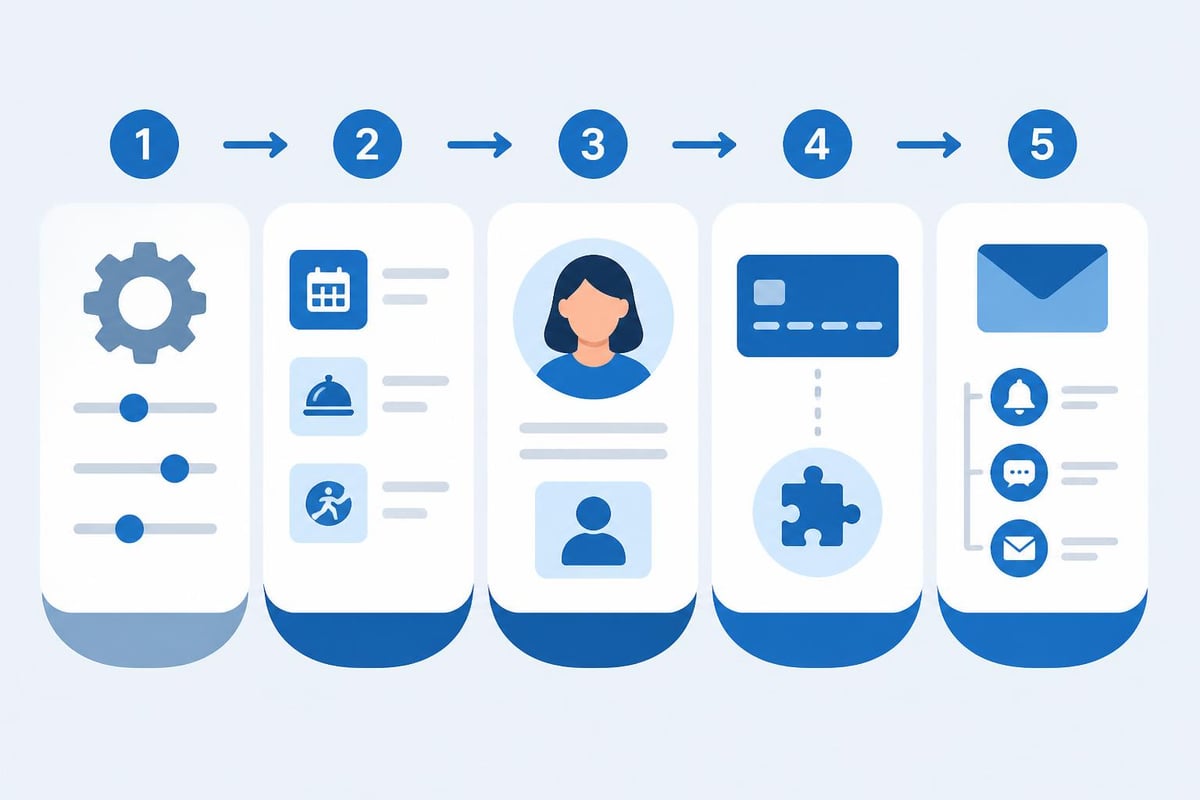
Deploying an open source booking system involves strategic decisions about hosting, customization scope, and integration with existing business systems. Salons that successfully implement these platforms typically follow a phased approach rather than attempting complete transformation overnight.
Phase One: Core Booking Functionality
Start with essential appointment scheduling capabilities before adding advanced features. This allows your team to adapt to the new system while identifying specific customization needs based on actual usage patterns.
Initial implementation should include:
- Calendar synchronization across all service providers
- Basic client information capture including contact details and service preferences
- Automated confirmation messages via email or SMS
- Simple cancellation and rescheduling workflows
- Staff availability management with day-off and break scheduling
Testing with a limited service menu helps identify workflow issues before full deployment. For example, start with basic haircut appointments before adding complex color services that require consultation times and multiple processing stages.
Advanced Customization for Competitive Advantage
Once core functionality operates smoothly, strategic customizations differentiate your salon's booking experience from competitors using standard platforms.
Intelligent service recommendations: Modify the booking interface to suggest complementary services based on client history. A client booking highlights might receive automated suggestions for toning treatments or deep conditioning add-ons.
Seasonal capacity management: Implement custom algorithms that adjust available appointment slots during peak seasons (prom, wedding season, holidays) to optimize revenue while maintaining service quality.
Loyalty program integration: Connect your open source booking system with custom loyalty point calculations that automatically apply discounts or enable reward redemption during the booking process.
Development resources vary based on customization complexity. Simple interface modifications might require 10-20 hours of developer time, while complex integration projects can extend to 100+ hours. According to Upwork's 2025 Freelancer Rate Report, web developers specializing in open source platforms charge between $50-150 per hour depending on expertise level.
Security and Compliance Considerations
Open source booking systems require diligent security management since you control the infrastructure. Client data protection extends beyond legal compliance to reputation management, as data breaches can devastate salon businesses built on personal relationships.
Essential security measures include:
- SSL/TLS encryption for all data transmission
- Regular software updates applying security patches within 48 hours of release
- Database encryption protecting stored client information
- Access control policies limiting system access based on staff roles
- Automated backup systems with off-site storage and recovery testing
The General Data Protection Regulation (GDPR) and various state privacy laws impose specific requirements on how salons collect, store, and process client data. Your open source booking system must support data portability, deletion requests, and consent management. Platforms like Tymeslot emphasize privacy and data control, providing built-in features that support compliance requirements.
Integration Ecosystems and Extensibility
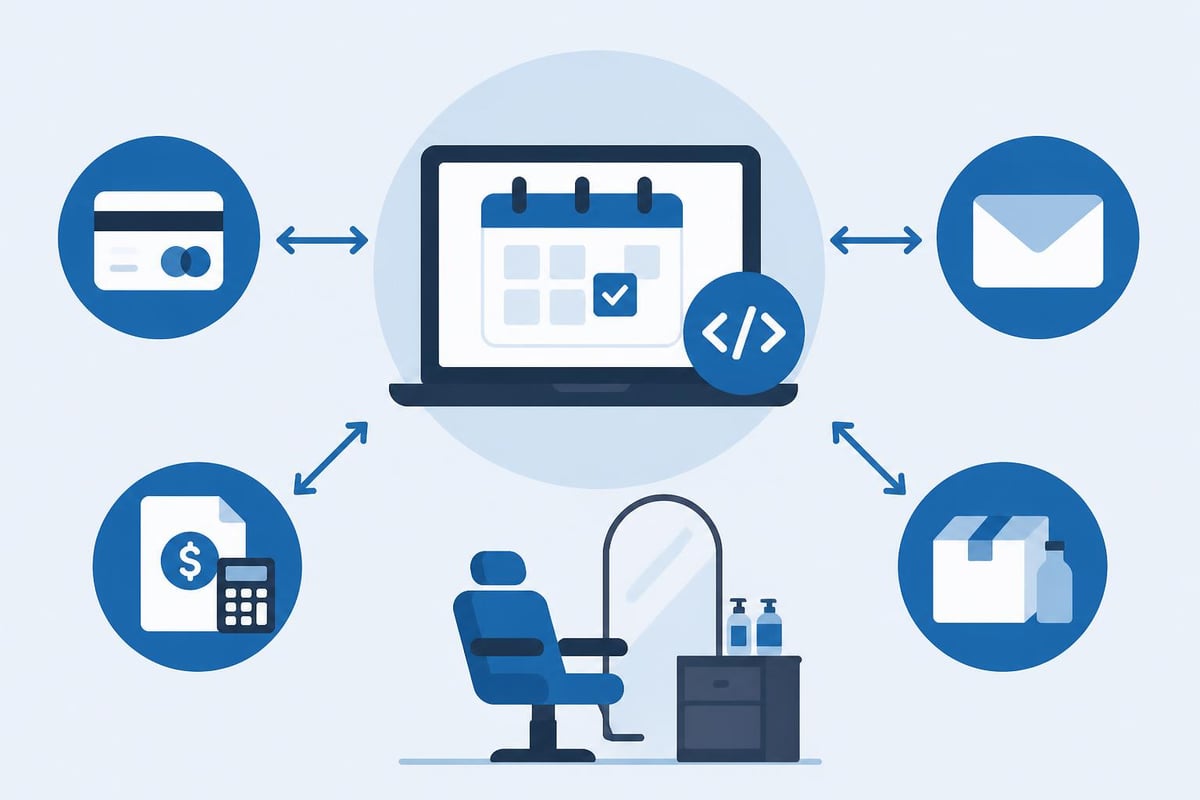
Modern salons operate multiple software systems including point-of-sale terminals, inventory management, client relationship databases, and marketing automation platforms. An open source booking system's value multiplies when it seamlessly exchanges data with these existing tools.
Payment Processing Integration
Accepting deposits or full payment during booking reduces no-show rates significantly. Research from the American Association of Cosmetology Schools indicates that requiring a deposit decreases no-shows by 45-60% compared to free reservations.
Integration approaches include:
Direct API connections to payment processors like Stripe, Square, or PayPal enable real-time transaction processing within the booking flow. This requires development work to implement secure payment handling and comply with PCI DSS standards.
Third-party payment plugins offer pre-built integrations that reduce development time but may limit customization options. Many open source booking systems maintain plugin marketplaces with payment solutions contributed by the developer community.
Hybrid payment workflows allow clients to book freely while sending automated payment requests via email for deposit collection. This approach maintains booking convenience while still securing appointments.
| Payment Method | Development Complexity | Transaction Fees | Client Convenience | No-Show Prevention |
|---|---|---|---|---|
| Direct API Integration | High | 2.9% + $0.30 | Excellent | Excellent |
| Plugin-Based | Low | 2.9% + $0.30 + plugin fee | Good | Excellent |
| Manual Payment Request | Minimal | Varies | Fair | Good |
| Pay at Appointment | None | Varies | Excellent | Poor |
Marketing Automation and Client Engagement
Connecting your open source booking system with email marketing platforms transforms appointment data into targeted campaign opportunities. Clients who consistently book color services every six weeks represent perfect candidates for pre-booking campaigns offering slight discounts for scheduling their next three appointments.
Integration enables:
- Automated win-back campaigns targeting clients who haven't booked within their typical interval
- Birthday promotions offering special services during celebration months
- Service upgrade suggestions based on booking history and client preferences
- Review requests sent automatically 24 hours after appointment completion
- Referral program triggers rewarding clients who bring new customers
Marketing technology firm HubSpot reports that personalized email campaigns generate 6x higher transaction rates than generic messaging. Open source booking systems with robust APIs enable this level of personalization by sharing detailed appointment data with marketing platforms.
Cost Analysis and Resource Planning
While open source software eliminates licensing fees, comprehensive cost analysis must account for implementation, hosting, customization, and ongoing maintenance expenses. Salons should evaluate total cost of ownership over a three-year period to enable accurate comparison with proprietary alternatives.
Initial Implementation Costs
Server infrastructure: Self-hosted solutions require virtual private servers (VPS) or dedicated servers. Quality hosting from providers like DigitalOcean or Linode costs $10-40 monthly for small to medium salons. High-traffic multi-location operations may require $100-300 monthly for adequate performance.
Development and setup: Basic installation of platforms like Booking Pad might take 5-10 hours for technically proficient users. Professional setup including customization typically ranges from $1,500-5,000 depending on complexity.
Data migration: Transferring existing client records, appointment history, and service menus from previous systems requires careful planning. Migration projects typically cost $500-2,000 or can be handled internally with 20-40 hours of staff time.
Training and documentation: Staff must learn the new system's interface and workflows. Budget for 2-4 hours of training per team member plus creation of internal documentation.
Ongoing Operational Expenses
Monthly recurring costs for an open source booking system include:
- Hosting fees: $10-300 depending on traffic and feature requirements
- Security monitoring: $20-100 for automated threat detection and vulnerability scanning
- Backup storage: $5-25 for redundant off-site backup systems
- Email/SMS delivery: $20-200 based on notification volume
- SSL certificates: $0-100 (many hosting providers include free Let's Encrypt certificates)
- Developer support: $100-500 for maintenance, updates, and minor modifications
According to Software Advice's 2025 Salon Technology Report, salons spend an average of $85-150 monthly on appointment booking technology. Open source solutions frequently fall within this range once all costs are considered, with the primary advantage being customization capability rather than cost savings.
Break-Even Analysis
Calculate when customization investments pay for themselves through operational improvements. For example, if custom features reduce no-shows by 3 appointments weekly worth $75 each, that generates $900 monthly in recovered revenue. A $5,000 customization investment reaches break-even in 5.6 months.
Similarly, automated marketing features that generate just 5 additional bookings monthly worth $100 each create $500 in incremental revenue. The development cost of marketing automation integration might break even within 6-10 months.
Community Support and Development Resources
The open source ecosystem provides access to global developer communities, documentation repositories, and collaborative problem-solving that proprietary software vendors rarely match. However, community support differs significantly from dedicated customer service teams.
Leveraging Community Resources
Active open source projects maintain documentation, forums, and issue tracking systems where users share solutions and report bugs. Before implementing any platform, assess community vitality through metrics like:
Commit frequency: Regular code updates indicate active development. Projects with no commits in 6+ months may be abandoned.
Issue resolution time: How quickly do maintainers respond to bug reports? Average response times exceeding two weeks suggest limited support availability.
Community size: Larger user bases generate more shared knowledge, tutorials, and third-party extensions. Small communities may struggle to answer specialized questions.
Commercial backing: Some open source projects receive support from companies offering paid implementation services, providing a middle ground between community support and traditional customer service.
Projects like LibreEvent demonstrate robust community engagement with clear documentation and active development, making them more reliable choices than sporadically maintained alternatives.
Contributing Back to the Ecosystem
Salons that develop custom features can contribute improvements back to the open source project, benefiting the broader community while gaining recognition. Contributions might include:
- Industry-specific templates for salon booking workflows
- Translation files making the software accessible in additional languages
- Bug fixes addressing issues discovered during daily operations
- Documentation improvements clarifying setup procedures or feature usage
- Plugin development creating specialized extensions for beauty industry needs
Contributing to open source projects builds relationships with developers who can provide priority support when critical issues arise. It also ensures your custom features remain compatible with future software versions as maintainers consider your contributions during core development.
Migration Planning and Risk Mitigation
Transitioning from an existing booking system to an open source platform requires careful planning to avoid appointment conflicts, data loss, or client confusion. Successful migrations follow structured processes that minimize operational disruption.
Pre-Migration Preparation
Data audit and cleanup: Before migration, review existing client records for duplicates, outdated information, and incomplete profiles. Clean data transfers more reliably and performs better in the new system.
Parallel operation period: Run both old and new systems simultaneously for 2-4 weeks, allowing staff to become comfortable with the open source platform while maintaining the familiar interface as backup.
Client communication strategy: Notify clients about the new booking system through email campaigns, social media announcements, and in-salon signage. Highlight improvements like enhanced mobile booking or new features specific to your implementation.
Backup and rollback plan: Maintain complete backups of both systems during transition. Develop specific rollback procedures if critical issues emerge, including timeline thresholds for reverting to the previous platform.
Testing and Validation Protocols
Comprehensive testing prevents appointment disasters when going live. Essential test scenarios include:
- Multi-service booking sequences ensuring complex appointments schedule correctly
- Payment processing confirming deposits and full payments process accurately
- Notification delivery verifying confirmations, reminders, and cancellations send properly
- Calendar synchronization across multiple staff members and locations
- Mobile responsiveness testing the interface on various devices and browsers
- Edge case handling like double-bookings, same-day appointments, and capacity conflicts
Recruit 3-5 trusted clients to test the booking system before full launch. Their feedback identifies usability issues technical testing might miss, particularly around interface clarity and mobile experience.
Post-Migration Optimization
Monitor system performance closely during the first 30-60 days. Key metrics include:
- Booking completion rate (percentage of clients who start but don't finish booking)
- Average booking time (how long clients spend completing reservations)
- Error frequency (technical issues preventing successful booking)
- Support request volume (staff or client questions about the new system)
- No-show rate changes (impact of new confirmation and reminder workflows)
Adjust configurations based on actual usage patterns. If data shows clients abandon bookings at the payment step, consider making deposits optional for established clients. If reminder notifications don't reduce no-shows effectively, experiment with timing, message content, or delivery channels.
Advanced Features and Future Capabilities
Leading-edge open source booking systems incorporate artificial intelligence, predictive analytics, and automation capabilities that rival enterprise-grade proprietary platforms. Salons investing in these technologies gain competitive advantages through superior client experiences and operational efficiency.
Predictive Scheduling and Demand Forecasting
Machine learning algorithms analyze historical booking patterns to forecast future demand, enabling optimized staff scheduling and inventory management. These systems identify trends like:
Seasonal service preferences: Color correction appointments increase 40% before major holidays as clients prepare for events and photos.
Day-of-week patterns: Fridays and Saturdays show 3x higher demand for styling services compared to mid-week appointments.
Weather correlations: Rainy forecast days generate increased same-day bookings for services not affected by weather conditions.
Client lifecycle stages: New clients book more frequently during their first 90 days before settling into regular maintenance intervals.
Implementing predictive features requires historical data spanning at least 12-18 months for accurate forecasting. Open source platforms with strong data analytics capabilities enable custom algorithm development tailored to your specific client base and service mix.
Automated Client Journey Optimization
Sophisticated open source booking systems orchestrate personalized client experiences across multiple touchpoints. Journey automation includes:
Pre-appointment preparation: Automatically send service preparation instructions (arrive with clean, dry hair for certain treatments) and parking information 24 hours before appointments.
In-appointment upselling: Trigger staff notifications when clients with high lifetime value arrive, suggesting premium service upgrades or retail product recommendations based on purchase history.
Post-appointment engagement: Schedule follow-up messages asking about satisfaction, providing styling tips specific to services received, and suggesting ideal rebooking timeframes.
Re-engagement campaigns: Identify clients deviating from typical booking intervals and automatically send personalized win-back offers before they defect to competitors.
According to Bain & Company research, increasing client retention rates by just 5% increases profitability by 25-95%, making journey optimization one of the highest-ROI technology investments salons can make.
Multi-Location Coordination
Salons expanding to multiple locations face complex scheduling challenges that basic booking systems struggle to handle. Advanced open source platforms enable:
- Cross-location booking allowing clients to visit any salon in your network
- Staff floating between locations based on demand patterns
- Centralized inventory management tracking products across all sites
- Unified reporting providing enterprise-level insights while maintaining location-specific metrics
- Franchise management with location-specific pricing, services, and branding within shared infrastructure
These capabilities transform independent salons into professional salon groups without sacrificing the personalization that attracts clients initially.
Open source booking systems offer salon owners unprecedented control over their scheduling technology, enabling customization that matches unique business requirements while eliminating vendor dependency. The investment in implementation and ongoing management delivers competitive advantages through tailored client experiences, integrated business processes, and scalable infrastructure that grows with your operation. For salons seeking a proven solution that balances powerful features with user-friendly operation, Salon Booking System provides comprehensive appointment scheduling with online payments, automated notifications, and advanced booking rules trusted since 2016 to enhance client satisfaction and streamline operations.