The salon and beauty industry has witnessed tremendous growth in digital transformation, with appointment scheduling being a critical component. As salon owners seek more control over their booking systems and data, open source appointment scheduling software has emerged as an attractive alternative to proprietary solutions. This technology offers unprecedented flexibility and customization potential, but it also demands careful consideration of technical requirements, security implications, and long-term maintenance needs. Understanding the nuances of open source solutions helps salon professionals make informed decisions about their booking infrastructure.
What Makes Open Source Appointment Scheduling Software Different
Open source appointment scheduling software operates on publicly available code that developers can access, modify, and redistribute freely. Unlike commercial booking systems with locked-down features, these platforms provide complete transparency into how the software functions.
The fundamental distinction lies in ownership and control. When salons implement open source solutions, they own their installation and data completely. There are no vendor lock-ins or mandatory subscription fees for basic functionality. This appeals particularly to technically proficient salon owners or those with access to development resources.
Key characteristics of open source booking platforms:
- Full access to source code for customization
- Community-driven development and improvements
- Self-hosting capabilities on personal servers
- Freedom to modify features without vendor restrictions
- Transparent security auditing potential
However, this freedom comes with responsibilities. Salons must handle their own hosting, maintenance, security updates, and technical troubleshooting unless they hire specialized support services.
Popular Open Source Scheduling Solutions for Service Businesses
Several robust platforms have gained traction in the service industry, each offering distinct advantages for appointment management.
NextAppointments and Easy!Appointments
NextAppointments represents a modern approach built with Next.js and TypeScript, specifically designed for service-based businesses including salons. The platform emphasizes security through regular updates and implements client communication tools alongside automated scheduling features.
Easy!Appointments has established itself as a reliable web-based solution with comprehensive features for calendar management, customer databases, automated reminders, and reporting capabilities. Its straightforward interface makes it accessible even for salon teams without extensive technical expertise.
Cal.com and Self-Hosted Alternatives
Cal.com has emerged as a notable player in the open source scheduling space, offering customizable solutions that scale from individual practitioners to enterprise operations. According to a detailed review by MapleMetric, the platform provides flexible pricing plans while maintaining the transparency and customization benefits of open source architecture.
| Platform | Best For | Technical Complexity | Key Strength |
|---|---|---|---|
| NextAppointments | Medical offices, salons | Moderate | Modern tech stack, security focus |
| Easy!Appointments | Small service businesses | Low to moderate | User-friendly interface, comprehensive features |
| Cal.com | Scalable operations | Moderate | Enterprise features, API integrations |
Security Considerations for Salon Data Management
Security represents one of the most critical concerns when evaluating open source appointment scheduling software for salon operations. Client data, payment information, and business records require robust protection against unauthorized access and breaches.
The open nature of source code creates both advantages and vulnerabilities. While transparency allows security experts to identify and patch vulnerabilities quickly, it also means potential attackers can study the code for weaknesses. According to security analysis by Fast Lean Smart, salons must prioritize solutions with active development communities that regularly release security patches.
Critical security measures for salon implementations:
- Regular software updates: Installing security patches promptly prevents exploitation of known vulnerabilities
- SSL/TLS encryption: Protecting data transmission between clients and servers
- Database security: Implementing proper authentication, encryption at rest, and access controls
- Backup protocols: Establishing automated, secure backup systems for disaster recovery
- Access management: Limiting user permissions based on roles and responsibilities
Many salon owners lack the technical expertise to maintain these security standards independently. This reality has led to increased adoption of managed hosting services specifically for open source booking platforms, where security professionals handle updates and monitoring while preserving the customization benefits.
Cost Analysis: Total Ownership Beyond Initial Price
While open source appointment scheduling software carries no licensing fees, the total cost of ownership extends far beyond the initial download. Salons must account for multiple financial factors when comparing open source options to commercial solutions.
Direct and Indirect Expenses
Infrastructure costs include server hosting, domain registration, SSL certificates, and bandwidth consumption. A salon handling 200+ appointments monthly might spend $20-100 per month on reliable hosting, depending on traffic and storage requirements.
Development and customization expenses vary dramatically based on requirements. Simple installations might require 5-10 hours of technical setup, while custom feature development could demand 40+ hours at $50-150 per hour for qualified developers.
Maintenance and updates represent ongoing commitments. According to industry estimates, maintaining a self-hosted booking system requires 2-5 hours monthly for updates, backups, and troubleshooting. Salons often underestimate this time investment when calculating costs.
| Cost Category | Open Source (Annual) | Typical SaaS Solution (Annual) |
|---|---|---|
| Hosting & Infrastructure | $240-$1,200 | Included in subscription |
| Initial Setup | $250-$1,500 | $0-$300 |
| Maintenance & Updates | $1,200-$3,000 | Included in subscription |
| Support Services | $0-$2,400 | Included in subscription |
| Total Range | $1,690-$8,100 | $600-$2,400 |
These figures illuminate an important reality: open source appointment scheduling software often costs more for small salons than commercial alternatives when factoring in technical labor. The value proposition improves for larger operations with multiple locations or specific customization needs that justify the development investment.

Technical Requirements and Implementation Challenges
Successfully deploying open source appointment scheduling software demands specific technical capabilities and infrastructure. Salons must evaluate whether their team possesses these skills or can access them affordably.
Server and Hosting Specifications
Most open source booking platforms require:
- Web server (Apache, Nginx) with PHP 7.4+ or Node.js support
- Database system (MySQL, PostgreSQL) for storing appointment and client data
- Minimum 1GB RAM for small installations, scaling up with user volume
- SSL certificate for secure HTTPS connections
- Regular backup storage with offsite redundancy
The DXCal comparison of open source scheduling software emphasizes that technical prerequisites vary significantly between platforms, with some requiring more sophisticated server configurations than others.
Common Implementation Obstacles
Salon owners frequently encounter these challenges during deployment:
Integration complexity often exceeds expectations. Connecting the booking system with payment processors, email marketing platforms, point-of-sale systems, and accounting software requires API knowledge and development time. Unlike commercial solutions with pre-built integrations, open source platforms may need custom connector development.
Mobile responsiveness varies across platforms. While most modern open source solutions offer responsive designs, older systems may require significant CSS and layout modifications to function properly on smartphones and tablets where many clients book appointments.
Customization scope creep represents a financial risk. Initial plans for simple color scheme changes often expand into feature requests, workflow modifications, and interface redesigns that multiply development costs.
Customization Capabilities for Salon-Specific Workflows
The primary advantage of open source appointment scheduling software lies in unlimited customization potential. Salons with unique service models can modify every aspect of the booking experience to match their specific operational requirements.
Tailoring Booking Flows
Beauty businesses often require specialized scheduling logic that generic platforms don't accommodate. Examples include:
- Service dependencies: Requiring color consultations before first-time color services
- Provider qualifications: Restricting certain treatments to certified specialists
- Equipment scheduling: Managing shared resources like shampoo bowls or treatment rooms alongside staff calendars
- Variable service duration: Adjusting appointment length based on client hair type, length, or service history
With access to source code, developers can implement these workflows precisely. The GitHub repository for NextAppointments demonstrates how modern open source projects provide extensible architectures that facilitate custom business logic integration.
Branding and User Experience
Complete visual control allows salons to create booking interfaces that seamlessly integrate with their website design and brand identity. This extends beyond simple color changes to include:
- Custom form fields capturing salon-specific client information
- Branded confirmation emails matching salon marketing materials
- Personalized client portals displaying service history and loyalty points
- Integration with existing website content management systems
Support Systems and Community Resources
Unlike commercial software vendors with dedicated support teams, open source appointment scheduling software relies on community forums, documentation, and third-party consultants for assistance.
Documentation quality varies significantly between projects. Well-maintained platforms provide comprehensive installation guides, API references, and troubleshooting resources. Less mature projects may offer minimal guidance, requiring users to read source code for understanding functionality.
Community forums serve as primary support channels where users help each other solve problems. Active communities respond to questions within hours, while smaller projects might have sporadic engagement. Salons should evaluate community activity levels before committing to a platform.
Commercial support options exist for popular open source solutions. Some companies offer paid support contracts, managed hosting, or guaranteed response times for critical issues. These services bridge the gap between free software and the reliability expectations of professional salon operations.
As Calendesk’s analysis of open source appointment scheduling points out, the availability and quality of support significantly impact whether salons successfully maintain their booking systems long-term.
Migration Considerations and Data Portability
Transitioning to or from open source appointment scheduling software involves substantial data management and process changes that salons must plan carefully.
Exporting from Current Systems
Moving appointment history, client records, and service catalogs from existing platforms requires:
- Data export capabilities in the current system (CSV, JSON, or API access)
- Data mapping to align fields between systems
- Import scripts to load information into the new platform
- Validation processes ensuring data accuracy after migration
- Historical preservation maintaining appointment records for tax and business analysis
Many commercial booking systems limit data export functionality, making migration challenging. This reality makes the data ownership offered by open source solutions particularly valuable.
Future Flexibility
Open source platforms inherently provide better long-term data portability. With direct database access, salons can extract complete information at any time without vendor cooperation. This flexibility protects against:
- Platform abandonment or shutdown
- Unsustainable pricing increases
- Feature changes that no longer meet business needs
- Acquisition by companies with different policies
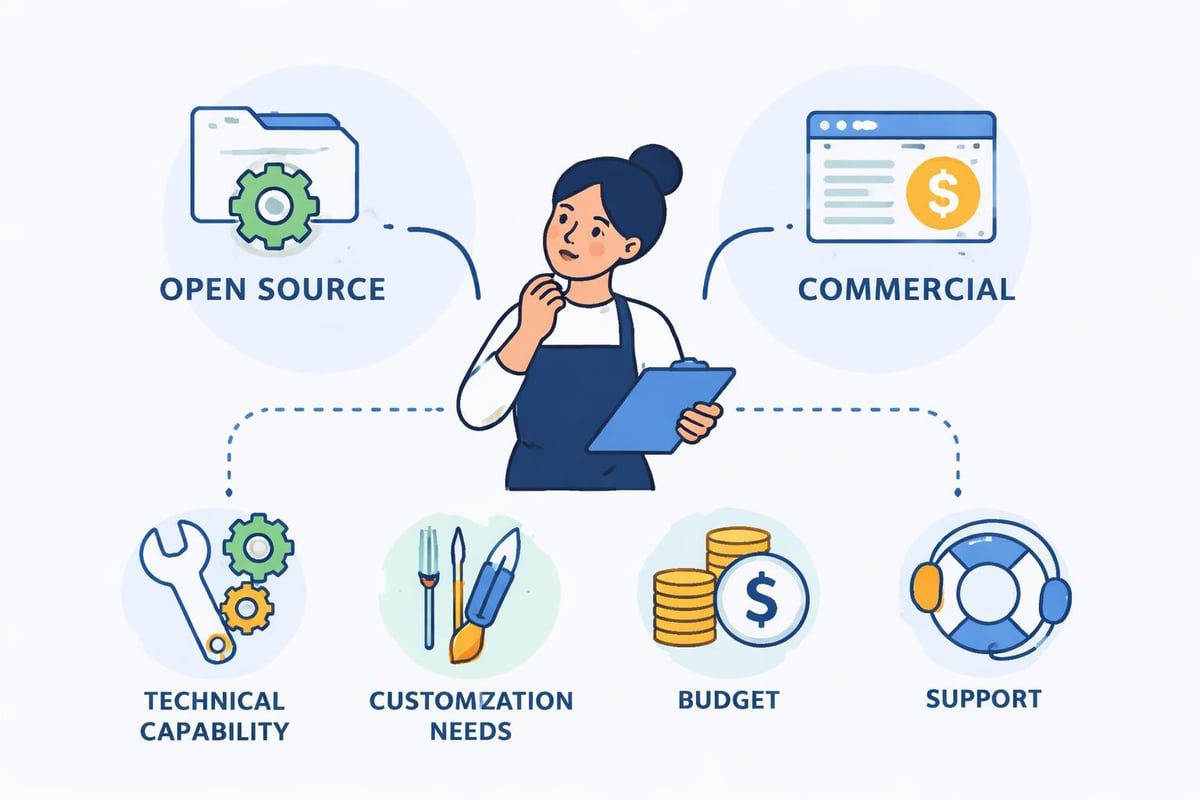
When Open Source Makes Sense for Salons
Despite the technical demands, certain salon scenarios justify the open source appointment scheduling software approach.
Multi-location operations with dedicated IT resources benefit from centralized control and customization across all sites. The ability to implement standardized workflows while accommodating location-specific requirements provides operational efficiency that justifies development investment.
Salons with unique service models that commercial platforms don't support find open source solutions enable their business model. Examples include membership-based access, complex package structures, or specialized treatment protocols requiring custom scheduling logic.
Tech-savvy owners who enjoy managing their digital infrastructure and want complete control over their booking system find satisfaction in open source platforms. The learning curve becomes an engaging challenge rather than a frustrating obstacle.
Budget-conscious businesses with technical skills can significantly reduce long-term costs by eliminating subscription fees, particularly as they scale appointment volume where commercial platforms increase pricing.
Conversely, salons without technical expertise, those seeking rapid deployment, or businesses prioritizing support availability typically find better value in commercial solutions despite higher subscription costs.
Integration with Salon Business Ecosystems
Modern salons operate multiple interconnected systems that must share data seamlessly. Open source appointment scheduling software integration capabilities determine operational efficiency.
Payment processing integration enables clients to prepay for appointments, reducing no-shows while improving cash flow. API connections to processors like Stripe or Square require development work but provide complete control over transaction flows and fee structures.
Marketing automation connections synchronize booking data with email campaigns, SMS reminders, and promotional targeting. While commercial platforms offer pre-built integrations with major marketing tools, open source solutions require custom connector development or third-party middleware.
Point-of-sale systems create comprehensive client records when booking data merges with transaction history. This integration reveals valuable insights about service combinations, retail purchases, and lifetime client value that inform business strategy.
Evaluating Long-Term Viability
The sustainability of open source appointment scheduling software depends on active development communities and project governance structures.
Development activity indicates whether a platform receives regular updates, bug fixes, and feature enhancements. Projects with recent commits, active contributors, and responsive maintainers demonstrate health. Abandoned projects present security risks and compatibility issues as technology evolves.
User adoption rates suggest community strength and knowledge base depth. Platforms with growing installation counts typically have better documentation, more answered forum questions, and more available developers familiar with the codebase.
Governance models affect project direction and stability. Community-governed projects with transparent decision-making provide more predictability than single-developer initiatives that might disappear unexpectedly.
According to TechRadar’s comprehensive scheduling app comparison, evaluating long-term viability requires examining both technical metrics and community health indicators before committing to any platform.
Open source appointment scheduling software presents salon owners with powerful customization capabilities and complete data ownership, but demands technical expertise and ongoing maintenance commitments that many small businesses struggle to sustain. The decision ultimately depends on your team's technical capabilities, unique scheduling requirements, and long-term growth strategy. For salon professionals seeking robust booking management without the technical complexity, Salon Booking System delivers comprehensive scheduling features, online payments, customer notifications, and advanced booking rules in a user-friendly platform trusted since 2016, allowing you to focus on client satisfaction rather than system maintenance.