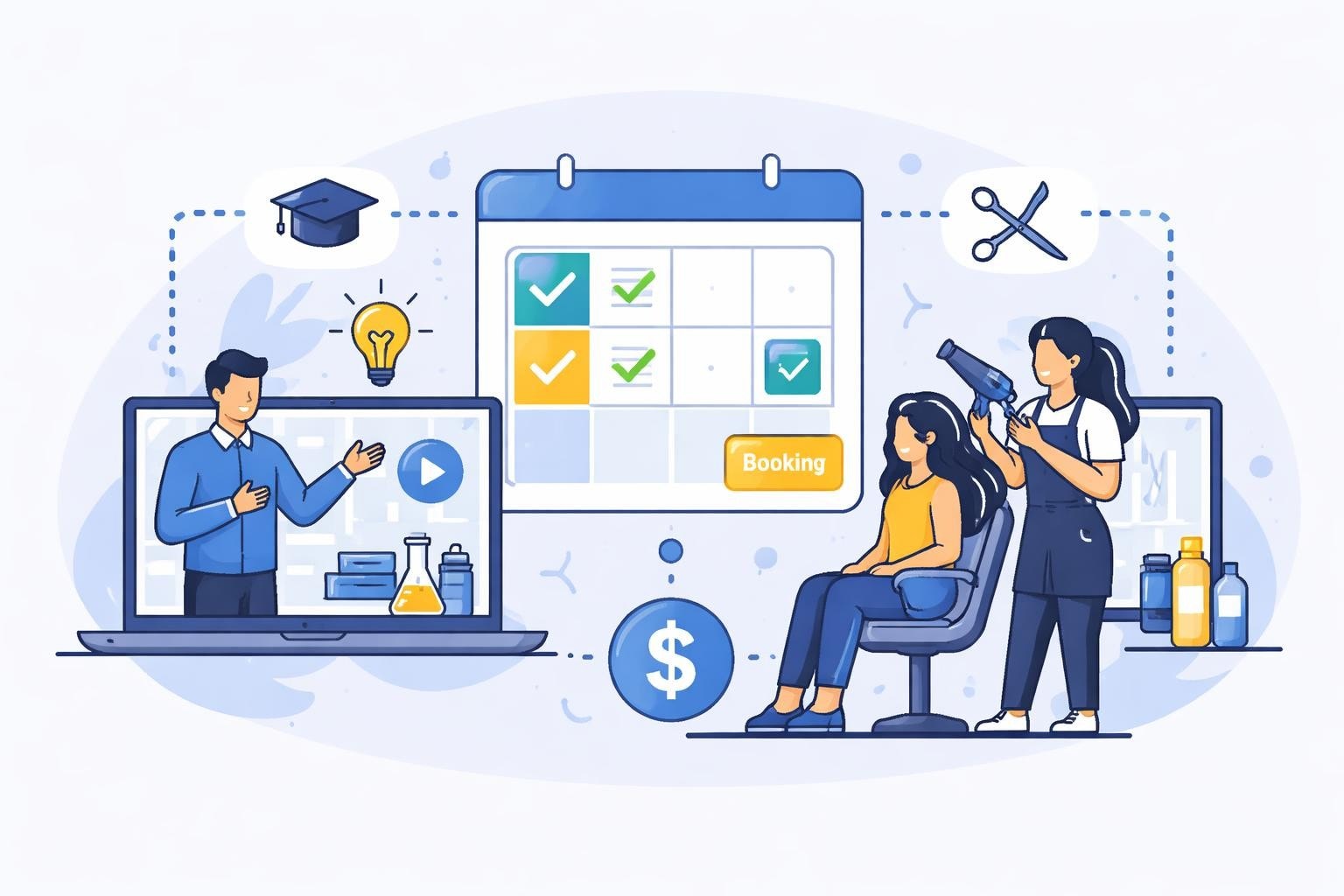
The beauty industry has evolved beyond traditional service delivery. Today's successful salons generate additional revenue by offering educational workshops, masterclasses, and certification programs alongside their regular appointments. An online class booking system has become essential infrastructure for salons looking to diversify income streams while building community and establishing authority in their market. Whether you're planning beginner makeup tutorials, advanced color correction workshops, or business development seminars for fellow beauty professionals, the right scheduling technology determines whether your educational initiatives thrive or become administrative nightmares.
Why Salons Are Embracing Educational Programming
Salon owners across North America are discovering that educational offerings create multiple business advantages beyond immediate ticket sales. According to Professional Beauty Association data, salons offering regular educational events report 34% higher client retention rates compared to service-only competitors.
Educational programming delivers measurable benefits:
- Revenue diversification that protects against seasonal appointment fluctuations
- Authority positioning that attracts premium clientele willing to pay higher rates
- Staff development that reduces employee turnover by 28% industry-wide
- Community building that transforms transactional relationships into loyal followings
- Marketing differentiation in saturated local markets
The challenge lies in managing class logistics alongside your regular appointment calendar. Attempting to handle workshop registrations through phone calls, social media messages, and text confirmations creates confusion, double-bookings, and missed revenue opportunities.

Core Features That Matter for Beauty Education
When evaluating potential systems, salon owners must prioritize features that address the unique requirements of class-based scheduling versus individual appointments. The fundamental differences between these booking types require specific technological capabilities.
Capacity Management and Waitlist Automation
Unlike one-on-one appointments, educational sessions involve fixed maximum capacities. Your balayage masterclass might accommodate twelve participants, while your Instagram marketing workshop seats twenty. The system must enforce these limits automatically while offering waitlist functionality.
Essential capacity features include:
- Automatic enrollment cutoff when maximum attendance is reached
- Waitlist management that automatically promotes registrants when cancellations occur
- Minimum capacity thresholds that trigger event cancellation notifications
- Real-time availability display showing remaining seats
- Group discount pricing for multiple registrant packages
According to best practices for online booking systems, proper capacity configuration prevents the embarrassment of overcrowded workshops or the financial loss from under-enrolled sessions that proceed despite insufficient participation.
Multi-Session Series Management
Many valuable educational programs span multiple sessions. Your advanced color theory certification might require four consecutive Tuesday evenings, while your bridal makeup bootcamp runs across three full Saturdays. An effective online class booking system must handle series registration as a single transaction.
| Feature | Benefit | Impact |
|---|---|---|
| Series package pricing | Encourages full commitment vs. drop-in attendance | 43% higher completion rates |
| Automated reminder sequences | Reduces no-shows across all session dates | Saves 6-8 hours monthly |
| Progress tracking | Identifies struggling participants early | Improves satisfaction scores |
| Certificate automation | Delivers completion credentials instantly | Enhances perceived value |
The system should automatically block all required dates when someone registers for the series, preventing partial bookings that create administrative complications.
Payment Flexibility and Deposit Options
Educational offerings typically require different payment structures than regular appointments. While a haircut is paid in full at service completion, your three-day intensive haircutting workshop might require a non-refundable deposit at registration plus final payment two weeks before the event.
Payment configuration requirements:
- Deposit amounts (fixed dollar or percentage-based)
- Payment plan options for expensive certification programs
- Early-bird pricing that automatically expires on specific dates
- Group rates that activate when multiple people register together
- Refund policy enforcement based on cancellation timing
Research from implementation guides for online booking systems indicates that flexible payment options increase workshop registration rates by 27% while reducing payment-related disputes.
Integration With Regular Appointment Scheduling
The most powerful advantage of modern booking technology emerges when class scheduling integrates seamlessly with your existing appointment calendar. Your stylists shouldn't need to toggle between separate systems to understand their complete schedule.
Unified Calendar Views
Your head colorist teaching a Sunday balayage workshop needs that time blocked on her regular appointment calendar automatically. The receptionist checking availability for new client consultations must see educational commitments without manually checking separate spreadsheets.
Integration prevents common scheduling disasters:
- Double-booking instructors for both workshops and regular appointments
- Scheduling intensive classes during your busiest retail periods
- Overlapping events that compete for the same physical space
- Staff confusion about daily responsibilities and locations
When your online class booking system shares the same database as your appointment scheduler, these conflicts become impossible. Real-time synchronization ensures accuracy across all booking channels.
Resource Allocation Across Services
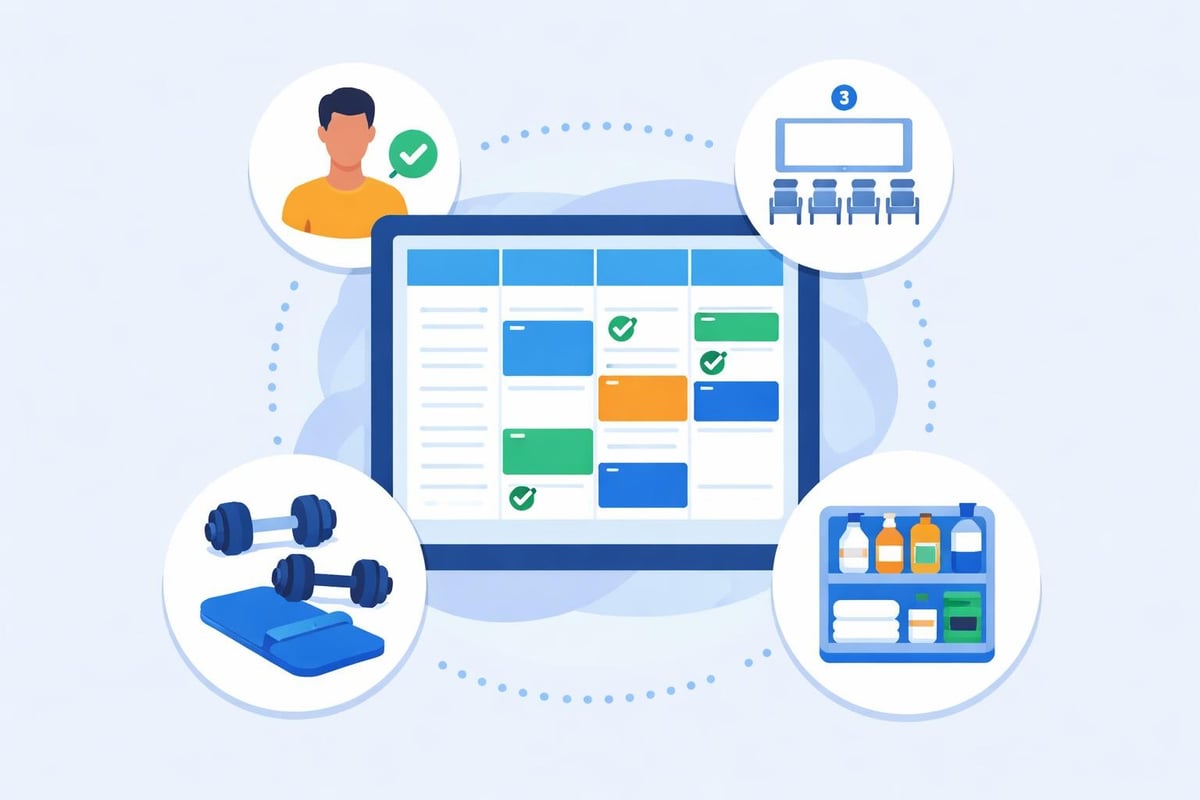
Beyond staff time, educational programs require physical resources. Your makeup artistry class needs specific stations, lighting equipment, and product inventory. The system must track these resources alongside room availability and instructor schedules.
Student Experience and Engagement Features
The registration process directly impacts conversion rates and participant satisfaction. According to data from fundamentals of online class booking systems, streamlined enrollment experiences increase completed registrations by 41% compared to cumbersome multi-step processes.
Mobile-Optimized Registration
Seventy-two percent of workshop registrations originate from mobile devices in 2026. Your booking interface must deliver flawless functionality on smartphones and tablets without requiring app downloads.
Mobile optimization essentials:
- Single-page checkout that minimizes form fields
- Digital wallet integration (Apple Pay, Google Pay)
- Automatic address completion using device location services
- Readable text and tappable buttons sized appropriately
- Progress indicators for multi-step registration flows
Testing your registration process on actual mobile devices reveals usability issues that desktop reviews miss. Have staff members complete test bookings using their personal phones to identify friction points.
Automated Communication Sequences
Professional communication throughout the student journey builds credibility and reduces support inquiries. Your online class booking system should trigger appropriate messages automatically based on registration status and timeline.
| Communication Type | Timing | Purpose |
|---|---|---|
| Registration confirmation | Immediate | Provides receipt and basic details |
| Pre-class preparation | 1 week before | Lists required materials and arrival instructions |
| Day-before reminder | 24 hours prior | Reduces no-shows by 34% |
| Post-class follow-up | 1 day after | Requests feedback and promotes future events |
| Certificate delivery | Upon completion | Delivers credentials and encourages social sharing |
These automated sequences eliminate the manual labor of sending individual reminder emails while ensuring consistent, professional communication that reflects positively on your salon brand.
Security and Data Protection Considerations
Educational bookings collect sensitive participant information including payment details, contact data, and potentially certification credentials. Security measures in online booking systems must protect this information from breaches, unauthorized access, and fraudulent transactions.
Payment Security Standards
Any system processing credit card transactions must maintain PCI DSS compliance. This industry standard ensures that payment information is encrypted, stored securely, and transmitted safely.
Verify these security features:
- SSL certification (visible https:// and padlock icon)
- Tokenization that stores payment methods without raw card numbers
- Two-factor authentication for administrative access
- Regular security audits from third-party firms
- Automatic logout after inactivity periods
According to data protection strategies for booking platforms, security breaches cost small businesses an average of $42,000 in direct costs plus immeasurable reputation damage. Prevention through proper system selection is substantially cheaper than remediation after incidents.
Privacy Policy Compliance
Educational programs may collect information beyond standard appointment data, including professional licenses, educational backgrounds, and portfolio samples. Your booking system must comply with privacy regulations including CCPA in California and similar state laws.
Participants should receive clear disclosure about data collection practices, usage intentions, and retention policies. The system must provide mechanisms for registrants to access, correct, or delete their personal information upon request.
Reporting and Analytics for Business Intelligence
Data generated through your educational bookings reveals actionable insights about program performance, participant demographics, and revenue optimization opportunities. Advanced reporting capabilities transform raw booking data into strategic business intelligence.
Revenue Analysis and Forecasting
Understanding which educational offerings generate the highest returns guides future programming decisions. Your online class booking system should track metrics beyond simple attendance counts.
Critical financial metrics include:
- Revenue per participant across different workshop types
- Cost per acquisition for various marketing channels
- Lifetime value of students who become regular service clients
- Seasonal demand patterns that inform scheduling strategy
- Price sensitivity analysis across different demographic segments
Salons using data-driven programming decisions report 23% higher educational revenue compared to those relying on intuition alone. The system should export detailed financial reports that integrate with your accounting software.
Student Demographics and Behavior Patterns
Knowing who registers for your classes enables more effective marketing and program development. Demographic analysis reveals whether you're reaching your target audience or attracting unexpected participant profiles.
Actionable demographic insights:
- Age distribution that guides content complexity and marketing channels
- Geographic radius showing whether participants travel significant distances
- Professional background (fellow beauty professionals vs. consumers)
- Repeat registration rates indicating satisfaction and loyalty
- Dropout patterns that identify problematic scheduling or pricing
This intelligence allows you to refine offerings, adjust pricing strategies, and allocate marketing budgets more effectively. Comparison reviews of class booking systems emphasize reporting capabilities as a key differentiator separating basic schedulers from strategic business tools.

Implementation Strategy for Salon Environments
Successful deployment requires more than selecting appropriate software. The transition from manual class scheduling to automated systems involves staff training, process documentation, and change management.
Staff Training and Adoption
Your team must understand both the technical operation and the business rationale behind the new system. Resistance typically emerges when staff members perceive technology as complicating rather than simplifying their work.
Training components for smooth adoption:
- Administrator training covering class creation, pricing configuration, and capacity management
- Instructor orientation teaching how to view rosters, communicate with participants, and track attendance
- Front desk procedures for handling phone inquiries about upcoming workshops
- Troubleshooting protocols for common technical issues and escalation paths
- Marketing team education on promoting classes through booking links and social integration
Dedicate two weeks to parallel operation where both old and new systems run simultaneously. This safety net builds confidence while revealing process gaps before full transition.
Marketing Integration and Promotion
The most sophisticated online class booking system delivers zero value if potential participants never discover your educational offerings. Integration with your existing marketing channels maximizes registration conversions.
Your booking system should generate embeddable widgets for your website, shareable direct links for social media, and email campaign integration for your existing client list. According to best practices for educational scheduling, multi-channel promotion increases registration rates by 56% compared to single-channel approaches.
High-performing promotion strategies include:
- Instagram Stories with direct booking swipe-up links
- Email campaigns to segmented client lists based on service history
- Website homepage feature rotations highlighting upcoming workshops
- Google My Business posts that appear in local search results
- Strategic partnerships with complementary businesses reaching your target audience
Track which channels drive actual registrations, not just clicks or impressions. This attribution data guides budget allocation toward the most cost-effective marketing investments.
Specialized Considerations for Different Educational Formats
Not all classes function identically. Your booking system must accommodate various educational delivery models prevalent in the beauty industry.
Hands-On Workshops Versus Demonstration Classes
Hands-on workshops where each participant works with models or mannequins require different capacity calculations than demonstration classes where students observe the instructor. The former might accommodate eight participants based on available workstations, while the latter could handle thirty limited only by seating.
Your online class booking system should allow format specification that automatically applies appropriate capacity limits, pricing structures, and equipment requirements. Workshops requiring student practice time need longer duration blocks than demonstration-only formats.
Certification Programs and Continuing Education
Beauty professionals seeking certification credits or continuing education hours need official documentation of completion. The system should generate certificates automatically upon course completion, including required information such as instructor credentials, hours completed, and unique certificate numbers.
Integration with industry credentialing organizations streamlines the verification process. Some advanced systems connect directly with state licensing boards to report completed hours electronically, eliminating manual paperwork for both your salon and participants.
Virtual and Hybrid Learning Options
The shift toward digital education that accelerated in 2020 remains relevant in 2026. Many salons now offer virtual workshops alongside in-person classes, expanding geographic reach beyond their local market.
Your booking system should handle both formats seamlessly, with virtual sessions automatically sending video conferencing links, digital handouts, and replay access. Hybrid events where some participants attend physically while others join remotely require sophisticated capacity management tracking both in-room seats and virtual attendance limits.
Cost-Benefit Analysis for Salon Owners
Investing in dedicated scheduling technology requires justification through tangible return on investment. Calculate both direct financial returns and indirect operational benefits when evaluating different systems.
Direct Revenue Impact
Educational programming generates immediate income through registration fees. A salon offering two workshops monthly at $150 per participant with an average enrollment of ten students generates $36,000 annually in direct educational revenue.
Additional revenue streams include:
- Product sales to workshop participants (average 40% conversion rate)
- Service bookings from students becoming ongoing clients (28% conversion rate)
- Certification program fees for multi-session intensive training
- Private coaching sessions booked by workshop alumni
- Licensing opportunities for successful curriculum sold to other salons
The right online class booking system increases these revenue streams by reducing friction in the registration process, enabling higher workshop frequency through automated administration, and supporting larger class sizes through efficient capacity management.
Operational Efficiency Savings
Beyond revenue generation, automated scheduling eliminates labor costs associated with manual class administration. Industry benchmarks indicate that managing educational programs manually requires approximately fifteen hours monthly for a salon offering regular workshops.
| Manual Task | Hours Monthly | Hourly Cost | Annual Expense |
|---|---|---|---|
| Registration processing | 4 hours | $25 | $1,200 |
| Payment collection and tracking | 3 hours | $25 | $900 |
| Reminder communications | 2 hours | $25 | $600 |
| Roster management | 2 hours | $25 | $600 |
| Certificate creation | 2 hours | $25 | $600 |
| Reporting and analytics | 2 hours | $25 | $600 |
| Total | 15 hours | $4,500 |
An online class booking system automating these tasks delivers immediate operational savings of $4,500 annually, effectively paying for itself within the first year at typical subscription pricing levels.
Long-Term Strategic Advantages
Beyond immediate financial returns, educational programming supported by robust scheduling technology positions your salon for sustainable competitive advantage in increasingly crowded markets.
Brand Authority and Market Positioning
Salons recognized as educational leaders attract premium clientele willing to pay higher service prices. When potential clients research local options, evidence of professional teaching activity signals expertise and credibility that purely transactional service providers cannot match.
Educational content marketing leverages workshop topics into blog posts, social media content, and YouTube tutorials that improve search engine visibility. Your balayage workshop becomes a blog article about balayage techniques, a video tutorial showcasing your methodology, and social proof through student testimonials.
This content flywheel transforms educational programming from a standalone revenue stream into a comprehensive marketing strategy that feeds your core service business.
Talent Attraction and Retention
Top beauty professionals seek employers who invest in ongoing education and professional development. Salons offering regular internal training workshops and external educational programming attract higher-quality applicants and reduce turnover among existing staff.
When your stylists teach workshops, they develop presentation skills, deepen technical expertise, and gain industry recognition that increases job satisfaction without requiring them to leave your employment. This creates a virtuous cycle where your best talent stays longer, becomes even better through teaching, and attracts additional talented professionals who want to work alongside recognized experts.
Modern salons must embrace educational programming as a core business strategy, not an optional side venture, and the right technology infrastructure makes this transition operationally feasible. If you're ready to transform your salon into an educational destination while maintaining flawless management of regular appointments, Salon Booking System delivers the comprehensive scheduling solution you need. Since 2016, the platform has helped salons streamline both service appointments and class bookings through integrated tools including online payments, automated notifications, and advanced scheduling rules. Discover how the system can eliminate administrative burdens while unlocking new revenue opportunities for your beauty business.