The salon industry across the United Kingdom has undergone significant digital transformation in recent years, with appointment scheduling technology becoming essential rather than optional. An online booking system UK salons trust must address specific challenges unique to beauty businesses: managing multiple service providers, handling complex pricing structures, reducing no-shows, and maximizing chair utilization. For salon owners, hairdressers, barbers, and beauty professionals, selecting the right booking platform directly impacts revenue, operational efficiency, and client satisfaction. This guide examines the critical features, implementation strategies, and measurable benefits of modern booking systems tailored for UK beauty businesses.
Understanding the UK Salon Booking Market in 2026
The beauty and personal care sector in the United Kingdom generates approximately £28.4 billion annually, with independent salons and small chains comprising over 65% of the market. According to research by the National Hairdressers' Federation, salons that implement digital booking systems experience an average 23% reduction in appointment gaps and a 31% decrease in no-show rates compared to those relying solely on telephone bookings.
Consumer behavior has fundamentally shifted. A 2025 study by Accenture found that 67% of UK consumers prefer booking beauty services online rather than calling, with this preference rising to 84% among clients aged 18-34. This demographic now represents the fastest-growing segment of salon clientele, making digital accessibility a competitive necessity.
The transformation extends beyond client preferences. Research on how online booking systems transformed the UK demonstrates that businesses adopting these platforms report significant improvements in staff productivity, with reception teams spending 40% less time managing appointment logistics.
Key Market Drivers for Adoption
Several factors accelerate the adoption of booking technology across UK salons:
- Staff efficiency requirements: Average salon reception staff spend 12-15 hours weekly on appointment coordination
- Client convenience expectations: 73% of consumers abandon booking attempts if the process takes longer than three minutes
- Revenue optimization: Digital systems reduce booking gaps by enabling real-time availability visibility
- Competitive differentiation: Salons with 24/7 booking capability capture appointments outside business hours
- Data-driven decision making: Booking analytics reveal peak times, popular services, and client retention patterns
Essential Features of an Effective Online Booking System UK Salons Need
Not all booking platforms deliver equal value for beauty businesses. A robust online booking system UK salons should prioritize must include features specifically designed for the complexity of salon operations.
Service and Staff Management
Salons typically offer multiple services with varying durations, from 15-minute express treatments to three-hour color corrections. Your booking system must accommodate:
Service complexity handling includes the ability to define different service durations, create service bundles (cut and blow-dry packages), manage add-on services (treatments applied during main appointments), and set service-specific pricing that varies by stylist experience level.
Staff scheduling capabilities should enable you to assign services to specific team members based on expertise, set individual working hours and break times, manage multiple staff members simultaneously, and define booking rules (such as minimum notice periods or maximum daily appointments).
| Feature Category | Business Impact | Implementation Priority |
|---|---|---|
| Online payment processing | Reduces no-shows by 47%, improves cash flow | High |
| Automated SMS/email reminders | Decreases missed appointments by 38% | High |
| Mobile-responsive booking widget | Captures 54% of bookings outside business hours | High |
| Client history and preferences | Increases rebooking rate by 29% | Medium |
| Multi-location support | Essential for chains, scalable for growth | Medium |
| Gift voucher management | Generates average 12% additional revenue | Low to Medium |
Payment Integration and Financial Controls
Payment functionality separates basic appointment calendars from comprehensive business management tools. An effective system should support:
- Deposit requirements for high-value services or new clients
- Full prepayment options to secure revenue and virtually eliminate no-shows
- Flexible payment methods including card payments, digital wallets, and contactless options
- Automated invoicing that generates receipts and integrates with accounting software
- Refund and cancellation policies with customizable rules and processing
Case studies from UK businesses implementing online booking solutions demonstrate that salons requiring deposits see no-show rates drop from industry average of 15-20% to below 5%.
Client Communication and Engagement
Modern booking systems function as customer relationship management platforms. Communication features should include:
Automated notification sequences send booking confirmations within seconds, reminder messages 24-48 hours before appointments, follow-up messages requesting feedback, and promotional communications about special offers or new services.
Personalization capabilities address clients by name, reference previous services and preferences, suggest relevant services based on booking history, and acknowledge special occasions like birthdays with offers.
Research published in the Journal of Service Management indicates that personalized client communications increase retention rates by 18-22% compared to generic messaging approaches.
Implementation Strategy for UK Salon Businesses
Successfully deploying an online booking system UK operations require careful planning and phased execution. Rushing implementation without proper preparation frequently results in staff resistance, client confusion, and temporary operational disruption.
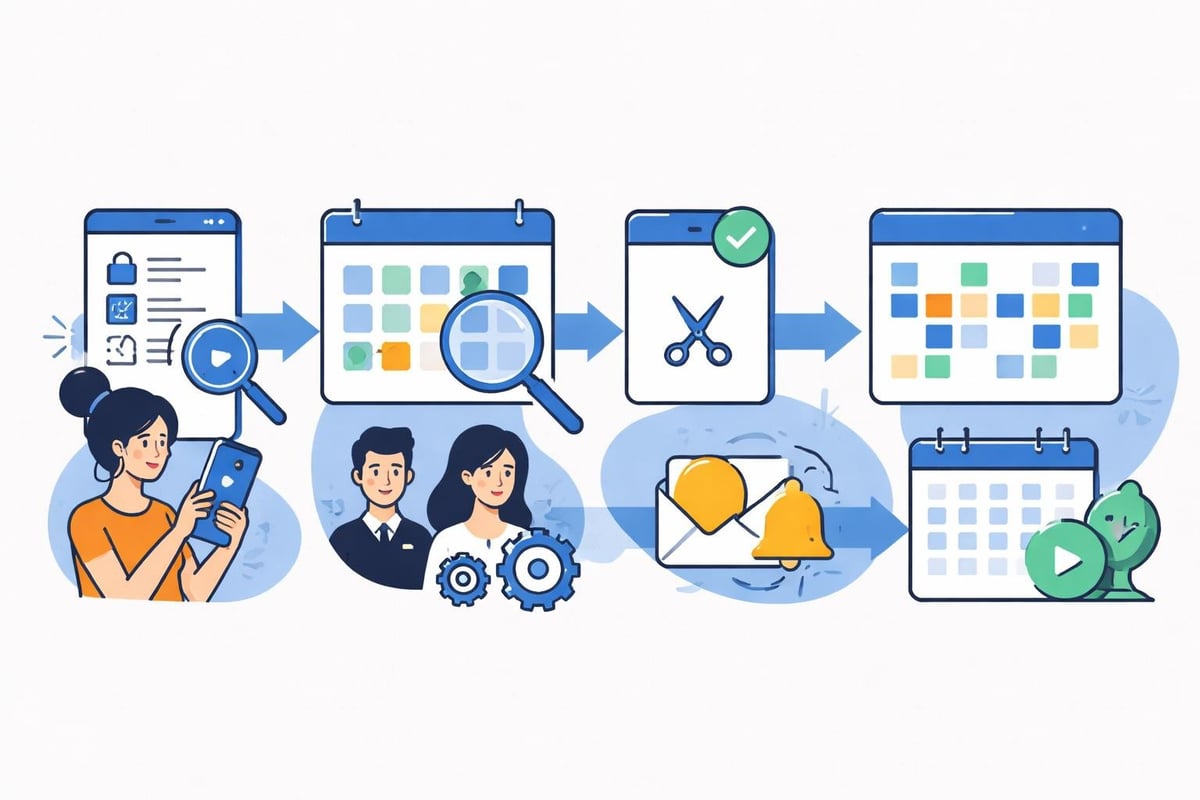
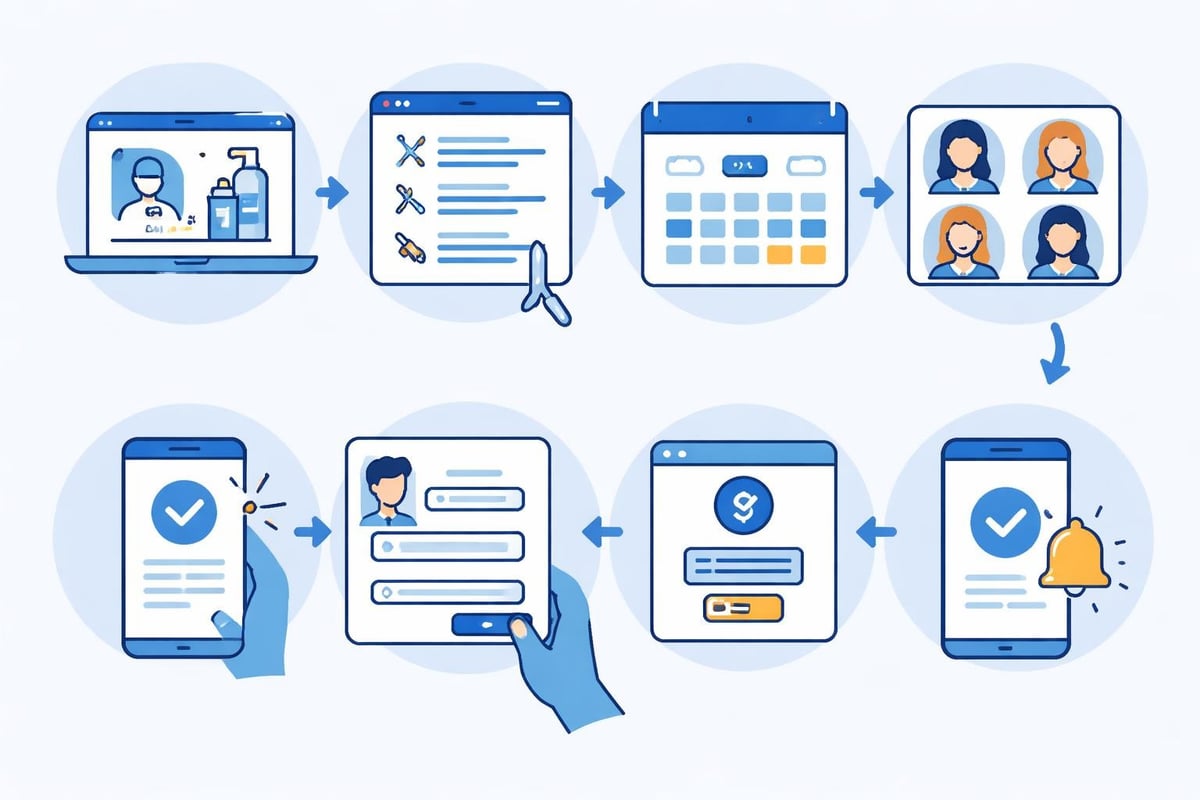
Phase One: Preparation and System Configuration (Weeks 1-2)
Begin by auditing your current appointment management process. Document every step, identify pain points, and establish baseline metrics for comparison after implementation.
Configuration tasks include:
- Enter all services with accurate durations and pricing
- Create staff profiles with working hours and service assignments
- Set business rules (booking windows, cancellation policies, buffer times)
- Configure payment methods and deposit requirements
- Customize notification templates with your brand voice
- Test the complete booking flow from client perspective
Invest time in properly structuring your service menu. Services should have clear, descriptive names that clients understand without requiring explanation. Avoid industry jargon that confuses first-time visitors.
Phase Two: Staff Training and Internal Testing (Week 3)
Your team's acceptance determines implementation success. Various case studies of successful booking system implementation consistently identify comprehensive staff training as the critical success factor.
Effective training covers:
- How to manage the digital calendar alongside walk-in traffic
- Processing online bookings and handling client modifications
- Accessing client history and preferences before appointments
- Troubleshooting common client issues (password resets, booking errors)
- Using booking data to identify schedule optimization opportunities
Schedule practice sessions where staff book fake appointments, modify them, and cancel them. This hands-on experience builds confidence and identifies confusing elements requiring clarification.
Phase Three: Soft Launch with Existing Clients (Week 4)
Introduce the system to your established client base before promoting it widely. These loyal customers provide valuable feedback in a lower-stakes environment.
Soft launch strategies:
- Add booking links to email signatures and text confirmations
- Display QR codes at reception linking to the booking page
- Mention the new option when clients call to schedule
- Offer small incentives (loyalty points, discount on next service) for first online booking
- Monitor bookings daily and personally contact clients if issues arise
This gradual approach allows you to identify technical problems, refine the booking flow, and build confidence before full-scale promotion.
Phase Four: Full Launch and Promotion (Week 5+)
With the system tested and staff comfortable, expand availability to all potential clients.
| Promotion Channel | Implementation Method | Expected Impact |
|---|---|---|
| Social media posts | Share booking link in bio, stories, regular posts | 15-25% of new bookings |
| Google Business Profile | Add booking button to business listing | 30-40% of new bookings |
| Website integration | Embed booking widget on every page | 40-50% of new bookings |
| Email newsletter | Dedicated announcement with instructions | 8-12% conversion rate |
| In-salon signage | Table tents, window decals, mirror cards | 5-10% of existing clients |
Monitor your analytics closely during the first month. Track booking sources, completion rates (clients who start but don't finish booking), popular time slots, and service combinations.
Measuring ROI and Performance Metrics
Implementing an online booking system UK salons operate represents a significant investment of time and resources. Quantifying returns justifies the expenditure and identifies optimization opportunities.
Financial Impact Metrics
Revenue per available hour measures how effectively you fill appointment slots. Calculate by dividing total service revenue by the number of hours your salon operates. After implementing online booking, this metric typically increases 12-18% within three months as booking gaps decrease.
No-show and cancellation costs directly impact profitability. The average UK salon loses £8,400 annually to no-shows based on industry benchmarking data. Systems requiring deposits or prepayment reduce this loss by 70-85%.
Labor cost allocation shifts when reception staff spend less time answering phones and managing paper diaries. Document time saved and redirect those hours to revenue-generating activities like retail sales or additional services.
Operational Efficiency Indicators
Track these metrics monthly to assess performance:
- Online booking percentage: Target 60-75% of all appointments within six months
- Booking completion rate: Percentage of clients who finish the booking process (should exceed 80%)
- Average booking time: How long clients take to complete a reservation (target under 2 minutes)
- Reminder effectiveness: No-show rate for appointments with automated reminders versus those without
- Rebooking rate: Percentage of clients who schedule their next appointment before leaving
Success stories from UK accommodation providers implementing similar systems report that detailed performance tracking enables continuous refinement, with booking completion rates improving 15-20% over the first year through iterative optimization.
Overcoming Common Implementation Challenges
Even well-planned deployments encounter obstacles. Understanding typical challenges and proven solutions accelerates successful adoption.
Client Technology Resistance
Some clients, particularly older demographics, express reluctance to book online. Rather than forcing adoption, maintain multiple booking channels while encouraging digital migration through gentle incentives.
Effective approaches include:
- Offering priority booking windows for online reservations
- Providing simple tutorial videos demonstrating the booking process
- Ensuring reception staff can assist with first-time online booking
- Maintaining phone booking availability during transition period
- Creating printed step-by-step guides for in-salon distribution
Research by Age UK indicates that 78% of individuals over 65 regularly use smartphones for various tasks, suggesting that resistance often stems from unfamiliarity rather than inability.
Managing Schedule Complexity
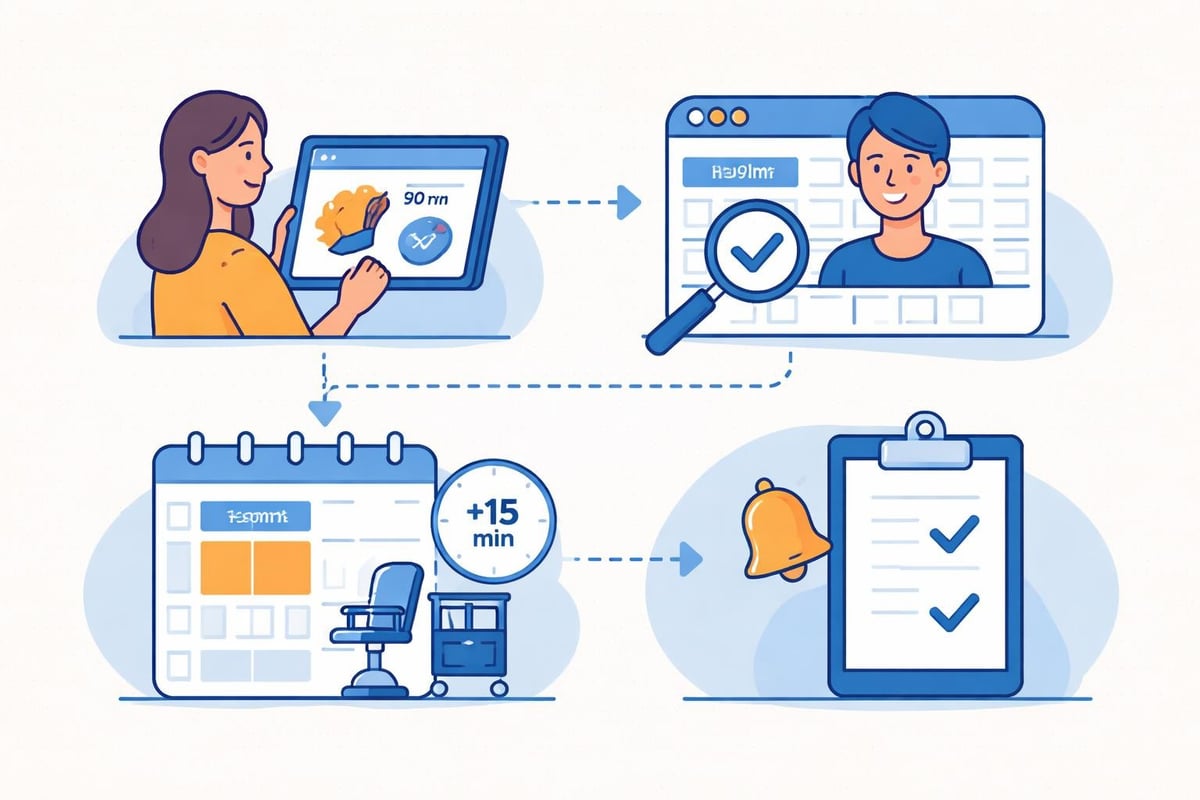
Salons with complex scheduling rules sometimes struggle to configure systems accurately. Common issues include:
Double bookings occur when the system doesn't account for service overlap. Solution: Set appropriate buffer times and configure the system to recognize that certain services require exclusive staff time.
Inadequate service duration settings lead to rushed appointments or excessive gaps. Solution: Track actual service completion times for two weeks and adjust system settings based on real data rather than estimates.
Staff assignment conflicts happen when team members are scheduled for services outside their expertise. Solution: Carefully map which staff can perform which services and regularly audit these assignments.
Integration with Existing Systems
Many salons already use point-of-sale systems, inventory management, or accounting software. Seamless integration prevents duplicate data entry and maintains accurate records.
Integration priorities:
- POS system connection: Ensures online bookings appear in your main business system
- Accounting software sync: Automatically records revenue and generates financial reports
- Marketing platform integration: Enables targeted campaigns based on booking behavior
- Social media connectivity: Allows clients to book directly from Instagram or Facebook
The implementation experience of community centers using online booking demonstrates that organizations investing in proper integration see 40% reduction in administrative workload compared to those using disconnected systems.
Advanced Optimization Strategies
Once your basic online booking system UK operation runs smoothly, implement advanced features that further enhance performance and profitability.
Dynamic Pricing and Demand Management
Variable pricing based on demand helps maximize revenue during peak times while filling slower periods. Strategies include:
- Off-peak discounts: Reduce prices 10-15% for appointments Monday-Wednesday mornings
- Premium time surcharges: Add 15-20% for high-demand Friday afternoons and Saturdays
- Last-minute availability specials: Offer discounts on same-day appointments to fill cancellations
- Package pricing: Bundle multiple services at attractive rates to increase transaction value
The Chartered Institute of Marketing reports that UK service businesses implementing dynamic pricing see average revenue increases of 8-12% without expanding capacity.
Waitlist and Cancellation Management
Cancellations create revenue gaps, but strategic waitlist management converts them into opportunities.
Automated waitlist functionality:
- Clients can join waitlists for fully booked time slots
- When cancellations occur, the system notifies waitlisted clients
- First to respond secures the appointment
- Remaining waitlist members receive notification if other slots open
Salons using waitlist features report 85-90% success filling cancellation slots compared to 40-50% success with manual calling.
Client Segmentation and Personalized Marketing
Booking data reveals valuable client patterns enabling targeted marketing:
| Client Segment | Identifying Characteristics | Marketing Strategy |
|---|---|---|
| VIP/High-value | Book premium services monthly, high lifetime value | Exclusive early access to new services, priority booking |
| At-risk | Previously regular, no booking in 90+ days | Re-engagement campaign with special offer |
| New clients | First appointment within 60 days | Welcome series, service education, next-visit incentive |
| Package buyers | Purchase multiple services per visit | Bundle promotions, loyalty rewards |
| Seasonal clients | Book around specific events/seasons | Timely reminders before their typical booking window |
According to research by the Direct Marketing Association, segmented marketing campaigns deliver 58% higher revenue per contact than non-segmented approaches.
Mobile App Considerations
While web-based booking handles most needs, dedicated mobile applications offer advantages for high-volume salons building brand loyalty.
Mobile app benefits include:
- Push notifications with higher open rates than email or SMS
- One-tap rebooking from appointment history
- Integrated loyalty programs with point tracking
- Offline access to appointment details
- Enhanced personalization through device-based preferences
However, apps require significant development investment and ongoing maintenance. Most salons achieve excellent results with mobile-responsive web booking before considering custom app development.
Data Security and GDPR Compliance
Any system collecting client information must comply with UK data protection regulations. The General Data Protection Regulation (GDPR) imposes specific requirements on businesses handling personal data.
Essential Compliance Elements
Data collection transparency requires clear communication about what information you collect, why you need it, and how you'll use it. Your booking system should display privacy notices before clients submit personal details.
Consent management means obtaining explicit permission for marketing communications. Pre-checked boxes don't satisfy GDPR requirements-clients must actively opt in to receive promotional messages.
Data security measures protect information from unauthorized access. Ensure your booking system provider implements:
- Encryption for data transmission and storage
- Regular security audits and vulnerability testing
- Secure authentication requirements for staff access
- Automated backup systems preventing data loss
- Clear data breach notification procedures
Client rights support enables individuals to access their data, request corrections, withdraw consent, or request deletion. Your system should facilitate these requests efficiently.
The Information Commissioner's Office reports that non-compliance penalties range from warnings to fines up to £17.5 million or 4% of annual turnover, making proper data handling essential rather than optional.
Choosing GDPR-Compliant Systems
When evaluating an online booking system UK businesses can trust, verify that providers:
- Maintain servers within the UK or EU jurisdiction
- Provide Data Processing Agreements (DPA) outlining their responsibilities
- Offer features supporting client data rights requests
- Regularly update security protocols addressing emerging threats
- Provide staff training resources on data protection requirements
Implementing an online booking system UK salon professionals can depend on transforms appointment management from administrative burden into competitive advantage. The measurable benefits-reduced no-shows, increased booking efficiency, improved client satisfaction, and enhanced revenue optimization-justify the investment many times over when you select a platform designed specifically for beauty business needs.
Salon Booking System delivers comprehensive scheduling functionality tailored for salons and beauty businesses, combining online payments, automated client notifications, and advanced scheduling rules in one intuitive platform. Since 2016, we've helped salon professionals across the UK streamline operations and enhance customer satisfaction. Start your free trial today to experience how the right booking system elevates every aspect of your salon business.