Managing group appointments, workshops, and training sessions presents unique challenges for salon and wellness businesses. Unlike individual appointments, group bookings require capacity management, coordinated communications, and specialized payment handling. Class booking software addresses these complexities by automating registration, managing participant limits, and streamlining the entire group scheduling process. This technology has become essential for salons offering group services such as bridal parties, educational workshops, or specialized treatment sessions.
Understanding Class Booking Software Architecture
Class booking software operates as a specialized management system designed specifically for group-based appointments and events. The architecture differs fundamentally from standard appointment scheduling by incorporating capacity controls, waitlist management, and batch communication capabilities.
Core Components and Functionality
The foundation of effective class booking software includes several interconnected modules working together seamlessly:
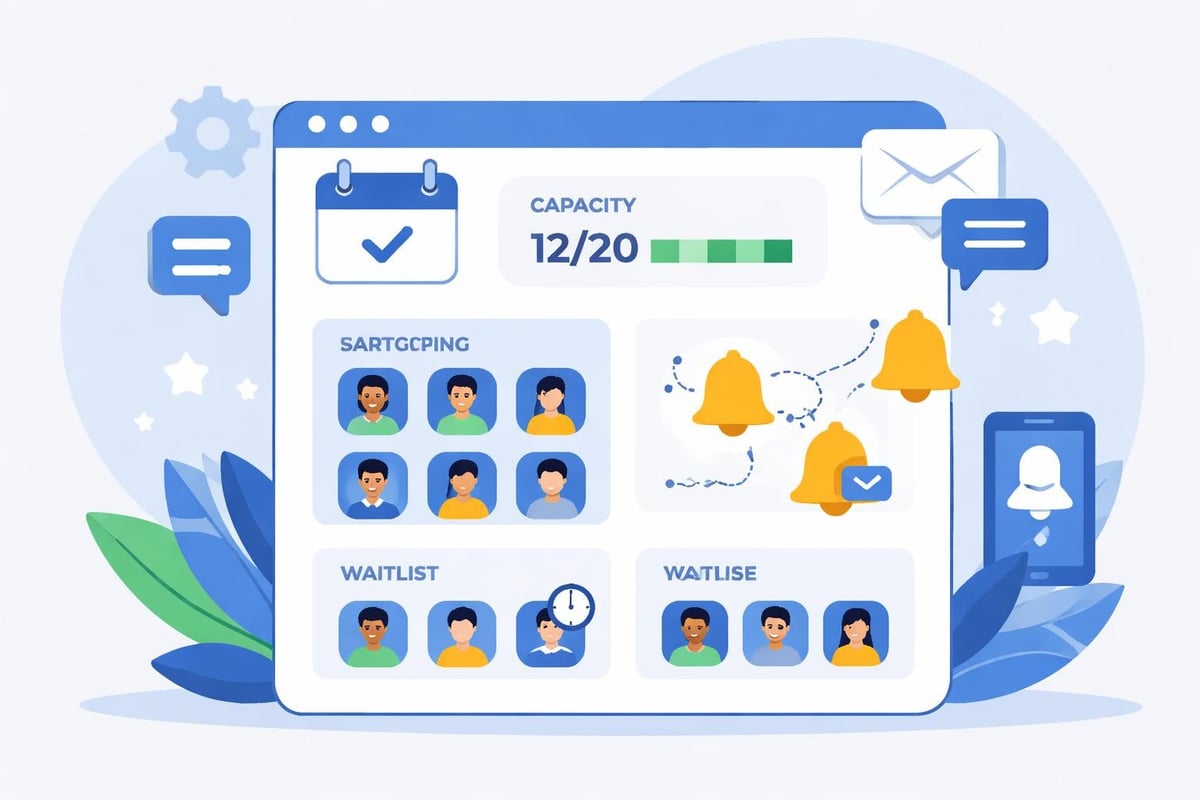
- Capacity management systems that track available spots and prevent overbooking
- Real-time availability displays showing clients exactly how many spaces remain
- Automated waitlist functionality that fills cancellations without manual intervention
- Batch notification engines for sending updates to all registered participants simultaneously
- Recurring event templates that simplify the creation of regular group sessions
Modern platforms integrate these components through centralized dashboards that provide instructors and administrators with complete visibility. The online class scheduling software market is experiencing significant growth, with projections indicating continued expansion through 2033 as more service-based businesses recognize the efficiency gains.
Technical Requirements and Integration Capabilities
Successful implementation requires careful consideration of technical infrastructure. Class booking software must integrate with existing business systems to avoid creating data silos or duplicating administrative work.
| Integration Type | Purpose | Business Impact |
|---|---|---|
| Payment Processing | Handle deposits, full payments, and package sales | Reduces payment delays by 65% |
| Calendar Systems | Sync with Google Calendar, Outlook, iCal | Eliminates double-booking incidents |
| Email Marketing | Connect with Mailchimp, Constant Contact | Increases class promotion reach by 40% |
| Accounting Software | Export financial data to QuickBooks, Xero | Saves 8-12 hours monthly on bookkeeping |
The platform should operate seamlessly across mobile devices, tablets, and desktop computers. According to industry research, 73% of class bookings now occur on mobile devices, making responsive design non-negotiable for modern class booking software solutions.
Strategic Benefits for Salon Operations
Implementing specialized group booking technology delivers measurable improvements across multiple operational dimensions. Salons offering educational workshops, bridal party packages, or team-building sessions gain competitive advantages through enhanced customer experience and reduced administrative overhead.
Revenue Optimization Through Dynamic Scheduling
Class booking software enables sophisticated pricing strategies that maximize revenue per session. Dynamic pricing adjusts rates based on demand, booking timing, and capacity utilization. Early-bird discounts encourage advance registrations, improving cash flow predictability and reducing last-minute cancellations.
Package pricing becomes manageable through automated tracking systems. Clients purchasing series packages receive automatic credits that apply toward future classes, while the software maintains accurate usage records without manual intervention.
The class scheduling management software market analysis indicates that businesses using specialized booking platforms experience average revenue increases of 23% within the first year of implementation.
Administrative Efficiency and Time Savings
Manual class management consumes substantial staff time through repetitive tasks. Spreadsheet-based tracking requires constant updating, email confirmations demand individual attention, and payment collection involves multiple manual steps.
Automation transforms these processes:
- Client self-service registration eliminates phone calls and back-and-forth messaging
- Automatic confirmation emails send immediately upon booking completion
- Reminder sequences trigger at customizable intervals (72 hours, 24 hours, 2 hours before class)
- Capacity alerts notify administrators when classes approach full enrollment
- Post-class follow-ups request feedback and promote future sessions automatically
Research from operational efficiency studies shows that salons implementing class booking software reduce administrative time spent on group appointments by an average of 18 hours per week. This recovered time redirects toward revenue-generating activities like client consultations and service delivery.
Essential Features for Salon Applications
Not all class booking software platforms deliver equal value for salon operations. Specific features determine whether a system genuinely improves business performance or simply adds another software subscription without meaningful returns.
Waitlist Management and Automatic Filling
Popular classes fill quickly, but cancellations inevitably occur. Manual waitlist management requires tracking interested clients, monitoring cancellations, and contacting the next person in line before spaces get filled elsewhere.
Automated waitlist systems handle this process without human intervention:
- Clients add themselves to waitlists through the booking interface
- System immediately notifies the next waitlisted person when space becomes available
- Time-limited holds (typically 2-4 hours) prevent indefinite reservation holding
- If the first waitlisted person doesn't claim the spot, the system automatically moves to the next
- Dashboard analytics show waitlist demand, informing decisions about adding sessions
This functionality proves particularly valuable for salons offering limited-capacity services like makeup masterclasses or hair styling workshops. According to best practices for increasing class attendance, automated waitlist management can improve capacity utilization rates by up to 35%.
Multi-Participant Booking and Family Accounts
Some group sessions accommodate multiple registrations from the same household or business. Bridal party packages, mother-daughter spa days, or corporate team events require systems that handle complex booking relationships.
Class booking software designed for these scenarios includes:
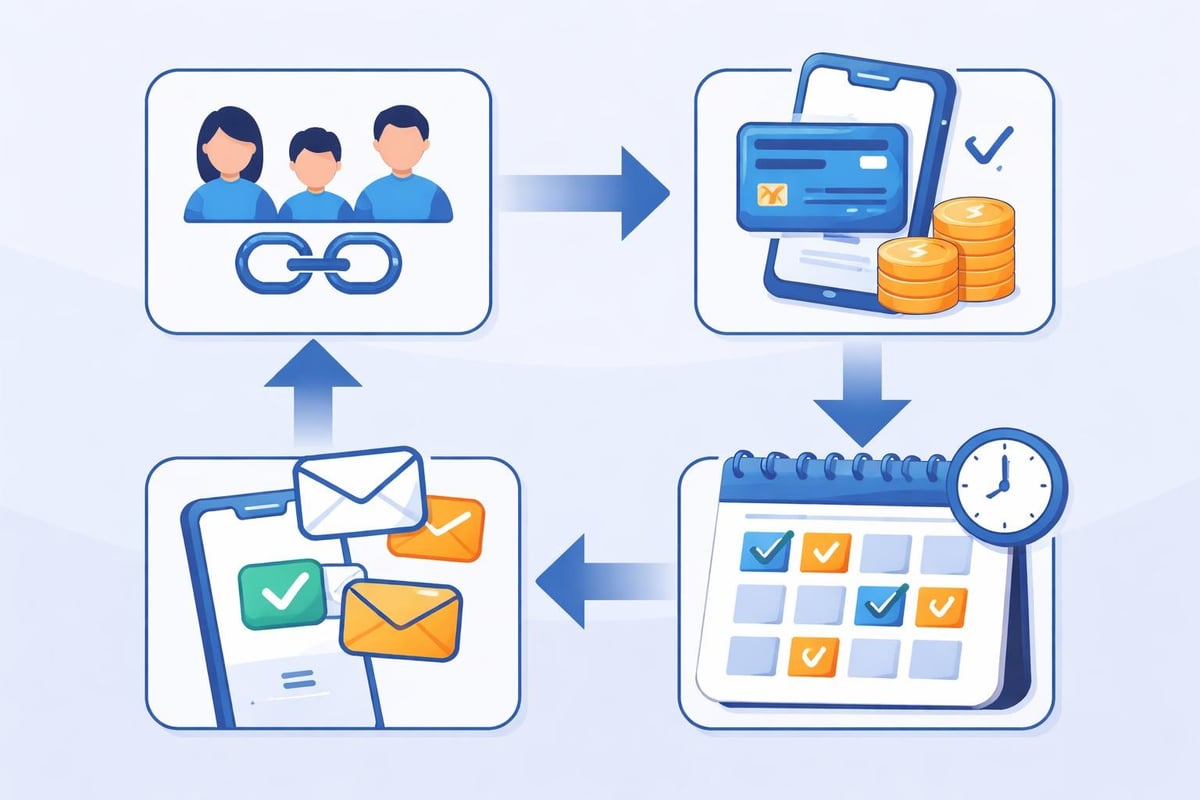
- Family account structures linking multiple individuals under one payment profile
- Group discount calculations that automatically apply when threshold quantities are met
- Coordinated scheduling ensuring all participants book into the same session
- Split payment options allowing costs to be divided among multiple parties
- Permission hierarchies enabling designated account managers to book for others
Advanced platforms like those offered through children and family class management systems provide specialized features for managing guardian relationships, age-appropriate class assignments, and family membership packages.
Hybrid and Virtual Class Management
The expansion of online service delivery has created demand for class booking software that handles both in-person and virtual sessions seamlessly. Salons offering online consultations, virtual color correction workshops, or remote training sessions require platforms supporting this hybrid approach.
Virtual Session Integration
Effective virtual class management extends beyond basic video conferencing. The booking system should automate the entire virtual experience:
| Virtual Feature | Client Experience | Provider Benefit |
|---|---|---|
| Automatic meeting link distribution | Receives Zoom/Meet link in confirmation email | Eliminates manual sending of links |
| Pre-class digital resource delivery | Gets worksheets, product lists before session | Improves preparation and engagement |
| Recording access management | Automatically receives recording link post-class | Adds value without additional work |
| Virtual-specific pricing | Sees clearly differentiated pricing for online vs. in-person | Enables separate pricing strategies |
Platforms with dedicated online class features handle video conferencing integration, virtual payment processing, and digital resource distribution through unified interfaces. This integration prevents the fragmentation that occurs when using separate systems for booking, video conferencing, and payment collection.
Format Flexibility and Switching Capabilities
Market conditions and client preferences shift over time. Class booking software should accommodate format changes without requiring complete system reconfiguration.
Salons benefit from platforms offering:
- Quick format switching that converts in-person classes to virtual with minimal adjustments
- Hybrid session support allowing simultaneous in-person and remote participation
- Location-specific capacity rules for businesses with multiple physical locations
- Virtual-specific cancellation policies reflecting the different logistics of online sessions
This flexibility proved essential during disruption periods when many salons rapidly transitioned to virtual consultations and educational content delivery.
Client Experience and Conversion Optimization
The booking interface serves as a critical customer touchpoint that directly influences conversion rates and customer satisfaction. Poor user experience during the booking process translates to abandoned registrations and lost revenue.
Streamlined Registration Process
Every additional step in the booking process reduces completion rates. Research indicates that each extra form field decreases conversion by approximately 4-5%. Class booking software optimized for conversions minimizes friction through:
- Guest checkout options allowing bookings without mandatory account creation
- Auto-fill capabilities that remember returning customer information
- Progress indicators showing clients exactly how many steps remain
- Mobile-optimized forms with appropriately sized touch targets and minimal typing
- Social login integration enabling one-click authentication through existing accounts
The booking interface should display essential information transparently. Clients need clear visibility into class descriptions, instructor credentials, what to bring, cancellation policies, and exact pricing including all fees before committing to registration.
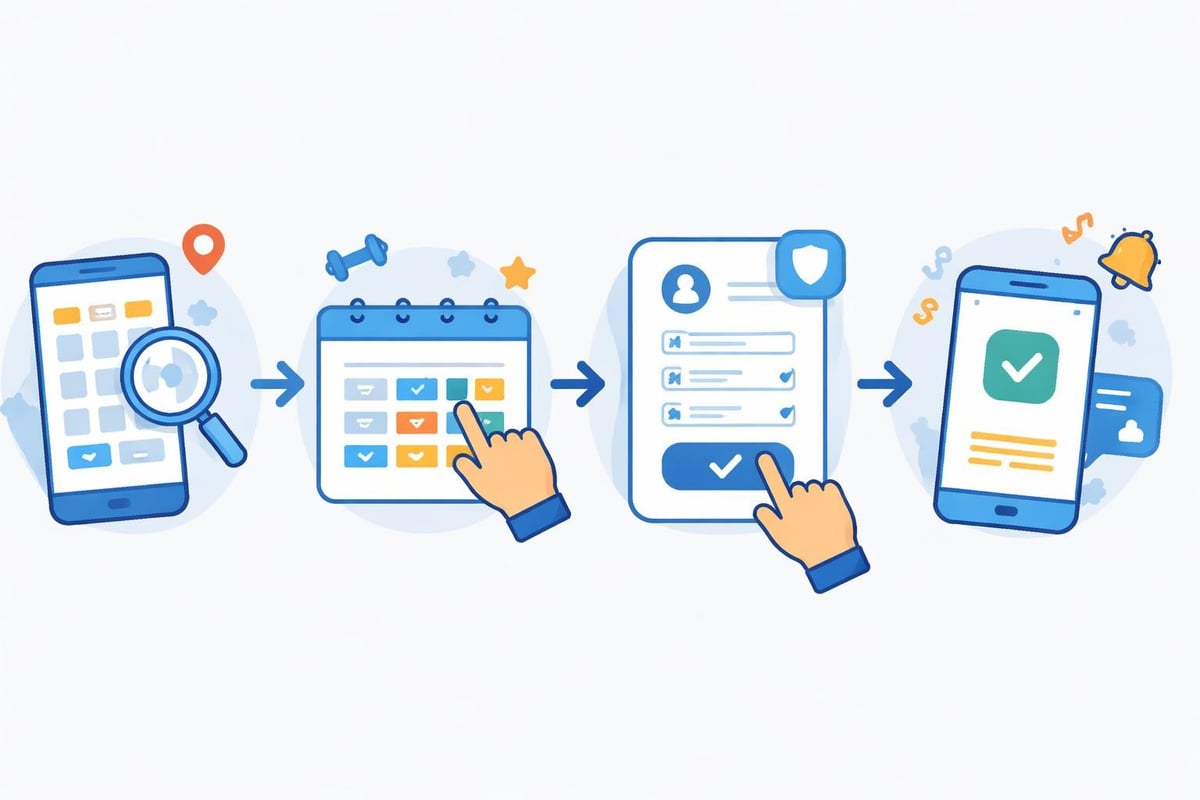
Visual Calendars and Availability Transparency
Calendar-based selection interfaces outperform list-based alternatives by providing spatial context that helps clients understand scheduling patterns. Visual calendars immediately communicate which days offer multiple options versus limited availability.
Effective calendar displays include:
- Color-coding that distinguishes class types, skill levels, or instructors at a glance
- Capacity indicators showing available spots without requiring clicks into detail pages
- Multi-week views enabling clients to plan attendance around personal schedules
- Filter controls that narrow options by instructor, service type, time of day, or location
These interface elements reduce the time required to find appropriate sessions, decreasing booking abandonment and improving customer satisfaction.
Payment Processing and Financial Management
Revenue collection represents a critical function where class booking software delivers substantial value. Manual payment handling introduces errors, delays cash flow, and creates reconciliation challenges.
Flexible Payment Options and Deposit Systems
Different class types warrant different payment structures. Class booking software should accommodate multiple approaches:
- Full payment at booking for lower-priced workshops and single sessions
- Deposit requirements that secure spots while deferring full payment until closer to the event
- Payment plan options that divide larger packages across multiple installments
- Class packages and punch cards offering discounted rates for commitment to multiple sessions
- Membership credits that automatically apply toward qualifying class registrations
According to salon and spa management software analyses, businesses offering flexible payment options experience 31% higher booking conversion rates compared to those requiring full upfront payment for all services.
Revenue Reporting and Financial Analytics
Understanding class profitability requires tracking metrics beyond simple attendance counts. Comprehensive class booking software provides financial analytics showing:
| Metric | Business Question Answered | Strategic Application |
|---|---|---|
| Revenue per available seat | Which classes generate highest returns? | Prioritize marketing for profitable formats |
| Average booking window | How far in advance do clients register? | Optimize promotional timing |
| Cancellation rates by class type | Which offerings have retention issues? | Identify classes needing content improvement |
| Payment method distribution | What payment preferences do clients have? | Ensure preferred options are available |
| Package vs. single-class revenue | How effectively are packages selling? | Adjust package pricing and promotion |
These insights enable data-driven decisions about which classes to expand, which to discontinue, and how to structure pricing for maximum profitability.
Selection Criteria and Implementation Strategy
Choosing appropriate class booking software requires evaluating platforms against specific business needs rather than selecting based solely on feature counts or pricing. The right solution aligns with operational requirements, technical capabilities, and growth objectives.
Evaluation Framework for Platform Selection
Systematic evaluation prevents costly mistakes and ensures the selected platform delivers expected benefits. Consider these dimensions when comparing class booking software options:
Technical compatibility assessment:
- Does the platform integrate with existing payment processors?
- Can it sync with current calendar and communication systems?
- Does it support the required number of simultaneous users and transactions?
- What mobile capabilities does it offer for both staff and clients?
Feature alignment evaluation:
- Does capacity management match your typical class sizes and limitations?
- Can waitlist functionality handle your specific requirements?
- Does the pricing engine support your desired revenue models?
- Are reporting capabilities sufficient for your analytical needs?
Support and reliability considerations:
- What service level agreements and uptime guarantees are provided?
- How responsive is customer support during implementation and ongoing use?
- What training resources help staff learn the system effectively?
- How frequently does the platform release updates and improvements?
Features highlighted on pages like class scheduling tools for group sessions provide useful benchmarks for comparing different platform capabilities.
Implementation Best Practices
Successful class booking software deployment follows structured implementation processes that minimize disruption while maximizing adoption. A phased approach typically works better than attempting to launch all features simultaneously.
Phase 1: Foundation setup (Weeks 1-2)
- Configure class types, pricing structures, and scheduling templates
- Import existing client data and establish account structures
- Set up payment processing integration and test transactions
- Create branded booking pages matching salon visual identity
Phase 2: Staff training and testing (Weeks 3-4)
- Train all team members on administrative functions
- Conduct test bookings covering various scenarios
- Refine workflows based on staff feedback
- Develop internal procedures and quick reference guides
Phase 3: Soft launch (Week 5)
- Invite select existing clients to test the new booking system
- Monitor booking completion rates and identify friction points
- Gather client feedback through direct outreach
- Make necessary adjustments before broader rollout
Phase 4: Full deployment (Week 6+)
- Announce new booking system to entire client base
- Provide clear instructions and support resources
- Monitor adoption metrics and booking patterns
- Continue optimizing based on usage data
This structured approach reduces risk while ensuring both staff and clients receive adequate support during the transition.
Integration with Broader Business Systems
Class booking software functions most effectively when integrated within the broader technology ecosystem supporting salon operations. Standalone systems create data silos that reduce efficiency and complicate reporting.
Data Flow and System Synchronization
Effective integration ensures information flows seamlessly between class booking software and complementary systems:
- Customer relationship management (CRM) platforms receive booking data to inform marketing segmentation and personalization
- Point-of-sale systems sync payment records to maintain accurate financial tracking
- Inventory management tools receive notifications when product-focused classes affect stock levels
- Marketing automation platforms trigger campaigns based on booking behavior and class participation
When systems communicate effectively, salons gain complete visibility into client relationships. A customer who books a color correction workshop can automatically receive targeted promotions for related retail products, upcoming advanced classes, or special events matching their demonstrated interests.
Mobile Accessibility and On-the-Go Management
Salon professionals frequently work away from desktop computers, making mobile functionality essential. Effective class booking software provides full-featured mobile applications enabling:
- Real-time availability checking and booking management from anywhere
- Instant notification of new registrations, cancellations, or waitlist movements
- Mobile-friendly client communication through integrated messaging
- Quick adjustments to class schedules, capacity limits, or pricing
- Access to complete class rosters and client information during sessions
Mobile capabilities extend to client-facing functions as well. The majority of bookings now originate from mobile devices, making responsive design and native app support critical for conversion optimization.
Specialized Applications and Industry Adaptations
While class booking software shares common core functionality across industries, salon applications benefit from features specifically designed for beauty and wellness contexts. Generic scheduling platforms often lack the nuanced capabilities that salon group services require.
Instructor and Resource Assignment
Group classes at salons may require specific instructors, particular treatment rooms, or specialized equipment. Class booking software for salon applications must handle these resource constraints:
- Instructor scheduling that prevents double-booking practitioners across individual appointments and classes
- Room capacity management accounting for physical space limitations and equipment availability
- Equipment allocation tracking specialized tools required for specific class types
- Multi-resource requirements ensuring all necessary components are available simultaneously
This resource orchestration becomes particularly complex for salons operating multiple locations or offering concurrent sessions requiring different instructors and equipment configurations.
Compliance and Documentation Requirements
Certain salon services involve regulatory requirements, age restrictions, or prerequisite completion. Class booking software supporting these scenarios includes:
- Age verification preventing booking for classes restricted to adults or requiring parental consent
- Prerequisite tracking ensuring clients complete foundational classes before advanced sessions
- Waiver management capturing required consent forms and liability acknowledgments
- Certification documentation maintaining records of completed training for professional development classes
These compliance features protect businesses legally while ensuring clients have appropriate backgrounds for specialized instruction.
Implementing specialized group booking technology transforms how salons manage workshops, bridal parties, and educational sessions by automating registration, optimizing capacity, and streamlining payment collection. The right platform reduces administrative burden while improving client experience and increasing revenue from group offerings. Salon Booking System provides comprehensive class booking capabilities alongside individual appointment scheduling, delivering unified management for all booking types through a single, user-friendly platform trusted by salon professionals since 2016.