Modern salon owners face a critical challenge: managing appointments efficiently while delivering exceptional client experiences. The right scheduling software transforms how salons operate, reducing administrative burden, minimizing no-shows, and maximizing chair time. With the salon software market projected to reach $1.2 billion by 2027, according to industry analysts, choosing the best salon appointment scheduling software has become essential for staying competitive in an increasingly digital marketplace.
Understanding Modern Salon Scheduling Software Requirements
Salon scheduling software has evolved far beyond simple calendar management. Today's platforms serve as comprehensive business management systems that handle everything from booking confirmations to payment processing and marketing automation.
Core Features That Define Quality Scheduling Software
The foundation of effective scheduling software rests on several non-negotiable capabilities. Online booking allows clients to schedule appointments 24/7 without phone calls, which research from the International Journal of Hospitality Management shows can increase booking rates by up to 40%. Automated reminders reduce no-shows significantly, with text message confirmations cutting missed appointments by 29% according to healthcare scheduling studies that translate directly to salon environments.
Payment processing integration eliminates the friction between service completion and revenue collection. Calendar synchronization prevents double-bookings and ensures staff schedules remain accurate across all platforms. Client management databases store service histories, preferences, and contact information, enabling personalized experiences that drive retention.
- Real-time availability updates across all booking channels
- Multi-location support for growing salon chains
- Staff performance tracking and commission calculations
- Inventory management for retail products
- Customizable service menus with duration and pricing
- Waitlist management for popular time slots

Advanced Capabilities for Competitive Advantage
Beyond basic scheduling, the best salon appointment scheduling software offers strategic business tools. Marketing automation sends targeted campaigns to clients who haven't visited recently, while loyalty program integration rewards repeat customers automatically. TechRadar’s comprehensive scheduling app guide highlights how advanced analytics transform raw data into actionable insights about peak hours, popular services, and revenue trends.
Mobile optimization has become critical, with 67% of salon bookings now originating from smartphones according to 2025 consumer behavior studies. Software that delivers seamless mobile experiences for both clients and staff members creates operational advantages competitors struggle to match.
Evaluating Top Scheduling Software Options
The market offers numerous solutions, each targeting different salon sizes and business models. Understanding how these platforms compare helps salon owners make informed decisions aligned with their specific needs.
Feature Comparison Framework
| Software Category | Ideal Salon Size | Average Monthly Cost | Key Strength | Primary Limitation |
|---|---|---|---|---|
| Enterprise Platforms | 10+ locations | $300-$800 | Comprehensive features | Complexity, steep learning curve |
| Mid-Market Solutions | 3-9 locations | $100-$300 | Balance of features and usability | May lack advanced customization |
| Small Business Tools | 1-2 locations | $30-$100 | Affordability, ease of use | Limited scalability |
| Specialized Salon Software | Any size | $75-$250 | Industry-specific features | Narrower integration ecosystem |
According to Studioloop’s 2026 salon software comparison, platforms designed specifically for beauty professionals consistently outperform general-purpose scheduling tools in user satisfaction ratings. This specialization delivers pre-configured service menus, beauty industry terminology, and workflows optimized for salon operations.
Platform Assessment Criteria
When evaluating the best salon appointment scheduling software, salon owners should apply systematic assessment criteria. Implementation time determines how quickly teams can achieve full productivity, with leading platforms offering complete setup in under one week versus months for complex enterprise systems.
Training requirements directly impact adoption rates. Software with intuitive interfaces reduces the learning curve, while platforms requiring extensive training create resistance among staff members. Customer support quality becomes crucial when technical issues threaten daily operations, making responsive support teams a competitive differentiator.
Integration capabilities determine how well scheduling software connects with existing tools. Payment processors, accounting software, marketing platforms, and POS systems should communicate seamlessly to create unified business management ecosystems.
Pricing Models and Total Cost of Ownership
Understanding software pricing requires looking beyond monthly subscription fees to calculate true ownership costs. Hidden expenses can transform apparently affordable solutions into budget-breaking commitments.
Subscription Structure Analysis
Most scheduling platforms employ tiered subscription models based on staff count, location number, or feature access. Per-user pricing typically ranges from $25 to $75 monthly per stylist, making it predictable but potentially expensive for larger teams. Flat-rate pricing offers unlimited users for fixed monthly fees between $80 and $200, creating better value for growing salons.
Transaction fees represent significant hidden costs. Some platforms charge 1.5% to 3.5% per credit card transaction, which compounds rapidly for high-volume salons. A salon processing $50,000 in monthly credit card payments could pay an additional $750 to $1,750 in transaction fees beyond base subscription costs.
- Setup and onboarding fees: $0-$500 one-time
- Data migration from existing systems: $100-$1,000
- Custom branding and white-label options: $20-$100 monthly
- Premium support packages: $50-$200 monthly
- Point-of-sale hardware: $300-$1,500 one-time
- Training and consultation services: $75-$200 per hour
Return on Investment Calculations
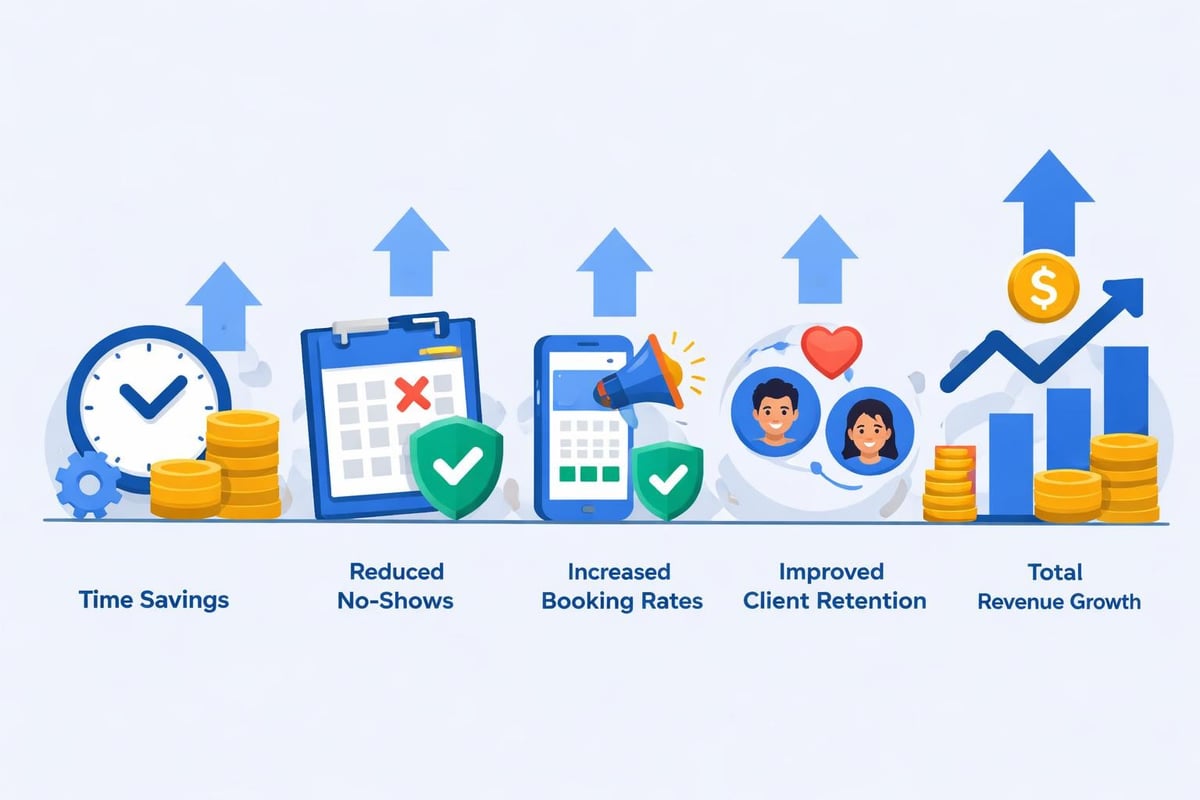
The best salon appointment scheduling software delivers measurable ROI through multiple channels. Time savings from automated scheduling eliminate 10-15 hours weekly of phone-based booking management, freeing staff for revenue-generating activities. At an average stylist hourly rate of $25, this creates $250-$375 in weekly value.
No-show reduction directly increases revenue. A 10-chair salon experiencing 15% no-shows loses approximately $2,400 weekly at $40 average service value. Cutting no-shows to 5% through automated reminders recovers $1,600 weekly or $83,200 annually. TechBullion’s analysis of salon scheduling tools demonstrates how enhanced client experiences drive retention rates that compound revenue growth over time.
Implementation Best Practices for Maximum Success
Purchasing software represents just the first step toward improved operations. Strategic implementation determines whether platforms deliver promised benefits or become expensive digital shelf-ware.
Pre-Implementation Planning Phase
Successful deployments begin with comprehensive planning. Data audit and cleanup ensures client records, service menus, and pricing information transfer accurately to new systems. Outdated contact information, duplicate records, and inconsistent service descriptions create confusion that undermines software effectiveness.
Staff involvement during selection processes increases buy-in and adoption rates. When team members participate in software evaluation, they develop ownership that translates into enthusiastic usage. Resistance to change represents the primary reason scheduling software implementations fail, making early stakeholder engagement critical.
Process mapping documents current workflows before software deployment. Understanding how appointments flow from initial contact through completion, payment, and follow-up reveals optimization opportunities and identifies features that deliver maximum value.
Launch and Training Strategies
Phased rollouts minimize disruption while allowing teams to master new systems gradually. Starting with online booking while maintaining existing phone-based scheduling creates safety nets during transition periods. Once staff confidence builds, additional features activate incrementally.
Training should accommodate different learning styles through multiple delivery methods:
- Live demonstration sessions led by software vendors or internal champions
- Video tutorials accessible on-demand for reference and reinforcement
- Written quick-reference guides posted at workstations for immediate assistance
- Practice environments where staff can experiment without affecting real bookings
- One-on-one coaching for team members struggling with specific features
GoodCall’s salon software review emphasizes how vendor support quality during implementation phases predicts long-term satisfaction levels. Platforms offering dedicated onboarding specialists and responsive technical support create smoother transitions.
Client Experience Optimization Through Strategic Software Use
The best salon appointment scheduling software becomes powerful when leveraged strategically to enhance every client touchpoint. Software capabilities mean nothing if they don't translate into improved customer experiences that drive retention and referrals.
Personalization and Communication Excellence
Modern clients expect personalized interactions throughout their salon journey. Scheduling software enables this through intelligent data utilization. Service history tracking allows stylists to reference previous colors, cuts, and preferences without relying on memory. Preference recording captures details like beverage choices, conversation topics to avoid, and preferred ambient music.
Automated communication feels personal when properly configured. Birthday greetings, service anniversary messages, and reactivation campaigns to dormant clients demonstrate attention that builds emotional connections. However, over-communication alienates customers, making strategic frequency management essential.
| Communication Type | Optimal Timing | Recommended Frequency | Purpose |
|---|---|---|---|
| Appointment Confirmation | Immediately after booking | Once per appointment | Reduce uncertainty |
| Appointment Reminder | 24-48 hours before service | Once per appointment | Minimize no-shows |
| Post-Service Thank You | Within 24 hours of visit | Once per visit | Reinforce positive experience |
| Rebooking Prompt | 3-4 weeks after service | Once per completed appointment | Maintain regular visit cadence |
| Reactivation Campaign | 6-8 weeks without appointment | Monthly maximum | Re-engage lapsed clients |
| Birthday/Special Occasion | On actual date | Annually | Build emotional connection |
Seamless Booking Experience Design
Friction during booking processes costs salons thousands in lost appointments. Business.org’s salon software research reveals that booking abandonment rates exceed 30% when online systems require more than four steps to complete appointments.
The best salon appointment scheduling software minimizes required clicks while gathering necessary information. Smart defaults pre-select commonly chosen options, while conditional logic shows relevant fields based on previous selections. A client booking a haircut doesn't need to see questions about nail polish preferences.
Visual availability displays using calendar interfaces prove more intuitive than dropdown menus listing available times. Clients grasp open slots instantly through color-coded calendars versus parsing text lists. Mobile-responsive design ensures consistent experiences across devices, preventing frustrated clients who abandon bookings when desktop-optimized interfaces malfunction on smartphones.

Operational Efficiency Gains Through Intelligent Scheduling
Beyond client-facing benefits, scheduling software transforms back-office operations and staff management. These efficiency improvements directly impact profitability through reduced labor costs and optimized resource utilization.
Staff Scheduling and Resource Allocation
Intelligent scheduling rules prevent common operational problems. Service duration enforcement ensures adequate time allocations, preventing the cascading delays that occur when appointments run long. A color service requiring 90 minutes shouldn't occupy a 60-minute slot, yet manual scheduling often creates these conflicts.
Skill-based assignment routes clients to qualified stylists automatically. When a client books balayage services, the system limits stylist options to those certified for the technique. This prevents awkward situations where clients arrive expecting services their assigned stylist can't deliver.
Buffer time management addresses transition needs between appointments. The best salon appointment scheduling software automatically blocks 10-15 minutes between certain service types, allowing stylists to clean stations, consult with next clients, and reset mentally. According to Zenoti’s small salon software analysis, salons implementing strategic buffer times report 23% improvements in on-time performance.
Inventory and Product Management Integration
Scheduling software that connects with inventory systems prevents service disruptions from product shortages. When color services deplete specific formulations, integrated systems alert staff to reorder before stockouts occur. Some advanced platforms suggest service scheduling adjustments based on inventory levels, maximizing revenue from available products.
Commission tracking automation eliminates manual calculations and disputes. As services complete, the system attributes revenue to performing stylists and calculates commissions based on configured rates. This transparency builds trust while reducing administrative burden.
Security, Compliance, and Data Protection Considerations
Salon scheduling software manages sensitive client information, creating legal and ethical obligations around data protection. Responsible platforms implement robust security measures while helping salons maintain regulatory compliance.
Data Security Standards and Certifications
PCI DSS compliance represents the minimum acceptable standard for platforms processing credit card payments. This certification ensures proper encryption, secure storage, and compliant handling of payment card information. Salons using non-compliant software assume liability for data breaches that could result in catastrophic financial penalties.
SOC 2 certification demonstrates comprehensive information security management. This audit framework evaluates security, availability, processing integrity, confidentiality, and privacy controls. While not legally required, SOC 2 certification indicates platforms meeting rigorous security standards.
Encryption protocols protect data during transmission and storage. SSL/TLS encryption secures information traveling between clients and servers, while at-rest encryption protects stored databases. The best salon appointment scheduling software employs AES-256 encryption, the same standard used by financial institutions and government agencies.
Privacy Compliance and Client Rights
GDPR compliance affects salons serving European clients, even if the salon operates in the United States. This regulation grants clients rights to access their data, request corrections, demand deletion, and understand how information is used. Scheduling software should facilitate these rights through built-in data export, modification, and deletion capabilities.
CCPA compliance applies to California salons and creates similar client rights under California law. With other states adopting comparable privacy legislation, choosing platforms with comprehensive privacy management tools future-proofs salon operations against evolving regulations.
Data retention policies balance operational needs with privacy principles. While service histories enable personalization, indefinite retention creates unnecessary risk. Configurable retention policies automatically purge data beyond specified timeframes, typically 3-7 years for financial records and 2-3 years for marketing information.
Integration Ecosystems and Workflow Automation
Scheduling software operates most effectively when integrated with complementary business tools. These connections eliminate duplicate data entry while enabling sophisticated automation workflows.
Critical Integration Categories
Accounting software integration ensures financial data flows seamlessly from appointment completion to revenue recognition. Platforms connecting with QuickBooks, Xero, or FreshBooks eliminate manual transaction entry while maintaining accurate financial records. According to The Startup Inc.’s scheduling software overview, integration capabilities rank among the top three purchase criteria for salon owners evaluating software options.
Email marketing platform connections synchronize client lists and trigger automated campaigns based on booking behaviors. When clients complete their first visit, integrated systems add them to welcome series. When regular clients lapse, reactivation campaigns deploy automatically.
Payment processor integration variety provides flexibility around transaction fee optimization. The best salon appointment scheduling software supports multiple processors, allowing salons to choose providers offering favorable rates. Supporting Square, Stripe, PayPal, and traditional merchant accounts creates competitive options.
Automation Workflow Examples
Sophisticated automation sequences demonstrate integration power:
- Client books first appointment online
- Welcome email deploys with preparation instructions
- 24-hour reminder sends via text message
- Client checks in upon arrival through tablet
- Service completes and payment processes automatically
- Thank-you email deploys with rebooking link
- Review request sends 48 hours post-appointment
- Client data syncs to marketing platform and accounting software
- Rebooking reminder triggers if no appointment scheduled within 4 weeks
These workflows operate invisibly, creating seamless experiences while eliminating hours of manual administrative work. Gitnux’s salon appointment software review highlights how automation capabilities separate basic scheduling tools from comprehensive business management platforms.
Mobile Functionality and On-the-Go Management
Modern salon operations demand mobile-first software design. Stylists, salon owners, and clients all rely on mobile devices as primary computing platforms, making mobile functionality essential rather than optional.
Mobile App Capabilities for Staff
Dedicated mobile applications empower staff to manage schedules from anywhere. Real-time schedule viewing allows stylists to check upcoming appointments during commutes or between personal errands. Client information access provides service histories and notes immediately before appointments begin.
Schedule modification capabilities let staff handle emergencies without desk access. When family obligations require schedule changes, stylists can block time directly from mobile devices. When openings appear, they can notify waitlisted clients instantly.
Push notifications alert staff to schedule changes, new bookings, and cancellations as they occur. This real-time awareness prevents confusion while enabling rapid responses to time-sensitive situations.
Client-Facing Mobile Experiences
Mobile booking interfaces require design approaches distinct from desktop versions. Thumb-friendly tap targets accommodate finger-based navigation versus mouse precision. Minimal text entry reduces friction on small keyboards through smart defaults and autofill capabilities.
One-tap rebooking from appointment confirmations creates the simplest possible path to future appointments. Clients receiving service completion notifications can immediately schedule their next visit with single button taps.
Mobile wallet integration stores appointment details in Apple Wallet or Google Pay, providing quick access to confirmation details, addresses, and check-in capabilities. These integrations reduce no-shows by keeping appointments visibly present on client devices.
Analytics and Business Intelligence for Strategic Growth
Data without insights provides minimal value. The best salon appointment scheduling software transforms operational data into strategic intelligence that guides business decisions.
Key Performance Indicators to Monitor
| Metric Category | Specific KPIs | Strategic Value | Target Benchmark |
|---|---|---|---|
| Booking Performance | Online vs. phone booking ratio | Measures digital adoption | 60%+ online |
| Client Retention | Repeat visit percentage | Indicates service satisfaction | 70%+ returning |
| Revenue Optimization | Average ticket value | Tracks upselling effectiveness | Industry varies |
| Operational Efficiency | Booking utilization rate | Measures scheduling optimization | 75-85% capacity |
| Service Mix | Revenue by service category | Identifies profitable offerings | Varies by positioning |
| Staff Productivity | Services per stylist daily | Evaluates individual performance | 6-8 services typical |
Trend analysis reveals patterns invisible in daily operations. Gradual declines in rebooking rates signal service quality issues before they become crises. Seasonal fluctuations in service mix inform inventory planning and marketing campaigns.
Predictive analytics in advanced platforms forecast future demand based on historical patterns. These projections guide staffing decisions, preventing both understaffing during peak periods and overstaffing during slow times.
Custom Reporting for Informed Decision-Making
While standard reports provide valuable insights, custom reporting capabilities enable analysis specific to individual business questions. Salon owners should seek platforms offering:
- Drag-and-drop report builders that don't require technical expertise
- Scheduled report delivery via email at specified intervals
- Data export capabilities for analysis in spreadsheet applications
- Visual dashboard creation for at-a-glance performance monitoring
- Comparative analysis tools showing performance versus previous periods
Segment analysis breaks overall metrics into meaningful subgroups. Comparing retention rates across different service types, stylists, or client acquisition sources reveals where business performs strongest and where improvement opportunities exist.
Selecting the best salon appointment scheduling software requires careful evaluation of features, pricing, integration capabilities, and long-term scalability aligned with your specific business needs. The right platform reduces administrative burden, enhances client experiences, and provides data-driven insights that drive strategic growth. Salon Booking System delivers comprehensive scheduling functionality with online payments, automated notifications, and advanced booking rules designed specifically for salons and beauty businesses, trusted since 2016 to streamline operations and maximize customer satisfaction.