Managing a beauty salon requires juggling multiple responsibilities: scheduling appointments, tracking client preferences, processing payments, managing staff, and maintaining inventory. The right technology can transform these daily challenges into streamlined operations that boost revenue and client satisfaction. Selecting the best beauty salon software is no longer optional for businesses looking to compete in 2026-it's a fundamental requirement for sustainable growth. This comprehensive guide examines the critical features, evaluation criteria, and practical considerations that salon owners must understand when choosing software that aligns with their specific operational needs.
Understanding What Defines the Best Beauty Salon Software
The best beauty salon software serves as the central nervous system for your business, connecting every aspect of operations into a cohesive workflow. These platforms extend far beyond simple appointment booking to encompass client relationship management, financial tracking, inventory control, and marketing automation.
Core Functionality Requirements
Modern salon software must deliver specific capabilities that directly impact daily operations:
- Real-time online booking that syncs instantly across all channels and devices
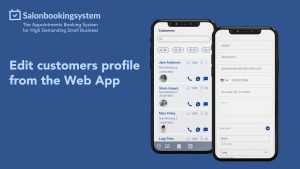
- Comprehensive client profiles storing service history, preferences, and contact information
- Staff scheduling and calendar management with conflict prevention
- Point-of-sale integration supporting multiple payment methods
- Automated reminders and notifications reducing no-show rates
- Reporting and analytics tracking revenue, popular services, and performance metrics
According to research by Software Advice, 47% of salon clients prefer to book appointments online rather than calling, making digital booking capabilities essential rather than optional. The beauty salon software landscape has evolved significantly to meet these changing consumer expectations.
Scalability and Business Growth
The best beauty salon software grows with your business. A solution that works perfectly for a single-stylist operation may collapse under the demands of a multi-location enterprise. Evaluate platforms based on their ability to handle increased appointment volume, additional staff members, expanded service menus, and geographic expansion.
Key scalability indicators include:
- Support for multiple locations with centralized management
- Unlimited or expandable client database capacity
- Flexible pricing tiers that match business size
- Integration capabilities with other business tools
- Customizable permissions for different staff roles
Businesses that outgrow their software face expensive and disruptive migration processes. Investing in scalable solutions from the start prevents these costly transitions.
Evaluating Software Based on Your Salon Type
Different salon specializations require distinct software capabilities. A nail salon has fundamentally different operational needs compared to a full-service day spa or a hair-focused barbershop.
Specialized Requirements by Service Category
| Salon Type | Critical Features | Secondary Priorities |
|---|---|---|
| Hair Salons | Color formulation tracking, stylist performance analytics | Retail inventory for hair products |
| Nail Salons | Quick appointment turnover, sanitation tracking | Multi-service package management |
| Spas | Treatment room scheduling, product usage tracking | Membership and package sales |
| Barbershops | Walk-in queue management, loyalty programs | Simple POS with minimal inventory |
| Med Spas | Consent form management, treatment protocols | Medical compliance documentation |
Understanding these specialized needs ensures you select software that supports your primary services rather than forcing workarounds. Many salon software options cater to specific niches, while others offer broad functionality across categories.
Integration with Existing Business Tools
The best beauty salon software doesn't operate in isolation-it connects seamlessly with tools you already use. Evaluate potential platforms based on their integration ecosystem:
- Accounting software like QuickBooks or Xero for automatic financial syncing
- Email marketing platforms such as Mailchimp for client communication
- Payment processors including Square, Stripe, or PayPal
- Social media platforms for automated posting and review management
- Inventory suppliers for direct product ordering
Each integration eliminates manual data entry, reducing errors and freeing staff time for client-facing activities. A 2024 study by McKinsey found that businesses using integrated software systems experienced 23% higher operational efficiency compared to those using disconnected tools.
Essential Features That Separate Leaders from Followers
While basic appointment scheduling forms the foundation, advanced features differentiate the best beauty salon software from mediocre alternatives. These capabilities directly impact revenue generation and client retention.
Intelligent Scheduling and Calendar Management
Advanced scheduling goes beyond displaying available time slots. The best systems incorporate:
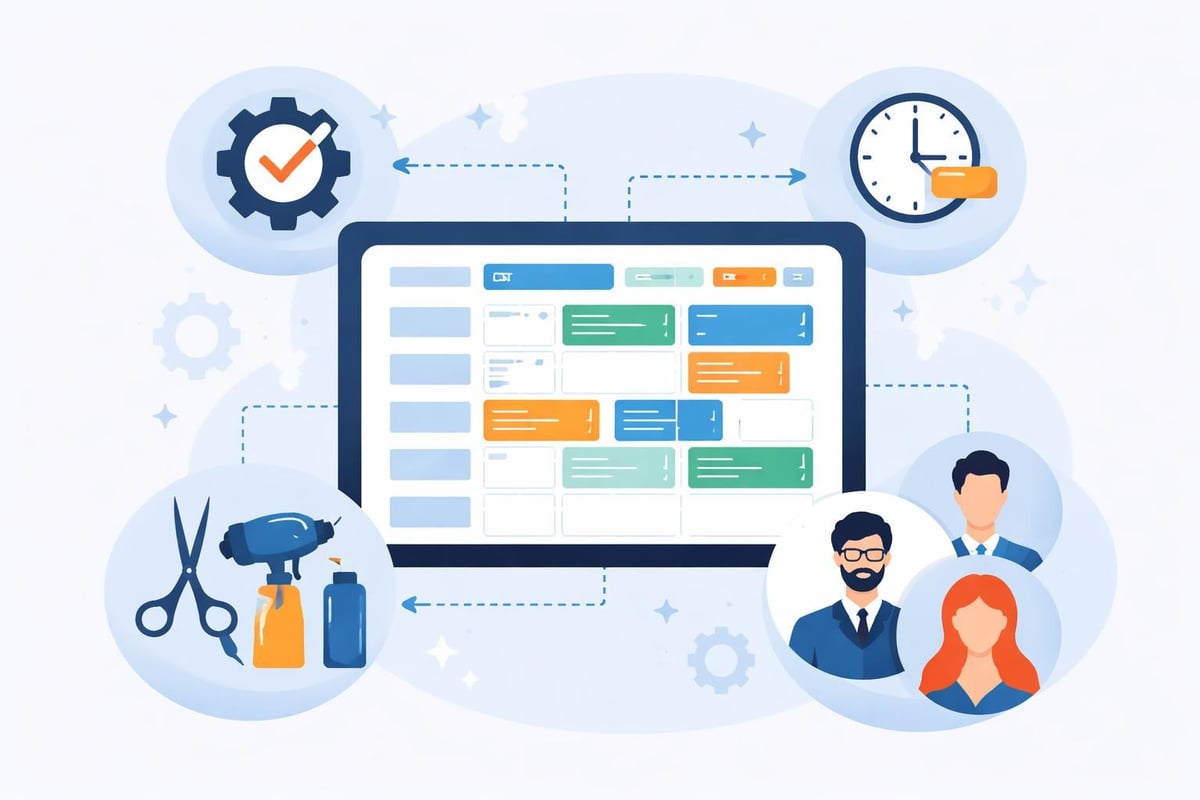
Automated optimization algorithms that suggest appointment times based on service duration, staff expertise, and preparation requirements. When a client books a color service requiring 90 minutes, the system automatically blocks appropriate time and accounts for processing intervals.
Buffer time management preventing back-to-back bookings that leave no room for cleanup or consultation. This feature alone can reduce schedule overruns by 40% according to salon management research.
Resource allocation tracking physical resources like treatment rooms, specialized equipment, or specific product inventory, ensuring appointments are only offered when all requirements are available.
Client Management and Retention Tools
Acquiring new clients costs five times more than retaining existing ones. The best beauty salon software includes retention-focused features:
- Automated birthday and anniversary messages with special offer incentives
- Service reminder triggers based on typical rebooking intervals for different services
- Loyalty program management tracking points, rewards, and redemption
- Client preference documentation ensuring consistency across visits and staff members
- Feedback collection with automated surveys after appointments
A comprehensive salon management software system treats client data as a strategic asset, using it to personalize experiences and predict future needs.
Financial Management and Reporting
Understanding your salon's financial health requires more than knowing daily revenue. Advanced reporting capabilities provide actionable insights:
- Service performance analysis identifying your most and least profitable offerings
- Staff productivity metrics comparing booking rates, service revenue, and retail sales
- Peak time identification revealing when to schedule additional staff
- Client lifetime value calculations showing which clients generate the most long-term revenue
- Inventory turnover rates preventing overstocking and identifying fast-moving products
These analytics transform raw data into strategic decisions. When reports reveal that balayage services generate 60% higher profit margins than basic cuts, you can adjust marketing efforts and staff training accordingly.
Mobile Accessibility and Multi-Platform Support
In 2026, beauty professionals and clients expect to manage appointments from any device at any time. The best beauty salon software delivers consistent functionality across platforms without compromising features.
Mobile Apps vs. Responsive Web Design
Two approaches dominate mobile access:
Native mobile applications offer the smoothest user experience with offline functionality and device-specific features like push notifications. They require separate downloads but provide superior performance and integration with phone capabilities.
Responsive web design adapts desktop interfaces to mobile screens without requiring app installation. This approach ensures universal access but may sacrifice some specialized mobile features.
The optimal solution provides both options, allowing clients to book via mobile web while staff utilize native apps for schedule management. According to essential salon software features research, 68% of salon appointments are now initiated on mobile devices.
Cloud-Based vs. Local Installation
Modern salon software predominantly operates on cloud-based infrastructure, offering significant advantages:
- Automatic updates ensuring you always access the latest features and security patches
- Remote access from any location with internet connectivity
- Automatic backups protecting against data loss
- Reduced IT requirements eliminating server maintenance responsibilities
- Subscription pricing spreading costs over time rather than large upfront investments
Local installation software, while declining in popularity, still appeals to businesses in areas with unreliable internet connectivity or those with specific data sovereignty requirements. However, the overwhelming majority of the best beauty salon software now operates exclusively in the cloud.
Payment Processing and Financial Flexibility
Seamless payment collection directly impacts cash flow and client convenience. The best beauty salon software integrates comprehensive payment capabilities rather than treating transactions as an afterthought.
Integrated vs. Third-Party Payment Processing
| Approach | Advantages | Disadvantages |
|---|---|---|
| Integrated Processing | Single vendor support, seamless UX, unified reporting | Potentially higher transaction fees, limited processor choice |
| Third-Party Integration | Processor flexibility, competitive rate shopping, existing relationship continuity | Complex troubleshooting, potential sync issues, separate reconciliation |
| Hybrid Options | Best-of-both flexibility, fallback options | Increased complexity, multiple vendor relationships |
Evaluate processing fees carefully-a difference of 0.5% on transaction fees can mean thousands of dollars annually for busy salons. However, the cheapest option isn't always optimal if it creates friction in the booking or checkout process.
Modern Payment Options
Client expectations for payment flexibility have expanded dramatically:
- Contactless and mobile payments including Apple Pay and Google Pay
- Buy now, pay later services like Afterpay for high-ticket services
- Subscription and membership billing with automatic recurring charges
- Deposit and prepayment capabilities for booking confirmation
- Split payments allowing service and tip separation or party bill division
- Gift card and package redemption tracking
Offering diverse payment options removes barriers to purchase, with research showing that businesses accepting multiple payment methods experience 30% fewer abandoned bookings.
Security, Compliance, and Data Protection
Beauty salons collect sensitive personal information including contact details, payment data, and sometimes health information for medical spa services. The best beauty salon software prioritizes data security and regulatory compliance.
Essential Security Features
End-to-end encryption protects data during transmission between client devices and servers. Without this protection, sensitive information remains vulnerable to interception.
PCI DSS compliance ensures payment card data handling meets industry security standards. Non-compliant systems expose your business to liability and potential fines in case of breaches.
Regular security audits by independent third parties verify that platforms maintain robust defenses against evolving threats. Reputable software providers publish audit results and maintain transparent security practices.
Role-based access controls limit which staff members can view or modify sensitive information, reducing insider threat risks and maintaining client privacy.
Data Backup and Recovery
Data loss can devastate salon businesses. Ensure your chosen platform implements:
- Automatic daily backups stored in geographically separate locations
- Point-in-time recovery allowing restoration to specific moments before problems occurred
- Documented recovery procedures with tested restoration processes
- Data export capabilities preventing vendor lock-in and supporting business continuity
Ask potential vendors specific questions about their backup frequency, retention periods, and average recovery times. Vague assurances about "having backups" are insufficient.

Customer Support and Training Resources
Even the most intuitive software requires support during implementation and occasional troubleshooting. The best beauty salon software providers offer comprehensive assistance that extends beyond basic technical support.
Evaluating Support Quality
Response time commitments matter more than 24/7 availability claims. A provider promising four-hour response times who consistently delivers beats one claiming instant support but taking days to respond.
Multiple support channels accommodate different communication preferences and urgency levels:
- Live chat for quick questions during business hours
- Phone support for complex issues requiring real-time troubleshooting
- Email ticketing for detailed problems requiring research
- Knowledge base and video tutorials for self-service learning
- Community forums connecting users for peer support
Onboarding and training programs accelerate time-to-value, reducing the learning curve that can frustrate staff and delay return on investment. Look for structured training that covers basic operations, advanced features, and best practices specific to your salon type.
Long-Term Partnership Indicators
The relationship with your software provider extends years beyond initial purchase. Evaluate companies based on:
- Product roadmap transparency showing planned features and improvements
- User feedback integration demonstrating responsiveness to customer needs
- Financial stability ensuring the company will exist to support you long-term
- Industry expertise with teams who understand salon operations, not just software development
- Active development with regular feature releases rather than stagnant products
Companies that view themselves as partners in your success rather than just vendors create better long-term value.
Pricing Models and Total Cost of Ownership
Sticker price rarely reflects true software costs. The best beauty salon software balances upfront expenses with long-term value, avoiding hidden fees that erode profitability.
Common Pricing Structures
Per-appointment fees charge based on usage, scaling costs with business volume. This model suits new salons with uncertain appointment volumes but can become expensive as businesses grow.
Monthly subscriptions offer predictable costs regardless of booking volume, typically tiered by features, staff count, or location number. This approach provides cost certainty supporting financial planning.
One-time purchases with annual maintenance fees are becoming rare but still exist for locally-installed software. Calculate total five-year costs rather than just initial price when comparing to subscription models.
Hidden Costs to Consider
Beyond base pricing, account for:
- Payment processing fees typically 2-3% of transaction value
- SMS notification charges for appointment reminders and confirmations
- Additional user licenses as your team expands
- Premium feature add-ons for advanced capabilities
- Migration and data import fees when switching from previous systems
- Training and implementation costs for initial setup
A seemingly cheaper platform charging for essential features like automated reminders may cost more than a higher-priced alternative including these capabilities. Calculate total annual costs across realistic usage scenarios.
Implementation and Migration Strategies
Transitioning to new salon software requires careful planning to avoid disrupting operations and losing valuable historical data. The best beauty salon software providers support smooth migrations through structured processes.
Pre-Implementation Planning
Data cleanup before migration prevents importing years of outdated, duplicate, or incorrect information. Review client records, delete inactive accounts, and standardize formatting.
Staff involvement from the beginning builds buy-in and identifies potential workflow conflicts before they disrupt operations. Schedule demonstrations allowing team members to test functionality and provide feedback.
Parallel operation periods running old and new systems simultaneously for 1-2 weeks create safety nets while staff adapt. Though temporarily burdensome, this approach prevents appointment losses during transition.
Migration Checklist
Execute migrations systematically to minimize risk:
- Export all data from existing systems in recommended formats
- Import historical appointments maintaining service history continuity
- Transfer client information including contact details and preferences
- Configure service menus with accurate pricing and duration
- Set up staff schedules and availability patterns
- Test payment processing with small transactions before going live
- Verify automated notifications send correctly with proper timing
- Train all staff on essential functions before launch day
Rushing implementation creates confusion and errors. Allocate sufficient time for thorough testing and adjustment.
Real-World Performance Metrics
Beyond feature lists and marketing claims, evaluate potential software based on measurable business outcomes. The best beauty salon software demonstrably improves key performance indicators.
Quantifiable Impact Areas
| Metric | Typical Improvement | Business Impact |
|---|---|---|
| No-show rate | 20-40% reduction | Recovered revenue, better schedule utilization |
| Booking conversion | 15-25% increase | More appointments from same traffic |
| Average ticket value | 8-15% growth | Upselling and package sales |
| Staff utilization | 10-20% improvement | Same team serves more clients |
| Client retention | 12-18% increase | Higher lifetime value per customer |
These improvements compound over time. A 20% reduction in no-shows combined with 15% higher booking conversion can increase monthly revenue by $3,000-$5,000 for a typical mid-sized salon.
Return on Investment Timeline
Calculate expected ROI before committing to platforms. Most salons should recoup software costs within 3-6 months through:
- Reduced no-shows from automated reminders saving 5-10 weekly appointment slots
- Increased rebooking rates through timely follow-up communications
- Higher retail sales enabled by integrated POS and inventory tracking
- Reduced administrative time allowing staff to focus on revenue-generating activities
- Decreased payment processing costs through optimized transaction routing
Track these metrics monthly to verify your software investment delivers promised value. The comprehensive features available in solutions like those reviewed in top beauty salon software comparisons directly support these improvements.
Future-Proofing Your Software Investment
Technology evolves rapidly, and the best beauty salon software continues advancing to meet changing market demands. Select platforms positioned to support your business through coming years, not just current needs.
Emerging Technology Integration
Forward-thinking platforms incorporate:
Artificial intelligence for predictive scheduling, suggesting optimal appointment times based on historical patterns, weather data, and local events. AI-powered chatbots handle common client questions, freeing staff for complex inquiries.
Augmented reality lets clients visualize hair color changes or makeup looks before committing to services, reducing dissatisfaction and increasing confidence in purchasing premium services.
Voice-activated booking through smart speakers and virtual assistants creates friction-free scheduling experiences, particularly appealing to younger demographics.
Blockchain-based loyalty programs provide portable rewards that clients can use across multiple participating businesses, expanding your competitive positioning within local beauty ecosystems.
While some emerging technologies remain experimental, platforms demonstrating innovation and technology adoption are more likely to remain competitive long-term.
Vendor Responsiveness to Industry Trends
Evaluate how quickly software providers adapt to industry changes:
- Do they rapidly support new payment methods as they gain popularity?
- Have they adjusted features in response to pandemic-era safety concerns?
- Do they incorporate regulatory changes like GDPR or CCPA requirements?
- Are they expanding into adjacent services your salon might offer in the future?
Companies stuck maintaining legacy code struggle to innovate, while those actively developing new capabilities protect your investment against obsolescence.
Making the Final Decision
After evaluating features, pricing, and providers, narrow choices through systematic comparison. The best beauty salon software for your specific business aligns with operational priorities, budget constraints, and growth ambitions.
Decision Framework
Create weighted scoring across evaluation criteria:
- Assign importance weights to factors (e.g., scheduling = 25%, client management = 20%, reporting = 15%)
- Rate each platform on 1-10 scale for each criterion
- Multiply ratings by weights and sum for total scores
- Compare weighted totals alongside qualitative factors
This structured approach prevents single impressive features from overshadowing important limitations in other areas.
Trial Period Strategies
Most providers offer free trials ranging from 7-30 days. Maximize trial value by:
- Scheduling different service types to test functionality across your full menu
- Having multiple staff members interact with the system gathering diverse perspectives
- Processing test payments verifying transaction smoothness
- Sending automated communications confirming they deliver as expected
- Generating reports ensuring you can extract needed business intelligence
- Contacting support with questions to evaluate responsiveness
Passive trials where you simply "look around" waste opportunities to identify deal-breaking issues before committing. When researching appointment software options for 2026, active testing reveals far more than feature lists alone.
Document your trial experiences systematically, noting both positive impressions and concerning limitations. This record supports final decisions and provides reference points if you later need to justify changes to stakeholders.
Selecting the best beauty salon software represents one of the most consequential operational decisions salon owners make, directly impacting efficiency, client satisfaction, and revenue potential. The platforms that excel combine comprehensive scheduling capabilities with client management tools, financial tracking, and support for growth, all delivered through intuitive interfaces backed by responsive customer service. Salon Booking System has provided these essential capabilities since 2016, offering a proven solution that simplifies appointment management through online payments, automated notifications, and advanced scheduling rules designed specifically for salon operations. Explore how the right booking platform can transform your daily operations and position your business for sustained success.