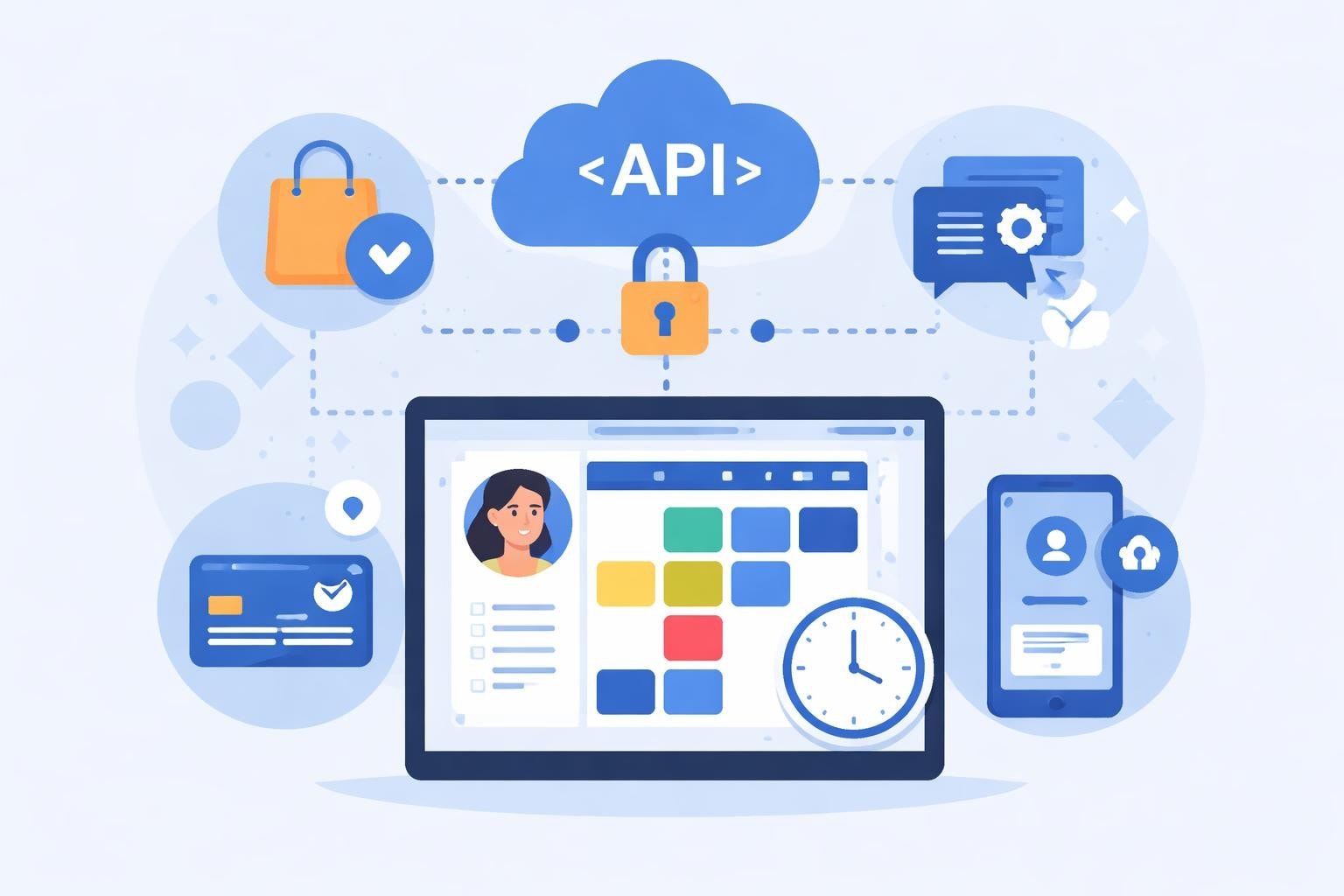
Modern salon businesses require seamless connectivity between their scheduling platforms and external services, from payment processors to marketing tools. An api booking system serves as the technical backbone enabling these integrations, allowing salon owners to automate workflows, synchronize data across platforms, and enhance client experiences without manual intervention. Understanding how to implement, secure, and optimize an api booking system transforms a basic appointment scheduler into a powerful business management ecosystem that scales with your growth.
Understanding the Architecture of an API Booking System
An api booking system functions as a structured interface that allows different software applications to communicate with your salon's scheduling platform. Rather than requiring staff to manually update multiple systems, the API automatically transmits appointment data, client information, and business metrics between connected applications.
The architecture typically consists of three primary layers: the presentation layer where clients interact with your booking interface, the business logic layer that processes scheduling rules and availability calculations, and the data layer that stores appointments, client profiles, and service configurations. APIs connect these internal components while also facilitating external integrations with payment gateways, SMS notification services, and accounting software.
Core Components and Functionality
Every effective api booking system requires specific endpoints that handle different operations. Create endpoints allow external applications to submit new appointment requests, read endpoints retrieve existing booking data, update endpoints modify reservation details, and delete endpoints cancel appointments when necessary.
| Endpoint Type | Primary Function | Common Use Cases |
|---|---|---|
| GET | Retrieve data | Check availability, fetch appointment lists |
| POST | Create new records | Submit bookings, add client profiles |
| PUT/PATCH | Update existing data | Reschedule appointments, modify services |
| DELETE | Remove records | Cancel appointments, delete unavailable slots |
The system must handle concurrent requests efficiently, particularly during peak booking periods when multiple clients attempt to reserve the same time slot. Implementing proper locking mechanisms and real-time availability checks prevents double-bookings while maintaining system performance.
Security Considerations for Salon Booking APIs
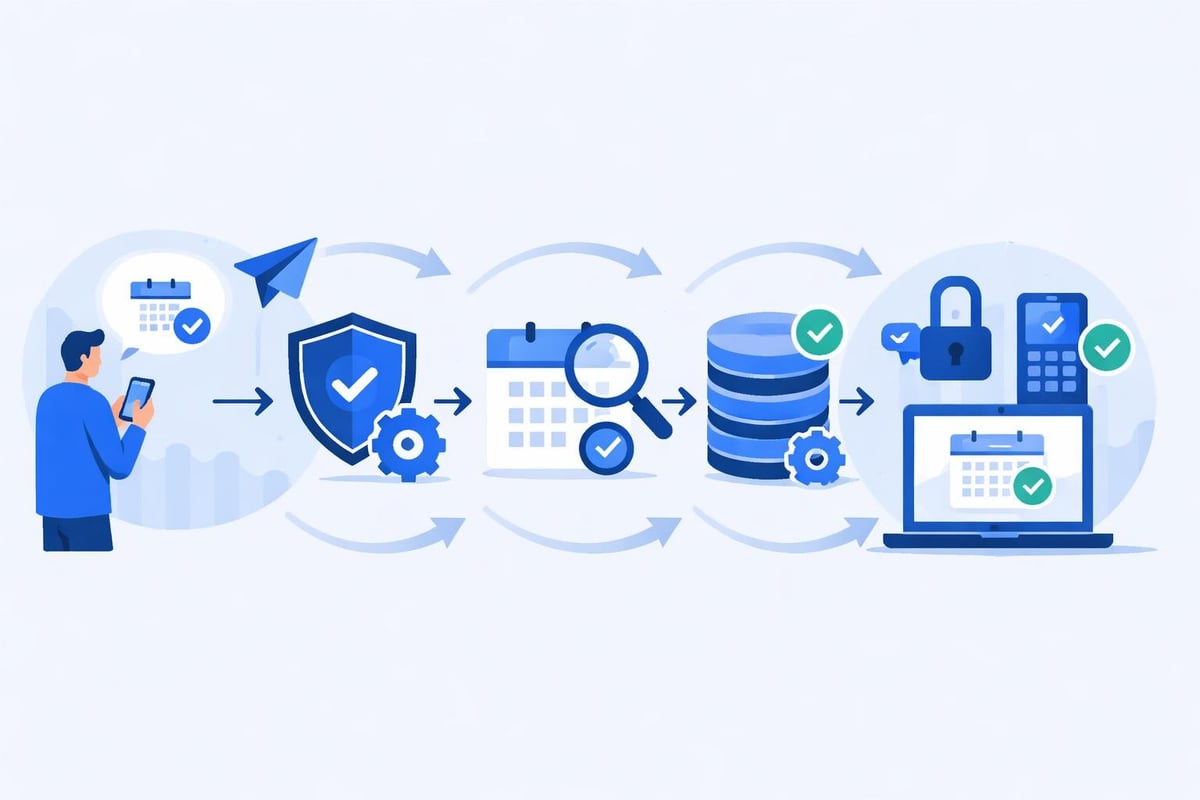
Protecting client data represents perhaps the most critical aspect of operating an api booking system. Salons collect sensitive personal information including contact details, payment information, and sometimes health-related data regarding allergies or skin sensitivities. A security breach damages client trust irreparably and exposes businesses to significant legal liability.
Authentication and Authorization Protocols
Implementing robust authentication ensures only authorized applications access your booking data. OAuth 2.0 has become the industry standard, providing token-based authentication that doesn't require sharing passwords with third-party applications. According to API security best practices, encrypting data with TLS prevents attackers from intercepting sensitive information during transit between your salon's system and external services.
Beyond basic authentication, implementing API keys or multi-factor authentication adds additional security layers that reduce unauthorized access risks. Each integrated application should receive unique API credentials with permissions tailored to their specific needs. A marketing automation platform might require read-only access to appointment data, while a payment processor needs write permissions for transaction records but shouldn't access unrelated client information.
- API key rotation: Change credentials quarterly or after staff departures
- Permission scoping: Grant minimum necessary access levels
- Activity logging: Track all API requests for audit trails
- Token expiration: Implement time-limited access tokens
Input Validation and Rate Limiting
Malicious actors frequently exploit APIs through injection attacks that manipulate input data to access unauthorized information or disrupt service. Validating and sanitizing all input data prevents these vulnerabilities by rejecting improperly formatted requests before they reach your database.
Rate limiting protects your api booking system from denial-of-service attacks where attackers flood your servers with requests, making the system unavailable to legitimate clients trying to book appointments. Setting appropriate thresholds requires balancing security with usability. Most legitimate use cases involve relatively few API calls per minute, while attack patterns generate thousands of requests within seconds.
Integration Strategies for Third-Party Services
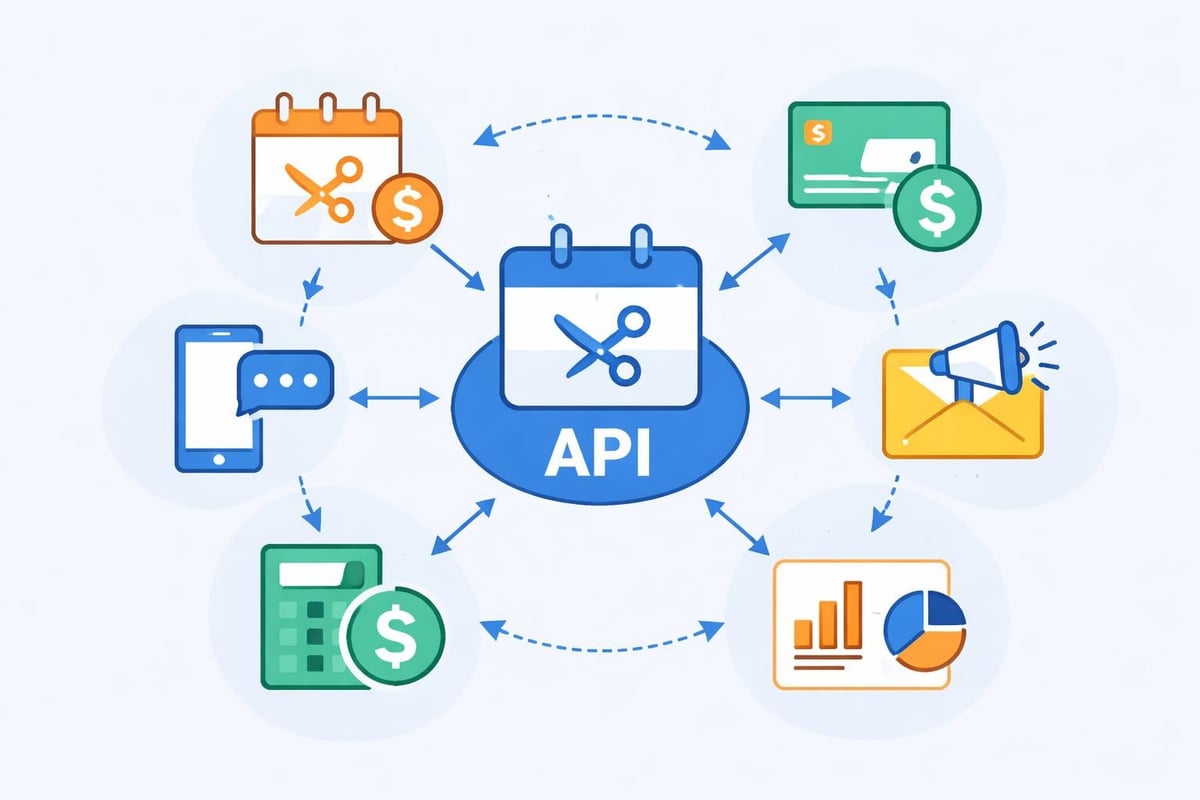
The true value of an api booking system emerges through strategic integrations that automate routine tasks and enhance operational efficiency. Salon owners benefit most by prioritizing integrations that address specific pain points in their current workflows.
Payment Processing Integration
Connecting your booking system with payment processors enables prepayments for appointments, reducing no-show rates significantly. Studies show salons requiring deposits experience up to 40% fewer missed appointments compared to those accepting bookings without payment commitments. The API handles the secure transmission of payment data while your scheduling platform records which appointments have been confirmed with deposits.
When implementing payment API integrations, ensure compliance with PCI DSS standards by never storing raw credit card data in your system. Instead, use tokenization where the payment processor returns a reference token that your api booking system stores to process future transactions or refunds.
Marketing and Communication Platforms
- SMS notification services send appointment reminders automatically based on triggers you configure
- Email marketing platforms sync client lists for targeted campaigns based on booking history
- Review management systems request feedback following completed appointments
- Social media scheduling tools announce availability or promote special services
Each integration requires mapping data fields between systems. Your API must translate internal field names like "service_duration" into whatever terminology the external platform expects, ensuring data flows correctly in both directions.
Performance Optimization and Scalability
As your salon business grows from a single location to multiple sites, or as you expand your client base, your api booking system must scale gracefully without degrading performance. Response times directly impact user experience. Research indicates every additional second of load time reduces conversion rates by approximately 7%.
Caching Strategies
Implementing intelligent caching dramatically improves API performance by storing frequently requested data temporarily. For example, your salon's service menu and stylist availability patterns change relatively infrequently but get queried with every booking request. Caching this information reduces database load while delivering faster responses.
Time-based caching refreshes data at set intervals, appropriate for information like daily schedules. Event-based caching invalidates stored data when specific changes occur, ensuring clients always see current availability even as appointments get booked throughout the day.
Database Query Optimization
The performance optimization techniques you implement significantly impact how quickly your api booking system responds to requests. Avoiding unnecessary count operations and minimizing filter fields in database queries reduces processing time, particularly when handling complex availability calculations across multiple staff members and service combinations.
| Optimization Technique | Performance Impact | Implementation Complexity |
|---|---|---|
| Response compression | 60-80% reduction in transfer time | Low |
| Database indexing | 40-90% faster queries | Medium |
| Connection pooling | 30-50% improved concurrent handling | Medium |
| Asynchronous processing | Eliminates user wait time | High |
Consider implementing pagination for endpoints that return large datasets. Rather than transmitting complete appointment histories spanning months or years, return results in manageable chunks that load quickly while allowing users to retrieve additional data as needed.
Real-Time Synchronization and Conflict Resolution
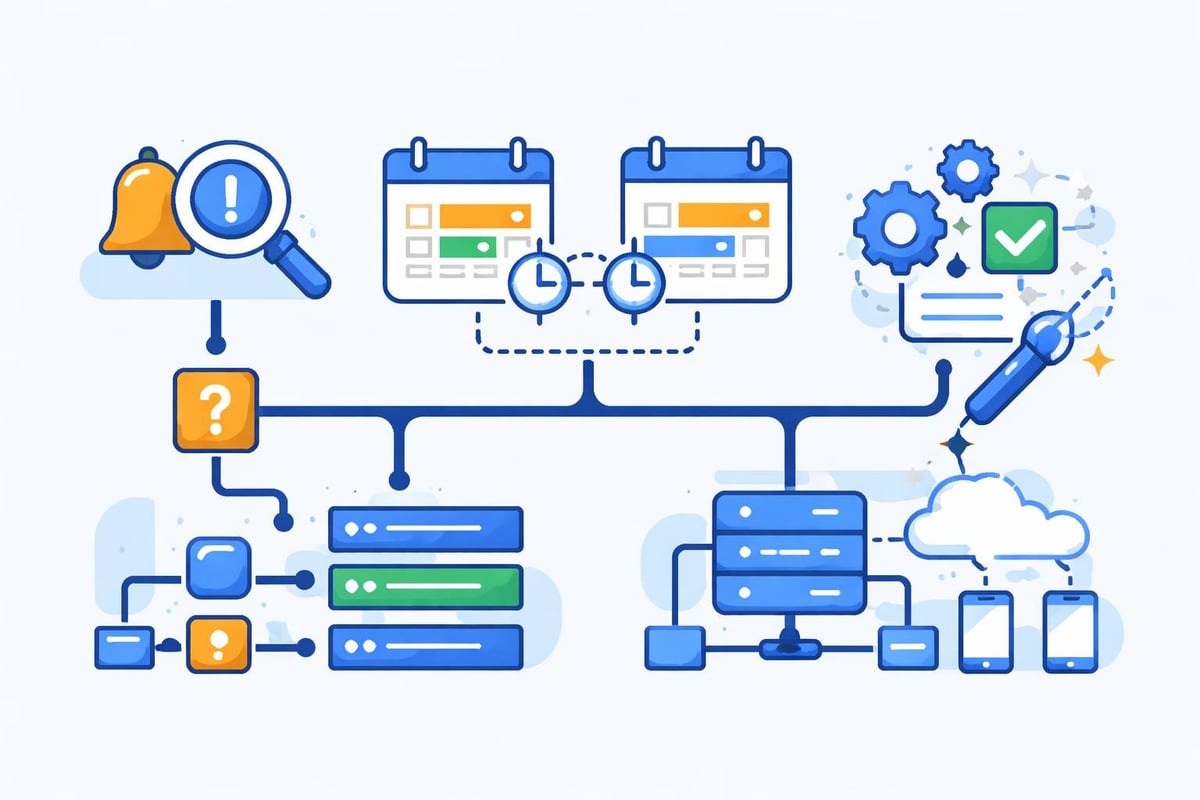
One of the most challenging aspects of operating an api booking system involves maintaining data consistency across multiple platforms updating information simultaneously. When a client books through your website while a receptionist manually adds an appointment in your internal system, the API must reconcile these actions without creating duplicate entries or losing data.
Webhook Implementation
Webhooks enable real-time notifications when booking events occur, allowing connected systems to update immediately rather than periodically polling for changes. Following Google’s best practices for real-time updates, implement webhooks that notify external platforms the moment appointments are created, modified, or canceled.
Your api booking system should provide webhook configuration options where administrators specify which events trigger notifications and what data gets included. This flexibility prevents overwhelming external systems with unnecessary updates while ensuring critical information flows instantly.
Conflict Resolution Protocols
Establishing clear precedence rules determines which system's data takes priority when conflicts arise. Common strategies include:
- Timestamp-based resolution: Most recent update wins
- Source hierarchy: Manual entries override automated imports
- Merge strategies: Combine non-conflicting fields from both sources
- Manual review queues: Flag conflicts for staff intervention
Document these rules clearly in your API documentation so developers building integrations understand how your system behaves in edge cases.
API Documentation and Developer Experience
Even the most sophisticated api booking system provides little value if developers struggle to implement integrations correctly. Comprehensive, clear documentation accelerates integration timelines while reducing support burden on your team.
Essential Documentation Components
Your API documentation should include interactive examples where developers can test endpoints directly from the documentation interface. Provide sample code in popular programming languages, covering common integration scenarios like checking availability, creating appointments, and handling webhooks.
- Authentication guide: Step-by-step credential setup and token management
- Endpoint reference: Complete parameter descriptions with data types and constraints
- Response schemas: Detailed structure of returned data with example payloads
- Error handling: Common error codes with resolution steps
- Rate limits: Clear explanation of throttling policies
- Versioning policy: How API updates are managed and communicated
Include realistic use case tutorials that walk developers through complete workflows from initial authentication to processing a successful booking. These practical examples demonstrate how individual endpoints work together to accomplish business objectives.
Monitoring and Analytics for API Health
Maintaining a reliable api booking system requires continuous monitoring of performance metrics, error rates, and usage patterns. These insights help identify problems before they impact clients while informing strategic decisions about infrastructure investments and feature priorities.
Key Performance Indicators
Track multiple metrics to gain comprehensive visibility into API health. Response time measures how quickly your system processes requests, with 95th percentile measurements revealing performance for most users rather than just average cases that mask occasional slowdowns. Error rates indicate reliability, with sudden spikes often signaling bugs introduced in recent deployments or capacity constraints under heavy load.
API usage patterns reveal which endpoints receive the most traffic, guiding caching strategy prioritization and infrastructure scaling decisions. Geographic distribution of requests helps optimize content delivery network configurations for faster global response times.
- Monitor authentication failure rates to detect potential security issues
- Track daily active integrations to measure ecosystem health
- Measure time-to-first-successful-call for new integrations
- Calculate cost per API request for budget planning
Incident Response Procedures
Establish clear protocols for responding when monitoring systems detect API failures or performance degradation. Automated alerts should notify technical staff immediately when error rates exceed thresholds or response times climb above acceptable levels.
Maintain a status page that communicates API availability to developers, particularly during maintenance windows or when addressing incidents. Transparency builds trust within your integration ecosystem and reduces support inquiries during known outages.
Compliance and Data Privacy Regulations
Operating an api booking system that handles client information requires strict adherence to data protection regulations. GDPR in Europe and CCPA in California mandate specific handling procedures for personal data, with significant penalties for non-compliance reaching millions of dollars.
Data Minimization Principles
According to secure API best practices, limiting data exposure prevents common security flaws. Your API should return only the information necessary for each integration's specific purpose. A marketing automation platform needs client email addresses and appointment dates but shouldn't receive payment information or detailed service notes.
Implement field-level permissions that allow granular control over data access. Different API credentials can have varying authorization to specific data types, ensuring each integration operates with minimum necessary privileges.
Data Retention and Deletion
Your api booking system must support client rights to access, correct, and delete their personal information. Implement endpoints specifically for data subject requests that allow authorized users to retrieve complete records of stored client data or permanently remove information from all integrated systems.
When clients exercise deletion rights, your API must propagate removal requests to connected platforms, ensuring information gets purged from marketing databases, analytics systems, and any other services that received data through your integration.
Future-Proofing Your API Architecture
Technology evolution requires building flexibility into your api booking system from the beginning. API versioning allows introducing improvements and new features without breaking existing integrations that depend on current behavior.
Versioning Strategies
URL-based versioning includes version numbers in endpoint paths (e.g., /v2/appointments), making the API version immediately obvious in all requests. Header-based versioning keeps URLs cleaner by specifying versions through request headers, though this approach can be less intuitive for developers.
Maintain support for previous API versions for reasonable deprecation periods, typically 12-18 months. This timeline gives integration partners adequate notice to update their implementations while allowing your team to move forward with architectural improvements.
Communicate changes through multiple channels including email notifications to registered developers, updates to documentation, and changelog entries that detail modifications between versions. Following data quality and update best practices ensures partners maintain accurate information as your API evolves.
Testing and Quality Assurance
Rigorous testing prevents API changes from introducing bugs that disrupt salon operations or corrupt booking data. Implement automated test suites that validate endpoint functionality with every code deployment, catching issues before they reach production environments.
Testing Methodologies
Unit tests verify individual functions work correctly in isolation. Integration tests confirm endpoints interact properly with databases and external services. Load tests simulate high-traffic scenarios to identify performance bottlenecks before they impact real users.
Maintain a staging environment that mirrors production configurations where you can test API changes without risking live booking data. Invite integration partners to test against staging endpoints when planning significant updates, gathering feedback before final releases.
Implementing a secure, scalable api booking system transforms how salons manage integrations and automate workflows, directly impacting operational efficiency and client satisfaction. By following security best practices, optimizing performance, and maintaining comprehensive documentation, salon owners create technology ecosystems that grow alongside their businesses. Salon Booking System provides these essential API capabilities alongside intuitive scheduling tools, enabling seamless integrations with payment processors, marketing platforms, and communication services that modern salons require.